
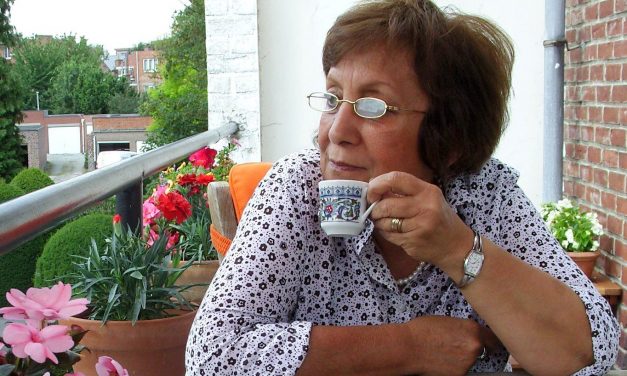
Ruqayyah Kāviyānī (Sīmā):A Modern Poet of Gilan



My moonlit songs
Take no orders
From any pens and papers
So you may add or omit
Any point with any good intentions
Ruqayyah Kāviyānī is among the contemporary poets of Gilan who has set herself apart from her contemporaries with her distinct vision and unique style in approaching objects, phenomena, and the world. She turned to modern poetry in the 1340s/1960s and has always maintained an active and dynamic presence as a prominent figure in the poetic landscape of Gilan1ʿAlīʹrizā Panjahʹīʾī, “Purs va gū bā Ruqayyah Kāviyānī” [Interview with Ruqayyah Kāviyānī], Faslʹnāmah Gīlānʹzamīn 1374–1375/1995–1996, no. 5–8 (Spring–Summer), 39.. Kāviyānī was born in the spring of 1323/1944 in Siahkal, Gilan2Hūshang ʿAbbāsī, “Zanān-i hunarʹmand va nāmʹdār-i Gīlān” [Artistic and well-known women of Gilan], in Kitāb-i Gīlān [Book of Gilan], edited by Ibrāhīm Islāh ʿArbānī (Pazhūhishʹgarān-i Īrān Zimistān, 1387/2008), 4:467. . According to her account, her inclination toward poetry began in childhood under the influence of her mother, who was a repository of poems, proverbs and riddles. Furthermore, her father, who was one of the founders of tea and rice factories in the east of Gilan, was a man of vast social vision as well as an intellectual and a devoted reader, owing to his extensive domestic and international relations. It was in such an environment that, naturally, books and reading became an integral part of her family life from an early age. During her primary school years, through book illustrations, she became familiar with many heroes of the Constitutional Movement, the Jangal Movement, great writers of the world, and many others. Later, as she grew older, she turned to reading the works of classical poets. Furthermore, due to her family’s economic and social position, their house was frequented by various individuals and served as a venue for discussions on political, social, and literary issues. Inevitably, the combination of these factors, alongside her innate poetic talents, shaped her inclination toward poetry. She also refers to the influence of two foreign experts on her inclination: Monsieur Saradis, the Greek engineer of the factory engines who lived in their household and occasionally sang Greek songs for them in a melodic and elongated tone; and Monsieur Hicho, a tea specialist from China, who sometimes captivated their attention by reciting unusual and exciting poems accompanied by graceful dancing movements on the large and beautiful veranda of their house. Kāviyānī notes that the unfamiliar and musical voices of these two men had a profound impact on her curiosity toward poetry and unconventional songs of that time.3ʿAlīʹrizā Panjahʹī, “Purs va gū bā Ruqayyah Kāviyānī”, 40. Another reason was the usual visits to their house by local villagers who would recite sweet poems and folktales.4ʿAlīʹrizā Panjahʹī, “Purs va gū bā Ruqayyah Kāviyānī”, 40.
Ruqayyah Kāviyānī began writing poetry in her adolescent years. Through reading newspapers and literary magazines like Sipīd va siyāh (White and black), she became acquainted with the works and opinions of prominent modern poets such as Nīmā, Shāmlū, Nādirʹpūr, Nusrat Rahmānī, Furūgh Farrukhʹzād, and others. She was writing free poetry around the age of eighteen, although she had experimented before with traditional methods and various forms. However, up to that point, none of her poems had been published5Ruqayyah Kāviyānī, in discussion with the author, Belgium, Urdībihisht 18, 1404/May 8, 2025.. Having finished high school, she began teaching Persian literature6ʿAbbāsī, “Zanān-i hunarʹmand va nāmʹdār-i Gīlān”, 467.. In 1341/1962, she married Javād Shujāʿīʹfard, a poet, singer, writer and critic. They have two sons, Shabtāb and Shirāgīm, and a daughter, Mānilī7Mānilī is considered one of the young and successful filmmakers in Iranian cinema. Her film, Migrin (Migraine), won acclaim in Fajr Film Festival in 1390/2011 for its new vision and its direction. See ʿAlīʹrizā Panjahʹī, “Purs va gū-yi ʿAlīʹrizā Panjahʹī bā Javād Shujāʿīʹfard” (ʿAlīʹrizā Panjahʹī’s interview with Javād Shujāʿīʹfard), Rahʹāvard-i Gīl 9, no. 22 (Ābān va Āzar 1391/November and December 2012), 16.. After their marriage, due to her husband’s professional assignment, Ruqayyah Kāviyānī took residence in Qazvin. In this period, the couple used to participate in literary societies, poetry reading sessions and critical discussion circles. Their house was frequented by poets and literary figures8Ruqayyah Kāviyānī, in discussion with the author... Thus, they became involved in poetic movements of the time.
Participating in formal literary circles
Ruqayyah Kāviyānī’s first poem entitled “Bā daryā” (With the sea) was published in Khūshah 46 (Day 1346/December 1967), whose editor in chief was Ahmad Shāmlū. The poem garnered the high praise of such great figures as Shāmlū, Akhavān and Nusrat Rahmānī, and was published accompanied by an elegant introduction written by Shāmlū9Ahmad Shāmlū, Khūshah, 46 (1346/1967), 58.. In an interview, she explains that this marks the moment she officially identifies as a poet: “For me, the day my being a poet was registered was the day my poem appeared on the very first page of Khūshah, the finest and, to this day, unrivalled literary magazine, under the editorship of the great Shāmlū, accompanied by a letter and a brief critical note brimming with praise and encouragement.”10Ruqayyah Kāviyānī (Sīmā), “Kudām Shiʿr, Kudām tiʾūrī” [Which poem, which theory?], Shabʹhā-yi Nīmkatī (blog), category “Adabiyyāt-i Imrūz” [Literature today], posted September 13, 2009, https://r-kaviyani.blogfa.com/post/92 This was a significant encouragement for her and made her continue on her poetic journey with stronger determination. Afterwards, numerous poems and interviews by her were published in literary sections of Kayhān newspaper and other reputable magazines and quarterlies11Ruqayyah Kāviyānī, in discussion with the author.. Commenting on her poems, Shāmlū asserts that, no other poet has succeeded in establishing themselves with their first poem but that she has accomplished this. He writes: “If these two poems that you sent me are truly your first poems, you should not have the slightest doubt about your position”12Ahmad Shāmlū, Khūshah, 58..
Ruqayyah Kāviyānī has published five poetry collections: Rasm al-khatt-i khashm13Ruqayyah Kāviyānī, Rasm al-khatt-i khashm, majmūʿah-ʾi shiʿrʹhāʾī az 1346–1356 [The orthography of anger: A collection of poems from 1967 to 1977] (1st ed., Qazvin: Nūr, 1357/1978). (The orthography of anger) (1357/1978); Yikī nabūd14Ruqayyah Kāviyānī, Yikī nabūd, guzīnah-ʾi shiʿrʹhā (1367–1378) [There was no one: Collection of poems from 1989 to 1999] (1st ed., Rasht: Harf-i Naw, 1380/2001). (There was no one) (1380/2001), containing a selection of poems composed between 1368/1989 and 1378/1999 and appearing on the market after a relatively long interval; Bānū15Ruqayyah Kāviyānī (Sīmā), Bānū, 1379–1382 va chand shiʿr-i bīʹtārīkh [Lady, poems from 1999 to 2003 and several undated poems] (1st ed., Rasht: Farhang-i Īliyā, 1385/2006). (Lady) (1385/2006), containing her poems from 1378/1999 to 1382/2003; Tarānahʹhā-yi mahtābī16Ruqayyah Kāviyānī (Sīmā), Tarānahʹhā-yi mahtābī (1380–1384) va chand shiʿr-i bīʹtārīkh [Moonlit songs, poems from 2001 to 2005 and several undated poems] (1st ed., Rasht: Farhang-i Īliyā, 1385/2006). (Moonlit songs) (1385/2006), containing her poems from 1380/2001 to 1384/2005 and several other undated poems; and lastly, Shādīʹhā-yi kūchak17Ruqayyah Kāviyānī (Sīmā), Shādīʹhā-yi kūchak (1386–1393) [Small joys, poems from 2007 to 2014] (1st ed., Rasht: Farhang-i Īliyā, 1395/2016). (Small joys) (1395/2016), containing her poems from 1386/2007 to 1393/2014.
First Poetic Period
Ruqayyah Kāviyānī’s first poetry collection, Rasm al-khatt-i khashm, was published in Qazvin in 1357/1978. The book contains twenty-four poems and is under the influence of the political and social currents of its time, as well as the Siyāhʹkal uprising, which left a lasting impact on Iranian literature and influenced a wide spectrum of literary productions as well as prominent poets and writers. According to the poet, after the Siyāhʹkal incident in 1349/1970, censorship dominated books and the press; consequently, she was forced into political silence18Ruqayyah Kāviyānī, in discussion with the author.. It seems that Rasm al-khatt-i khashm is the product of that period, containing intense socio-political critiques. The poems in this volume are composed in free verse. Their music is internal, produced through the selection of rhythmic word combinations, the use of similar-sounding consonants and vowels, the enjambments and caesurae of hemistiches, and, fundamentally, the dual relationships between words and meanings along the vertical axis of the poems. The use of lateral musical devices (rhyme and refrain) also contributes significantly to the musical quality of the poems. Other linguistic techniques such as repetitions of words and phonetic and semantic correspondences create a specific resonance within the poems. The language is simple, though at times not particularly refined or fully polished; nevertheless, one can find novel and innovative combinations and expressions throughout the collection. Occasionally, the use of local (Gilaki) vocabulary enhances the aesthetic quality of the poems. The poem about the village woman at the end of the collection, with its simple and sincere tone and its captivating sense of longing, transports the reader to the lush rice fields and the picturesque tea gardens of the poet’s homeland.
Harmony and unity
In the poem “Hamʹsidāʾī” (Harmony), the nightingale serves as a symbol for the poet or the freedom-seeking individual, singing in the entrapment of the crow and the blight (symbols of ominous and oppressive human forces), alongside countless others in captivity, with the hope of the victory of the proud cypress trees (symbols for free and noble human beings), and reaching liberation. The poem’s language is not particularly powerful; however, it is concise and contributes to the compactness of the words and the images and creates a specific tone and a heroic resonance. The lateral musical devices such as rhyming words (mīʹdānīm, mīʹrānīm, mīʹkhvānīm), along with phonetic games (alliteration, repetition, inversion), and the harmonic interplay of consonants and vowels such as bāgh (garden) and zāgh (crow), all work cohesively to sustain this heroic tone. Moreover, the poet uses symbolic imagery such as the garden, the nightingale and the cypress to point toward the second layers of meaning. As a result, language, music, and imagery turn into the structural energy of the poem, and unite in order to convey the content of the poem.
My heart and I know well
Far from the clamor
Of the crows’ host
What noble longing has
The garden from the nightingale
And
The nightingale from the garden
Yet, trapped amid
Blights and crows
My heart and I continue on
Toward the victory of
The proud cypresses
My heart and I sing
As do thousands still in chains19Kāviyānī, Rasm al-khatt-i khashm, 26–28.
Hope and anticipation
In the poem “Bā īnʹhamah dust dāram” (With all this, I still love), despite the chaos and uncertainty of the times, the poet remains hopeful, cherishing the day, a symbol of light, signifying victory and salvation, with its tangible brightness and currency of desire. The language of the poem is simple, imagistic and attractive. The lateral musical devices (the repeated refrain “I love”), alliteration (particularly of the sounds /s/, /kh/, and /sh/), repetitions (memory, remembrance), and the measured alternation and linkage of hemistiches, and contrasts and correspondences (night, day / snow, rain, mountain, plain, marsh) all contribute to the musical and rhythmic texture of the poem. The imagery is fresh and inventive: memory is compared to an antique brooch pinned upon the breast of remembrance, while rain becomes a bugle-call awakening the mountain, the plain, and the marsh. The use of symbolic language (snow and rain signifying fertility and life; mountain, plain, and marsh signifying different types of people in the society) invites the reader to delve deeper into the poem to find hidden layers of meaning.
There was no memory
So that, antique-like,
It could be pinned upon
The breast of my remembrance
Only the suffocation of silence
Yet still,
I love
The day
With its tangible brightness
And its currency of desires
And
I love
The night
For it is a single-hearted way
And the snow
And the rain
For they are the bugle-call
For the mountain
And the plain
And the marsh…
With all this, I still love.20Kāviyānī, Rasm al-khatt-i khashm, 33–39.
Localism and the description of nature
Some of the poems display a distinctly regional tone and incorporate local vocabulary. For instance, in the poem “Bānū-yi rūstāyī” (The village lady), the poet celebrates the pure and beautiful nature of her village with a simple, honest and enchanting tone, describing its mountains, forests, plains, rivers, as well as the honest and good-natured villagers and their weekly markets and the fruit of their labor. The tone is simple, sincere and descriptive, and the language is soft and clear. The inclusion of local words such as sītah [starling], chūchāq [flat sea holly], garzanah [stinging nettle], gumaj [a clay pot usually used for cooking local stews], and lat [wooden roof shingles] enhances the sincerity of the poem and the richness of the language. The music of the poem arises not only from lateral musical devices (rhyming words such as chāyʹzār, purʹbār, shālīʹzār, bāzār; and the refrain of man), and alliteration (s, sh, ch, r, etc.), but also from inventive word combinations, e.g., “rāshiahʹhā-yi mushajjar” (wooded trails), “malmal-i shamīm va rutūbat” (the muslin of fragrance and moisture) as well as rich imagery (the fragrant hem of the rice field, the smokeless suspended blue, the felted night-cap of the hills). The figures of speech such as simile (the green mirror of the tea fields), metaphor (the forest, Mount Kākū, the hem of the rice field, the noble rivers, the smokeless blue sky), are fresh and inventive, granting human qualities to the village and creating beautiful and enchanting images for it, resting gracefully against Mount Kākū, with its fragrant skirt of rice field, and arteries of gentle rivers. Thus, all formal elements are united in the vertical axis of the poem to form a structural and thematic unity.
My birthplace
Is a small village
In the refraction of the green mirror of tea fields
And the lush abundance of a forest
Reclining on the slope
Of Kākū21The name of a mountain between Siahkal and Daylam.
With the fragrant hem of its rice fields
And the arteries
Of its noble rivers
My village
With its small figure
and wooded trails22“Rāshyah” means a narrow pathway.
Lying upon the muslin of fragrance and moisture
And the long flocks of sītah [starling] and wild ducks
In its smokeless suspended blue
Has a graceful design.23Kāviyānī, Rasm al-khatt-i khashm, 97–116.
And then she describes the sincere and lively weekly markets in her village in this way:
My birthplace
On market days
With strings of garlic and onions
And bundles upon bundles of pennyroyal, chūchāq [flat sea holly], and garzanah
In the earthen crossroads of a square
Carpeted with rough cloth and gamaj [a clay pot usually used for cooking local stews]
My village
With houses growing amid the gardens
Of tea and rice
And its felted night-caps of straw and lat [thin pieces of wood used for covering the roofs].24Kāviyānī, Rasm al-khatt-i khashm, 101–7.
Second Poetic Period
Kāviyānī’s second poetry collection, published in 1380/2001, comprises selected poems written between 1368/1989 and 1378/1999. The poems in this volume are categorized into three sections, with some titles consisting only of a single letter of the alphabet or a number. This collection was published nearly two decades after the first collection, during which time the poet remained active in the literary community through the publication of her selected works in journals and literary periodicals, as well as through interviews, discussions, and poetry readings in friendly gatherings. In this collection, the language is more flexible, fluid, and mature, marking a turning point in the poet’s development and her experiment with new atmospheres. It reveals her engagement with the poetic movements of the 1370s/1990s25See ʿAlī Bābāʹchāhī, Guzārahʹhā-yi munfarid: Masāʾil-i shiʿr va barrasī-i shiʿr-i jadīd va javān-i imrūz [Individual statements: Poetic issues and the study of today’s new and young poetry] (2nd repr. ed., Tehran: Dībāchah, 1389/2010), 3:131–97. Also see Sānāz Rahīm Baygī and Qudrat Allāh Tāhirī, “Barrisī-i ʿanāsur-i ghayr-i zabānī” [A study of non-lingual elements], Pazhūhishʹhā-yi adab-i ʿirfānī [Studies in mystical literature] 5, no. 4 (Isfand 1390/March 2012): 145–74., which had a conversational or colloquial tendency, characterized by the dominance of the poet’s individual tone. In this mode, language was rooted in everyday communication but extended its function to inducing and influencing the reader. On the other hand, the expressive, imagistic, and rhetorical elements reinforced this inductive power of language. Yet, Kāviyānī displays a specific poetic vision and attains a personal style that differentiates her from other poets of this decade. The themes of the poems are more varied than in her first collection, though the underlying themes are socio-political issues, presented through innovative figurative imagery that serves as a bridge for communicating subjective themes as more objective and more concrete.
At the beginning of this collection, the poet refers to notebooks of different colors that have been hidden in the closets for a long time; notebooks that are still angry, and the poet, as a commander, urges them to rise and act for the awakening and enlightenment of society. The language is simple and colloquial, yet more flexible than in her first collection. The tone is urgent, warning and harsh, and besides the lateral musical devices such as the rhyming words (larzān / amān; tikān buʹkhurīd / rāh bīʹuftīd), the internal music emerges from a network of lexical harmonies, e.g., green, blue, violet; “ganjah” and “yakhʹdān” (two types of buffet); “amn va amān” (secure) “lajūj va kallahʹshaq” (obstinate and stubborn), and syntactic cohesions as well as the symmetrical conjunctions and disjunctions of the hemistiches. Through the use of metaphor (personification of the notebooks) and metonymy (kneading as a metaphor for destruction), the poet elevates the poem from a simple to a literary one, making its message more transparent:
Green – blue – violet
Bright yellow
Dull jade
Fantasy
This cupboard
That buffet
Sometimes trembling
Sometimes secure
And these stubborn notebooks… these obstinate ones
I have dragged them all in bundles here – right here
Make a move!
March on!
Or else I shall knead you.26Kāviyānī, Yikī nabūd, 9–11.
Loneliness and fear
In the poem “Khānum-i (N) ʿAzīz” (Dear Mrs. N.), the poet reveals her fear, loneliness, and helplessness through the languid repetition of the ticking clock and deliberate spacing between words within a hemistich. In fact, she turns the poem into a performative text. This is a new stylistic feature of her poetry which is influenced by the poetic movements of the 1370s/1990s (conversational poetry). By disrupting the conventional spelling of words through spacing, the bolding of certain words or phrases, the use of one-word hemistiches, and repetitions, she not only creates music but also underscores the meaning of her poem. In order to create further cohesion between form and content, the poet also employs a network of semantic associations (monster, ogress, hag / eyes, tears, spectacles / notebook, pen), as well as lateral musical patterns (the external rhymes nimīʹdānad, part kunad, biʹtarsad, biʹbārad / bāvar mīʹkunī, mīʹguftī) and internal music (producing melody through the use of pauses, sensory tensions and emphatic repetitions), and figurative imagery such as metaphor (monster, hag), simile (smoke like the dance of a monster), and allusion (to One Thousand and One Nights).
A shadow – a monster
Behind the window every night
A cough – a smoke
Like the dance of the monster
This hag, too
Worse than the monster
Tick-tock / Ti k tak / Tick-tock / Ti k tak / Tick-tock
There remains a pair of
Wet, sleepy eyes
That do not know
Whether to throw away
Her notebook, pen, and glasses
Like last night
To fear loneliness
To let her ready tears fall…27Kāviyānī, Yikī nabūd, 14–15.
Fear of intellectual rigidity: Another recurrent theme in her poetry is fear, which frequently appears in connection with socio-political issues. However, in the poem “Guftugū-yi 5” (Dialogue 5), she talks about a deeper form of fear that leads to fossilization and intellectual rigidity. The language is simple and employs repetition, alliteration (notably of /t/, /kh/, /s/, /m/, /n/…), and end-rhymes. Moreover, the variations in the length of the hemistiches and the pauses in them create inner music. The stone signifies rigidity and inflexibility, and the poem employs hyperbole (claiming that the speaker does not fear the collapse of mountains or rocks, but is terrified by the fall of the stones of dogmatism and rigidity) to emphasize the significance of this fear and to impart warning to the reader. Thus, music and imagery turn out to be the two principal elements through which the poem conveys its message.
This fear
Is one of those fears I truly fear…
If the mountain falls
If all its stones and rubble if
I do not fear
You have seen that I do not fear
My fear of my own stone
My fear of your stone
It is these stones… that I
Truly!28Ruqayyah Kāviyānī, “Guftugū-yi 5” [Dialogue 5], in Yikī nabūd, 33.
The depiction of the monster
The depiction of “hayūlā” (the monster) is one of the recurring motifs in her poetry. The language is fluid, simple, and conversational, yet the dominance of the individual tone of the poet and the artful arrangement of words, along with the inner and lateral musical elements (e.g. mīʹpūshad, mīʹzanad, mīʹshavad, mīʹkhvānad, dārad, taʿāruf mīʹkunad), repetitions (monster, I, you), and alliteration (of /sh/, /kh/, /m/, /s/, etc.) contribute to the poem’s overall effectiveness.
This monster
Does not look like a monster
Like you and me
It dresses up
Wears glasses
Walks and rides
Reads newspapers
And even
Has a kind smile
From the outside
It looks so much like you and me
That you would not believe it even if you knew.29Ruqayyah Kāviyānī, “Qurbānī” [The sacrifice], in Yikī nabūd, 49–51.
Invitation to unity and solidarity: Another recurrent motif in her poetry is the invitation to unity and solidarity as a means of overcoming the darkness of oppression. The language is colloquial and conversational and has a distinctive orthography. It draws the reader’s attention to the theme by the use of pauses and spaces inside the hemistiches. The music of the poem is internal, resulting from the thoughtful breaks and connections as well as pauses in the hemistiches. The use of figurative devices, in particular synesthesia (green mind, blue mind / sweet mind, salty mind), as well as symbols (green as a symbol of fertility; blue as a symbol of light and purity), and metaphor (sweet and salty minds representing positive and constructive thinking versus extreme or distorted thinking) serves as key structural means for imparting the message of the poet.
A little green mind
A little blue mind
A little sweet mind
A little salty mind
If with a little of your mind
If it could happen
Ah!
If it could happen
One day
Is not
A little time
My dear.30Ruqayyah Kāviyānī, “Y” [Y/Yah is a letter of the alphabet], in Yikī nabūd, 56.
Steadfastness on the path to freedom
In the poem titled “Mīm” [which is also a letter of the alphabet], the speaker is determined to sing within the cage (the oppressed community) until her song brings forth the spring (freedom). The poet employs lateral musical devices (khvāhish nimīʹkunam / nimīʹshavam / mīʹkhvānam) and repetition, and constructs a layered meaning in the poem through a symbolic language and the personification of objects and phenomena (the window, a symbol for communication and a portal to light; the flowerpot, a metaphor for the limited and confined surrounding; the lovebird, a simile; the cage, a metaphor for a society bound by tyranny; spring, a metaphor for freedom; the throat, a metonym for voice). The language is simple and direct on the surface; however, the interplay of imagery and a network of semantic correspondences invite the reader to intellectual engagement and draw them into deeper layers of meaning.
I will not beg the window
I will not humble myself before the flowerpot
Not before you
Nor before anyone else
Not even before me…
I and the lovebird of this cage
With this throat
I will sing
Sing
Sing
Until… spring itself comes begging.31Ruqayyah Kāviyānī, “M” [M/Mīm is a letter of the alphabet], in Yikī nabūd, 66.
The Third Poetic Period
In the third period of her poetic career, the poet published her three collections at long intervals. The short poems in these collections often resemble sparks of moments that have preoccupied the poet’s mind. In some of the poems, the lyrical “I” of the poet is merged with the character of a housewife involved in the routines of everyday life. Sometimes, she narrates an imitation of herself and of life. Thus, while drawing upon daily life, she maintains the literary aspect of the text, as she artistically observes the conciseness of expression and avoids verbosity. She adds layers of meaning to the poems by making use of deliberate ellipses and the omission of statements; thus, she invites the reader to interpret the white spaces of the texts through their own mental effort. The poems are still written in free verse. Their music is primarily internal, arising from the mutual relationship between word and meaning in the vertical axis of the poems. Skillful use of lateral musical devices, linguistic games, brevity and simplicity also contribute to the musicality of the text. The language is plain, fluid, and intimate, while also showing complexities. With the use of this simple language, the poet approaches the nature of colloquial language and explores the world and leads the reader from surface meanings to deeper layers of meaning. Thereby, she emphasizes the literary aspects of the text in the horizon of the reader’s vision. The different types of imagery operate in harmony with other elements of the form, often occupying the center of the poet’s message in novel and surprising methods and mobilize the other components of form around them. Her fresh and novel look at the surrounding objects and phenomena distinguishes her poems from the works of others, a quality that exhibits itself fully in the process of the mental and linguistic functions of her texts. These processes have gradually become more refined, mature, and complete over the course of her poetic career.
Bānū
This collection comprises poems written between 1378–1382/1999–2003, along with several undated poems. The subjects of the poems include a wide range of themes, from society, politics and art to everyday life. A sense of nostalgia for the sweet and cherished memories of the past is observable in many of her poems. Yet, there is a golden thread that ties all these diverse themes together: the poet’s artistry and her distinctive vision of the world, phenomena, and people.
Longing for the past days
In the following poem, the poet talks about memories of the nights of her childhood and her longing for a long-lost beloved. The language is simple and fluid, and the tone is narrative and dramatic. The poem’s music is created by both internal and lateral musical devices such as end-rhymes (biʹkhandānad, biʹlarzānad, biʹrīzad) as well as by semantic correspondences (such as fruit, tree, plum, and garden / night, lantern, and star). The shift in point of view from third person to second person reinforces the intimacy, reduces the distance, and enhances the emotional impact of the poem. The imagery is fresh and inventive. For instance, comparing the eyes of jackals to dancing lanterns and describing laughter and plums as falling from the sparkle of black eyes reveal highly exquisite metaphorical structures. The poet uses synesthesia in the phrase “noisy laughter”. The poet’s distinctive tone in arranging the words and combinations, as well as her music and inventive imagery, contribute to the poem’s beauty and attract the reader’s attention.
A dark night
Like those same nights
When the sparks of the jackals’ eyes
Dancing lanterns
That from behind the windows
Could startle and make one laugh
When the falling of a fruit from the tree
Could shake the silence of the garden
Tonight
The same star
Which Farkhundah once named beautiful
Oh, Farkhnndah, my dear, where are you?
So that from the sparkle of your black eyes
laughter and plums would fall…32Ruqayyah Kāviyānī, “Salām Farkhundah jān” [Hi, dear Farkhundah], in Bānū, 37–39.
Memories of the father
The poem “Sawghāt-i Hind” (Souvenir from India) is written in memory of the poet’s father, his dreams, his beautiful and cherished garden house, and his rare black pepper tree. A sense of nostalgia for the past permeates the poem. The tone is addressive. The poet, by personifying the tree, suggests a connection between its loneliness among the other trees of the garden with her own sense of alienation within the society, creating a deeply emotional effect. The dominance of the distinctive voice of the poet in the selection, combination, and arrangement of words lends distinction and charm to the poem. By making variations in line lengths, she creates semantic pauses that generate a particular resonance. The imagery (such as the metaphoric picture of the souvenir that breaks all conventions, the most living memento, the old migrant, and the longing shoulders of the pepper tree) is fresh and inventive as in much of her work, functioning as a crucial structural element for understanding the poem.
Always
Father’s souvenirs
Like his geographical dreams
would break norms
Like your rare sapling
But still
I did not know the word exile
When
I had felt your estrangement
Amid that multitude of trees
The most living souvenir, still
Oh, old migrant
Today I wish
To weep
The whole sunset
On your longing shoulders.33Ruqayyah Kāviyānī, “Sawghāt-i Hind” [Souvenir from India], in Bānū, 18–19.
Dialogue with the internal I
In the poem “Hamʹzād” (The double), the poet speaks with her inner self who is fully aware of every secret in her life. The conciseness and compressed imagery of the poem (being found beside ten years of age, memorizing all the secrets, and knowing without speaking) serve to generate conflict and motion, and to heighten the capacity for making connections and conveying images. This, along with the lateral musical devices (the use of end-rhymes: gurīzī / rāhī / paydā mīʹkunī, mīʹshudī, mīʹdānistī; and the refrain: nīst) enhance the rhythm and cadence of the poem.
There is no escape
No path
You will find me
Beside my ten years of age
You had memorized all my secrets
And knew without speaking.34Ruqayyah Kāviyānī, “Hamʹzād” [The double], in Bānū, 63–64.
Tarānahʹhā-yi mahtābī
This collection includes poems written between 1380–1384/2001–2005 along with several undated poems. The poems are divided into three categories, and some of them are titled by letters of the alphabet or numbers. The collection mostly consists of short poems, representing fleeting moments which have occupied the poet’s mind. The poems encompass a wide thematic range, including social and political reflections, the art of poetry, love, longing, homeland, everyday life, memories of friends and of the past, carpe diem, existential questions, etc.
In these poems, the language is simple and fluid, and the music is mainly internal. In some of the poems, the poet incorporates lines from classical and modern masters such as Mawlavī Rūmī, Saʿdī, Hāfiz, Parvīn Iʿtisāmī, Furūgh Farrukhʹzād, and Ahmad Shāmlū. Overall, she is mainly under the influence of Nīmā Yūshīj and his followers, especially Ahmad Shāmlū.
The influence of Shāmlū
The musicalization of every word, phrase, and image is one of the dominant aspects of Shāmlū’s poetic language, which has influenced the poet. In the following poem, the poet musicalizes elements of the poem by the use of melodic combinations such as “kharman-i gīsū” (tresses of hair) and “hizār āyinah tamāshā” (a thousand mirrors of vision), contrasts (yesterday/today; mirror as the symbol of brightness and clarity/ash as the symbol of opacity and obscurity), and figurative imagery, including metaphor (kharman-i gīsū as an adjectival metaphor) and hyperbole (hizār āyinah tamāshā).
Yesterday
Your tresses
Was a thousand mirrors of vision
Today
What ash you scatter
On the mirror.35Kāviyānī, Tarānahʹhā-yi mahtābī, 89.
Furthermore, the poet employs contrast, which is one of the characteristic features of Shāmlū’s poetry. Shāmlū uses binary contrast to convey abstract concepts about humans and existence. In the following poem, the contrast between “bīd-i mishk” (the pussy willow) and “bīd-i majnūn” (the weeping willow) is attributed to one of the games of fate. The pussy willow is associated with joy; but the weeping willow is a symbol of melancholy or a heartbroken lover:
This pussy willow
In front of
This weeping willow
Is similar to
Which game of fate?36Ruqayyah Kāviyānī, “18”, in Tarānahʹhā-yi mahtābī, 88.
Critique of false beliefs
In the poem titled “N”, the poet integrates a hemistich from Rūmī’s ghazal “Āftāb āmad dalīl-i āftāb” (The sun has come as proof of the sun); however, she transforms it into a satirical critique of the misguided faith which, metaphorically, tends to mistake the wolf’s glimmering eyes (a symbol of savagery) for the light of the sun (a metaphor for truth and justice). The use of “tazmīn” (incorporating verses from classical or contemporary masters) not only facilitates the comprehension of the poem for the reader, but also leads to conciseness; while the element of humour serves to underscore a socio-political theme.
No doubt
No question
The sun has come as proof of the sun
This is a fine excuse
For these foolish lambs
To take the glimmer in the desert wolf’s eyes
For sunlight.37Ruqayyah Kāviyānī, “N” [N/Nūn is a letter of the alphabet] in Tarānahʹhā-yi mahtābī, 26.
Characteristics of the poems
In the poem “Tarānahʹhā-yi mahtābī”, the poet talks about the characteristics of her poems, which flow everywhere like moonlight and are bound by no authority. These are unbound poems which speak of universal principles of humanity. The poems are concise, and their music is internal, making use of synesthesia. Moreover, moonlight symbolizes brightness and awareness. Pen and paper, in their metaphorical meanings, signify the poet’s thoughts. “Adding or omitting” becomes a metaphor for alteration, and borderlessness signifies universality, which is the dominant image and message of the poem.
My moonlit songs
Take orders from no pen or paper
So that you might, for convenience
Add or erase anything
There’s the moonlight
And there’s my borderless songs.38Ruqayyah Kāviyānī, “Tarānahʹhā-yi mahtābī” [Moonlit songs], in Tarānahʹhā-yi mahtābī, 57.
Pure moments of life
In the following graceful poem, the speaker talks about the ephemeral but beautiful moments of life, the breeze, the dance of the curtain, and the flutter of the pages of the notebook that bring a smile to her face and remind her that the society awaits her spellbinding words. The language is simple, the tone descriptive, and in phrases such as “raqs-i kāghazʹpārahʹhā” (the noise of paper fragments), the syntax showcases deviation (the displacement of noun and adjective) that captures attention. The music arises from the harmonious arrangement of words and phrases and the repetitions, stemming from the poet’s distinctive tone and linguistic individuality. Personification is employed in the dance of the curtain, the gratitude of the breeze, and the flight of paper fragments. The alley is a metonymy for the people of the alley. Imagery and language are the two dominant aspects of the poem in conveying the poet’s emotions and intellectual depth.
And for the dance of a curtain in the wind
I thank the breeze
For the noise of your paper fragments
Poem by poem
Page by page
Taking flight
So you may smile
And remember
That the accustomed eyes of the alley
Are waiting.39Ruqayyah Kāviyānī, “Ghurūb” [Sunset], in Tarānahʹhā-yi mahtābī, 35.
The memories of friends and acquaintances
Love and remembrance of friends and loved ones are other motifs in this collection; for example, in the poem “T” which is composed for the memory of the dear Tītī Gul, the poet’s beloved old nurse in her childhood. The tone is dramatic, and the language is simple and sincere and reflects the poet’s distinctive vision. The music is internal, created by the use of unique orthography, for example the spacing between words in a hemistich, repetition, contrast and antithesis. This exquisite music captures the readers’ attention and invites them toward deeper layers of the meaning of life.
You used to sing
We
Skipping
Used to clap our hands… and never understood
Used to spin… never understood
Now that we understand
We neither clap
Nor spin
Nor understand40Ruqayyah Kāviyānī, “T” [T/Tah is a letter of the alphabet], in Tarānahʹhā-yi mahtābī, 51.
Finally, in the following poem, the poet describes the strange feeling of gazing at a beloved’s photograph with brevity. The language is simple, yet the distinctive vision she brings to phenomena is extraordinary. There is a harmony between language, music, and imagery for conveying the conceptual mindset of the poet.
A strange feeling
Circled the room
And calmly
Hid
Behind your framed picture41Ruqayyah Kāviyānī, “42”, in Tarānahʹhā-yi mahtābī, 85.
Shādīʹhā-yi kūchak
Shādīʹhā-yi kūchak is the most recent published collection of poems by Ruqayyah Kāviyānī, containing poems written between 1386–1393/2007–2014. In the preface, she notes that this collection is actually a selection from three separate manuscripts, originally intended for publication in three individual volumes. However, for various reasons, she gave up that idea, hoping to bring together her more recent poems, which have newer forms and structures, and publish them in the future. This beautiful poem stands at the beginning of the collection. By the use of a novel and innovative language (antithesis and linguistic games), the poet presents her philosophical worldview and her distinctive perspective on the world and life:
And words
Play with us
And we play with words
And an experienced actor
Plays with
Us
And
The word42Ruqayyah Kāviyānī, “Bāzī-i yik” [Game one], in Shādīʹhā-yi kūchak, 7.
The titles of the poems are categorized under two major headings: “Bāzī” (Game) followed by different numbers, and “Satrʹhā” (Lines) followed by various adjectives. Some of the poems follow a certain orthography, marked by separated letters, syllables, and words, or bold typographies. These techniques are used to create rhythm, insert emphasis, and convey meaning. The language is simple and fluent, yet more mature, refined, and structurally cohesive. Some hemistiches consist of a single word; at times, there is an intentional spacing between the words of a single line; sometimes, the words are written in a specific orthography or colloquial phrasing; and occasionally, the words are repeated to convey the poet’s intended ideas. In many of these poems, the poetic “I” merges with the persona of a housewife, engaging in an inner dialogue, drawing from everyday life. However, the poet gives heed to the thin line separating the two domains and maintains the literary quality of the text by observing conciseness and creating striking concepts by presenting novel and innovative imagery.
Moreover, alongside her innate talent, the more the poet’s intellectual and artistic experience grows over the years, the more she exhibits notable transformations in her style and innovative poetic forms and concepts. Breaking habitual expectations is one of the characteristics of her poetry. By deconstructing and reversing familiar habits and by going beyond the seemingly simple words of everyday life, she achieves defamiliarization, inviting the reader to pause and reflect on the themes of the poems. Also, through brevity, ellipsis, spacing, and while reading, she guides the reader toward the hidden layers of meaning. She addresses major events and human sufferings through codes, symbols and suggestions so skillfully that the reader is motivated toward mental exploration and admiration of her poetry. Her poems invite the reader to reflect upon universal themes, offering moral insight and warning in an alluring form, and calling for a transformation in the reader’s perception of the world. There are many powerful and influential poems in this collection, presenting a wide range of themes. However, the most central themes are related to society and politics. We will examine selected examples from this collection.
Loneliness
At times, the poet praises loneliness and believes no one is kinder than it. However, she simultaneously constructs a paradoxical combination by calling loneliness the gradual death of beauty. The language is colloquial and conversational, employing everyday expressions such as not scattering the pencils and notebooks, “tamargīdan” (to sit still), and “bachchah-ʾi ādam” (like a proper kid). One of the characteristics of her poetry is the use of such everyday idioms which makes her poems more influential and intimate. The music of the poem is internal and lateral (by rhyming words such as dastūr nimīʹdahad, nimīʹbāfad, pīlah nimīʹkunad / bitamargand, nakunand) as well as the result of lexical harmonies (such as food and sleep, question and answer, notebook and pen, word and desk). The poem exhibits paradox (loneliness as both kind and the gradual death of beauty) and several metaphors, such as “pīlah kardan” which is a metaphor for insistence or annoyance; “misl-i bachchah-ʾi ādam tamargīdan” which signifies obedience; and “rīkht va pāsh kardan” which is a metaphor for creating disorder and chaos. The central message of the poem embedded in the paradoxical image of loneliness is in harmony with the other elements of the form, suggesting that although loneliness may seem favorable, it ultimately brings about the gradual death of the spirit.
I know no one
Kinder than loneliness
At least
It never makes out of time orders for meals or sleep
It never weaves a lie in a question and answer
It never harasses the notebook, pen, or words
So that they, like proper kids
Sit at the corner of the desk and make no mess
Loneliness is the gradual death of beauty.43Ruqayyah Kāviyānī, “Bāzī-i 18”, in Shādīʹhā-yi kūchak, 29.
Misinterpretations
In many of her poems, the poet employs “tazmīn” (incorporating verses from classical or contemporary masters) to simplify the meaning and beautify the poem. In the poem below, she incorporates the first hemistich of a famous ghazal by Hāfiz to satirize people’s superficial interpretations of the words of the sages by settling for mere intoxication and temporary pleasures, neglecting the necessity of attempting to build an ideal and favorable society. The poem’s music is internal. The phrase “the subsequent lines” is a metaphor for the complementary and related interpretations, and “turning the page unread” is a metaphor for inattentiveness and the lack of engagement. The poem is concise and “tazmīn” is the central element in creating coherence and balance among all the formal elements in relation to the content of the poem.
Come
Let us scatter flowers and pour wine into the goblet
And we turned the page
The rest of its lines left unread
So easily!44Ruqayyah Kāviyānī, “Bāzī-i 40”, in Shādīʹhā-yi kūchak, 53.
Everyday experiences
One of the significant characteristics of her poetry is playing with the orthography of the words. She uses this technique to create pause, repetition, emphasis, effective induction of meaning, and creating musical effects. In the poem below, she talks about her own everyday experiences and, through artful brevity and characteristic mastery, connects them to the literary aspect of the poem. She uses a specific orthography in words like “sīb” (apple), “āshʹpazʹkhānah” (kitchen), and especially “pīr” (old) to depict the impact of the passage of time on women while attending to domestic chores. The poem’s music is the result of the combination of internal and lateral musical devices, as well as the altered orthography of the words. The word “pīr” carries “īhām-i tanāsub” (double entendre) as it signifies withering in connection with apple and aging in connection with the woman. This subtle pun, along with the special orthography of the words, play an essential role in the unity of the form and the content of the poem.
On the skin of my ap-ple
I drew the shape of a woman
Placed it on the kit-ch-en table
And it grew oooold!45Ruqayyah Kāviyānī, “Bāzī-i 41”, in Shādīʹhā-yi kūchak, 54.
Conclusion
Across four decades and five collections, Kāviyānī’s poetry resists the external authority which her epigraph refuses. What links the political urgency of Rasm al-khatt-i khashm, the conversational rupture of the 1370s/1990s poems, and the domestic intimacy of her later work might be a continued line of poetic style but a persistent refusal to let any single mode, movement, or master fully claim her voice. Kāviyānī uniquely stands out from any predefined forms when she absorbs Nīmā and Shāmlū, and reaches back further still to Hāfiz and Rūmī through tazmīn, without becoming any of them, and lets the housewife and the poet share a single “I” without dissolving one into the other. Her recurring turn inward, including the dialogues with an inner double, the fears given shape as monsters and stones, the private ledger of a life lived alongside kitchens and pots as much as censorship and silence, suggests that a poet less interested in announcing a new theory of language than in testing, poem by poem, how far an ordinary vocabulary can be made to hold an extraordinary interiority. She achieved all this while writing from Qazvin and later Gilan rather than Tehran, largely outside the institutional currents that made and unmade literary reputations in Iran. That distance from the capital may explain why her name remains less familiar nationally today than the praise she received at the very start of her career, from Shāmlū himself, would lead one to expect. Kāviyānī’s collections trace less a movement from one school to the next than a widening of the same instinct that is to turn language, however plain, into a private and unbound instrument, “moonlit” and beyond anyone’s editing but her own.
Cite this article

Abstract
Ruqayyah Kāviyānī (Sīmā) is among the contemporary poets of Gilan whose distinct vision and unique style have set her apart from her contemporaries since she turned to modern poetry in the 1340s/1960s. This article traces her poetic career across three periods and five collections, from the politically charged verse of Rasm al-khatt-i khashm, shaped by the Siyāhʹkal uprising and its aftermath, through the more flexible, conversational language of the 1370s/1990s, to the concise, intimate poems of her later work. Drawing on close readings of individual poems, the article examines her use of musical devices, imagery, and figurative language, situating her poetry within the wider landscape of modern Persian poetry while highlighting the personal style that distinguishes her voice.