
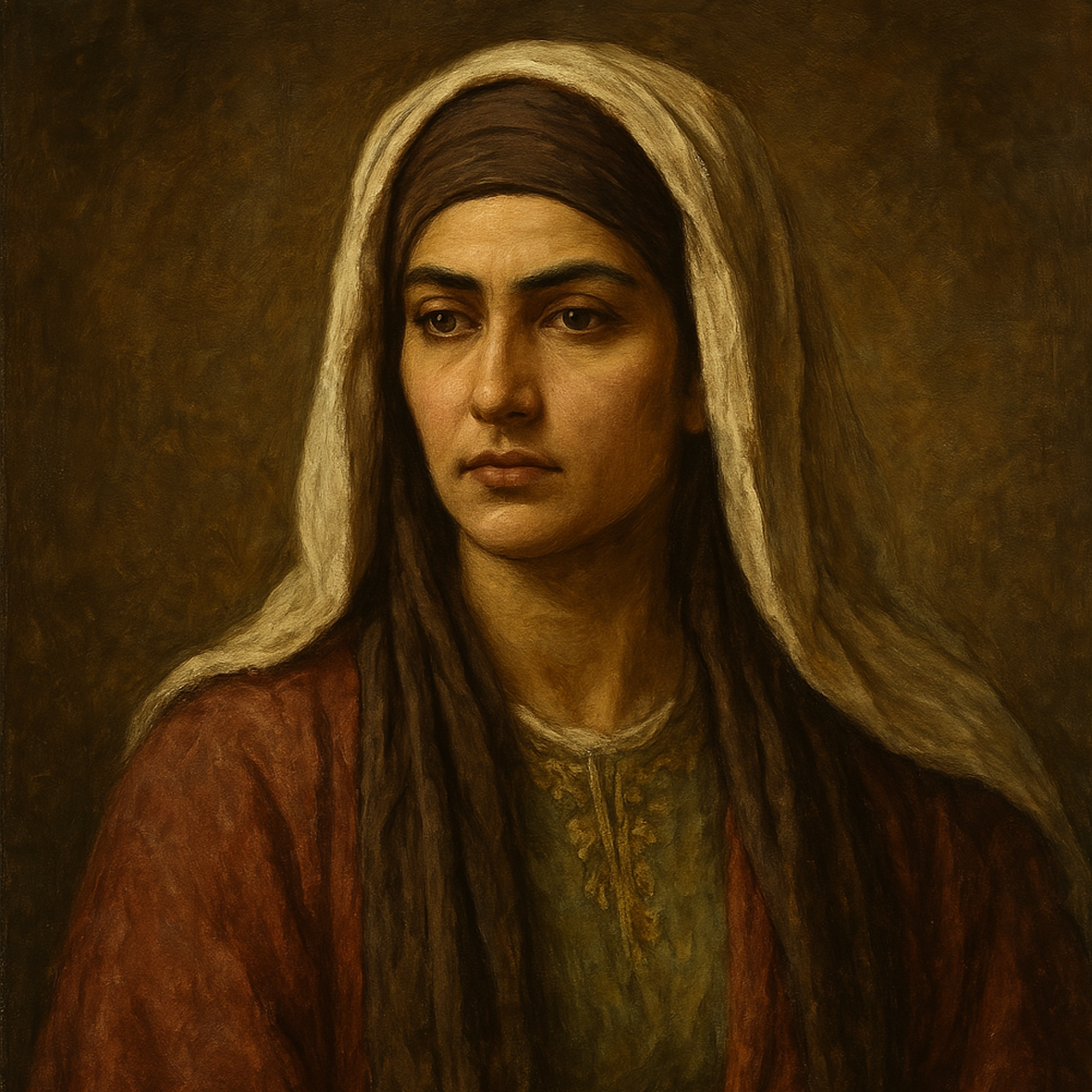
Rābiʿah Quzdārī: The Vanguard of Women’s Poetry




Rābiʿah bint Kaʿb Quzdārī was a poet who lived in the AH 4th/10th century. She has been referred to by various names, including “bint Kaʿb,”1Muhammad ibn ʿUmar al-Rādūyānī, Tarjumān al-balāghah [Interpreter of eloquence], ed. Ahmad Ātash (Tehran: Asātīr, 1331/1952), 18. “Dukhtar-i Kaʿb,”2Shams Qays al-Rāzī, al-Muʿjam fī maʿāyīr ashʿār al-ʿajam [Compendium on the conventions of Persian poetry], ed. Edward Browne and Mīrzā Muhammad ibn ʿAbd al-Vahhāb Qazvīnī (1st ed., Leiden: E.J. Brill; London: Luzac & Co., printed at Beirut: Matbaʿah-i Kāthūlīkīyah [Catholic Press], AH 1327/1909), 16. “Rābiʿah dukhtar-i Kaʿb,”3Saʿīd Nafīsī, Rūdakī: Muhīt-i zindagī va ahvāl va ashʿār [Rūdakī: The environment, life, and poetry] (2nd repr. ed., Tehran: Amīr Kabīr, 1336/1957), 360. “Rābiʿah Balkhī,”4Muhammad Taqī Bahār, Sabkʹshināsī [Stylistics] (3rd repr. ed., Tehran: Franklin, 1349/1970), 3:110. and “Rābiʿah Quzdārī.”5Bahār, Sabkʹshināsī, 3:257. Hermann Ethé6Hirmān Itih [Hermann Ethé], Tārīkh-i adabiyāt-i Fārsī [History of Persian literature], trans. Sādiq Rizāʹzādah Shafaq (Tehran: Bungāhʾ-i Tarjumah va Nashr-i Kitāb, 1337/1958), 28. Originally published as Hermann Ethé, “Neupersische Litteratur,” in Grundriss der iranischen Philologie. Band 2. Litteratur, Geschichte und Kultur, Register zum II. Band, edited by Wilhelm Geiger and Ernst Kuhn (Berlin; New York: De Gruyter, 1974), 212–368. recorded her name as Qizdārī, while Mazāhir Musaffā transcribed it as Qazdār.7Mazāhir Musaffā, Pāsdārān-i sukhan [Custodians of poetry] (Tehran: Kitābʹfurūshī-i Zavvār, 2552/1973), 47. In Tārīkh-i adabiyāt darī (The history of Dari literature), it is noted that “Rābiʿah was widely known among the people as Rābiʿah Qusdārī.”8ʿAbd al-Qayyūm Qavīm, Tārīkh-i adabiyāt-i Darī: az dawrahʹhā-yi bāstānī tā pāyān-i qarn-i chahārum-i hijrī [The history of Dari literature: From the ancient periods to the end of the 4th century AH] (Kabul: Kabul University, 1366/1987), 146. She came to be called Rābiʿah Balkhī because her father, Kaʿb, was a member of the noble class in Balkh. Kaʿb’s ancestors were closely involved in the political and military events of Khurasan alongside Abū Muslim and held authority over Sijistan, Turan, and Quzdar.9Abū Muslim (c. 724–755) was a key figure in early Islamic history, leading the ʿAbbasid revolt against the Umayyad caliphate and playing a pivotal role in the establishment of the ʿAbbasid caliphate. Qavīm, Tārīkh-i adabiyāt-i Darī, 146. It remains unclear why some biographers have referred to her as Rābiʿah Isfahānīyah.10Muhammad Muzaffar Husayn ibn Yūsuf ʿAlī Sabā, Tazkirah-ʾi rūz-i rawshan [Memoir of the bright day], ed. Muhammad Husayn Ruknʹzādah Ādamiyat (Tehran: Kitābʹkhānah-i Rāzī, 1343/1964), 280; Muhammad Hasan ibn ʿAlī Iʿtimād al-Saltanah, Khayrāt-i hisān, lithograph edition (Tehran: n.p., 1307/1928), 1:141. In Rayāhīn al-sharīʿah11Shaykh Zabīh Allāh Mahallātī, Rayāhīn al-sharīʿah: dar tarjumah: dānishmandān-i bānuvān-i shīʿah [Sweet basils of the prophetic dispensation in translation: Learned Shia women] (6th repr. ed., Tehran: Dār al-Kutub al-Islāmiyyah, 1373/1994), 4:250. (Sweet basils of the prophetic dispensation) and Tazkirah-ʾi rūz-i rawshan12Sabā, Tazkirah-ʾi rūz-i rawshan, 280. (Memoir of the bright day), she is mentioned as “Rābiʿah Isfahānī.” It is perhaps based on this reasoning that Abū al-Qāsim Rādfar identifies her as Rābiʿah Isfahānī or Rāyihah Isfahānī, describing her as a mystic, ascetic, and poet.13Abū al-Qāsim Rādfar, Zanān-i ʿārif: Sūkhtagān-i ʿishq va ishtiyāq [Women mystics: Devotees of love and longing] (Tehran: Midhat, 1385/2006), 93. Overall, it should be noted that these biographers, in the absence of sufficient evidence, have attributed her birthplace to Isfahan.14Sughrā Bānū Shikuftah, “Rābiʿah Quzdārī: Nakhustīn zan-i sukhanvar-i pārsīʹsarā” [The first Persian-speaking woman poet], Hilāl 113 (Tīr 1350/July 1971): 6.
Farīd al-Dīn ʿAttār Nayshābūrī (ca. AH 553–627/1158–1230) presents Rābiʿah as a contemporary of Rūdakī (d. AH 329/941)15Farīd al-Dīn Muhammad ibn Ibrāhīm ʿAttār Nayshābūrī, Ilāhīʹnāmah [The book of the divine], ed. Muhammad Rizā Shafīʿī Kadkanī (6th repr. ed., Tehran: Sukhan, 1392/2013), 384. in his Ilāhīʹnāmah (The book of the divine). Building on this account, Rizā Qulī Khān Hidāyat lists her among the poets of the Samanid period.16Rizā Qulī Khān Hidāyat, Majmaʿ al-fusahā [Assembly of the eloquent], ed. Mazāhir Musaffā (2nd repr. ed., Tehran: Amīr Kabīr, 1382/2003): 1:820. Similarly, Mudarris Tabrīzī, in Rayhānah al-adab (The sweet basil of literature), identifies Rābiʿah as a female mystic of the AH 4th/10th century and a contemporary of Rūdakī,17Muhammad ʿAlī Mudarris Tabrīzī, Rayhānah al-adab fī tarājum: al-Maʿrūfīn bi-al-kunyah wa al-laqab [The sweet basil of literature: Biographies of figures known by honorifics and epithets] (3rd repr. ed., Tehran: Khayyām, 1369/1990), 2:281. a view shared by Āqā Buzurg Tihrānī.18Shaykh Āqā Buzurg Tihrānī, al-Zarīʿah ilā tasānīf al-Shīʿah [The guide to Shia writings] (2nd repr. ed., Beirut: Dār al-Azwāʾ, AH 1403/1983), 9:344. Vālah Dāghistānī, in Tazkirah-ʾi riyāz al-shuʿarā (Garden of poets), asserts that Rābiʿah witnessed the Samanid era and was contemporaneous with the Buyid dynasty (AH 332–448/933–1056).19ʿAlī Qulī ibn Muhammad ʿAlī Vālah Dāghistānī, Tazkirah-ʾi riyāz al-shuʿarā [Garden of poets], ed. Muhsin Nājī Nasrābādī (Tehran: Asātīr, 1384/2005), 2:813. Likewise, Zabīh Allāh Safā places her in the AH 4th/10th century alongside Rūdakī.20Zabīh Allāh Safā, Tārīkh-i adabiyāt dar Īrān: Az mīyānah-ʾi qarn-i panjum tā āghāz-i qarn-i haftum-i hijrī [History of literature in Iran: From the mid-5th century to the beginning of the 7th century AH] (5th repr. ed., Tehran: Firdawsī, 1375/1996), 1:449. While Saꜥīd Nafīsī acknowledges that not all biographers recognize Rābiʿah a contemporary of Rūdakī,21Nafīsī, Rūdakī, 360. he himself categorizes her among the poets of Rūdakī’s time.22Nafīsī, Rūdakī, 451–56. Nafīsī further includes Rābiʿah in the section devoted to post-Rūdakī poets who were influenced by his themes. He draws a parallel between the two poets, noting that “Rūdakī writes:
In the end, this rope will pass through the loop
No matter how long it may be
This sentiment is echoed in Rābiʿah’s verse:
Do not despair, O daughter of Kaʿb, though your beloved is far from you
No matter how long the rope may seem, it will still pass through the loop23Nafīsī, Rūdakī, 451–56.
If we accept ʿAttār’s account of Rābiʿah’s meeting with Rūdakī, it follows that she lived during the reign of Nasr ibn Ahmad ibn Ismāʿīl Sāmānī (r. AH 301–331/914–943).24Ahmad Idārahʹchī Gīlānī, Shāʿirān-i hamʿasr-i Rūdakī [Poets contemporary with Rūdakī] (Tehran: Bunyād-i Mawqūfāt-i Duktur Mahmūd Afshār Yazdī, 1370/1991), 9. Jan Rypka also situates Rābiʿah in the late Samanid period.25Jān Rīpkā [Jan Rypka], Tārīkh-i adabiyāt-i Īrān az dawrān-i bāstān tā Qājāriyah [History of Persian literature from ancient times to the Qajar era], trans. ʿĪsā Shahābī (Tehran: Bungāh-ʾi Tarjumah va Nashr-i Kitāb, 1352/1973), 211. Originally published as Jan Rypka, Iranische Literaturgeschichte (Berlin: De Gruyter, 1959). Similarly, in Kārʹnāmah-ʾi zanān-i mashhūr-i Īrān (The accomplishments of prominent Iranian women), Rābiʿah’s era is recorded as coinciding with that of Rūdakī.26Fakhrī Qavīmī (Khāshāyār Vazīrī), Kārʹnāmah-ʾi zanān-i mashhūr-i Īrān [The accomplishments of prominent Iranian women] (Tehran: Intishārāt-i Vizārat-i Āmūzish va Parvarish, 1352/1973), 40. From a stylistic standpoint, Mazāhir Musaffā argues that the use of the refrain bād (“wind”) in Rābiʿah’s poetry sets her apart from the poetic style of the Samanid poets and their contemporaries, including Rūdakī:
The breeze scattered lilies, flowers, silver, and gold,
Oh, what a wind—may mercy on the wind unfold.
It etched the mark of Āzar’s idols on the water’s face,
And revealed Mānī’s magic’s trace.
Like Adam’s eye, perhaps a cloud did appear—
Like Jesus’s own grace, perhaps the wind brought near.27Musaffā, Pāsdārān-i sukhan, 47–48.
Nevertheless, Sīrūs Shamīsā notes that thirty-five poets from the Samanid era are known, and he mentions Rābiʿah alongside figures such as Rūdakī, Abū Shakūr, Daqīqī, Kisāʾī, Manjīk, and Firdawsī.28Sīrūs Shamīsā, Sabkʹshināsī-i shiʿr [Stylistics of poetry] (2nd repr. ed., Tehran: Mītrā, 1385/2006), 25. In his discussion of taghazzul (lyricism) and ghazal, he observes that, from the Samanid period, up until the end of the AH 4th/10th century, only a few ghazals by Rābiʿah have survived.29Shamīsā, Sabkʹshināsī-i shiʿr, 203. The only source to place Rābiʿah in the AH 3rd/9th century is Tārīkh-i jāmiʿ-i Īrān (Comprehensive history of Iran).30Tārīkh-i jāmiʿ-i Īrān [Comprehensive history of Iran], ed. Kāzim Mūsavī-Bujnūrdī (2nd repr. ed., Tehran: Dāʾirat al-Maʿārif-i Buzurg-i Islāmī, 1394/2015), 16:441.
Historical Geography of Quzdar
The Persian language and literature in Pakistan flourished and spread from the city of Quzdar in the Baluchistan region, extending across the Indian subcontinent, Pakistan, and reaching as far as Eastern Pakistan and Bengal. Throughout history, Quzdar has been recorded under various names, the most notable of which are Quzdār (قضدار), Quzdār (قزدار), Qusdār (قصدار), and Khuzdār (خضدار).31Sayyidah Falīhah Zahrā Kāzimī, “Tahlīl-i tatbīqī-i āsār-i kalāmī-i Rābiʿah Quzdārī va Parvīn Iʿtisāmī” [A comparative analysis of the theological works of Rābiʿah Quzdārī and Parvīn Iʿtisāmī], Dānish 100 (1389/2010): 188. Concerning the historical geography of Quzdar, the birthplace of Rābiʿah, it has been documented that it was a region in India, situated 48 kilometers from Bost, and was also referred to as Qusdār.32Yāqūt ibn ʿAbd Allāh al-Hamawī al-Rūmī al-Baghdādī, Muʿjam al-buldān [Dictionary of countries] (Beirut: Dār Sādir, 1977), 341–42; ʿAbd al-Karīm ibn Muhammad ibn Mansūr al-Tamīmī al-Samʿānī, al-Ansāb (Cairo: Maktabat Ibn Taymīyyah, AH 1400/1981), 10:135–36.
Quzdar served as a crossroads connecting Kalat, Karachi and Makran. Among the geographers of the AH 3rd and 4th/9th and 10th centuries, Maqdisī provides the most valuable insights into the region, describing Quzdar as the capital of Turan. He notes that the city consisted of two districts on either side of a dry valley without a bridge, with houses constructed from clay. Despite its modest size, this settlement was prosperous and attracted merchants from Khurasan, Fars, Kerman, and various cities in India, who frequently traveled there for trade.33Abū ʿAbd Allāh Muhammad ibn Ahmad al-Maqdisī, Ahsan al-taqāsīm fī maʿrifat al-aqālīm [The best divisions for knowledge of the regions], trans. ʿAlī Naqī Munzavī (Tehran: Shirkat-i Muʾallifān va Mutarjimān-i Īrān, 1361/1982), 2:704.
In Masālik va mamālik (Roads and kingdoms), Istakhrī identifies Quzdar as the principal town of Turan in his account of the regions of Sind and its dependencies.34Abū Ishāq Ibrāhīm Istakhrī, Masālik va mamālik [Roads and kingdoms], ed. Īraj Afshār (Tehran: Bungāh-ʾi Tarjumah va Nashr-i Kitāb, 1340/1961), 171, 177. Īrāj Afshār, the work’s editor, notes that some manuscripts list its name as Qasdān.35Istakhrī, Masālik va mamālik, 147.
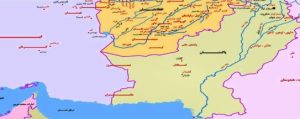
Figure 1: The Geographical Location of Quzdar (Qusdār) and Makran
In Persian poetry, Quzdar and Makran are frequently mentioned together. For example, Farrukhī, in his tribute to Amīr Ayāz Ūymāq and the homage paid to Mahmūd Ghaznavī (AH 387–421/997–1030), writes:
He bestowed upon him the wealth of the land of Bost
The tribute of the land of Makran and Quzdar.36ʿAlī ibn Jūlūgh Farrukhī Sīstānī, Dīvān-i Farrukhī Sīstānī, ed. Muhammad Dabīrʹsiyāqī (6th repr. ed., Tehran: Zavvār, 1380/2001), 162.
Elsewhere, in his panegyric to Mahmūd, he declares:
You rule from the banks of the Ganges to the Sea of Abaskun
You rule from the gates of Urgench to Quzdar and Makran.37Sīstānī, Dīvān-i Farrukhī Sīstānī, 257.
ʿAttār records that Rābiʿah’s family was of Arab descent, having settled in the region during the time of Abū Muslim. Given the existence of a desert known as Kaʿb’s Desert between Balkh and Taleqan, it is likely that the area was named after Kaʿb, Rābiʿah’s father.38Saʿīd Nafīsī, “Rābiʿah dukhtar-i Kaʿb” [Rābiʿah, daughter of Kaʿb], Īrān-i imrūz 1, no. 1 (1317/1938): 42-45. This could explain why Nafīsī identified her as having Arab ancestry.39Nafīsī, “Rābiʿah dukhtar-i Kaʿb”, 45. Altāf ʿAlī points out that ʿAwfī, in Lubāb al-albāb (Quintessence of hearts), attributes Kaʿb to Quzdar.40Muhammad ʿAwfī, Lubāb al-albāb [Quintessence of hearts], ed. Edward Browne, with an introduction and annotations by ʿAllāmah Muhammad Qazvīnī, trans. Muhammad ʿAbbāsī (Tehran: Mumtāz, 1361/1982), 2:61; Sultān Altāf ʿAlī, “Rābiʿah Quzdārī, Zan-i inqilābī” [Rābiʿah Quzdārī: The revolutionary woman], Dānish 52 (1377/1998): 126. Kaʿb was the leader of the Arabs during the Samanid period. However, when Quzdar is mentioned during the Ghaznavid era, there is no reference to Kaʿb or his successor, Hārith. This suggests that Kaʿb lived prior to the Ghaznavid period.
ʿAttār refers to Nasr ibn Ahmad II (d. AH 331/943), the Samanid ruler, as the “Sovereign of Bukhārā,” under whose reign Kaʿb served as the governor of Balkh.41Altāf ʿAlī, “Rābiʿah Quzdārī, zan-i inqilābī,” 128. According to Rizā Qulī Khān Hidāyat, Kaʿb was the ruler of several regions of Greater Khurasan, including Balkh, Bost, Qandahar, and Quzdar and was of Arab descent.42Hidāyat, Majmaʿ al-fusahā, 1:654. However, some scholars have contested this claim, proposing instead that Kaʿb was a Persian poet.43Idārahʹchī Gīlānī, Shāʿirān-i hamʿasr-i Rūdakī, 90–92. Helmut Ritter finds Hidāyat’s assertion highly dubious, arguing that Kaʿb was likely “a local ruler in Quzdar about whom nothing has been transmitted by the historians.”44Hilmūt Rītir [Helmut Ritter], Daryā-yi jān: Siyrī dar ārāʾ va ahvāl-i Shaykh Farīd al-Dīn ʿAttār-i Nayshābūrī [The ocean of the soul: A study of the ideas and life of Shaykh Farīd al-Dīn ʿAttār-i Nayshābūrī], trans. Mihrʹāfāq Bāybūrdī (3rd repr. ed., Tehran: Intishārāt-i Bayn al-Millalī-i al-Hudā, 1388/2009], 2:20. Originally published as Helmut Ritter, The Ocean of the Soul: Men, the World and God in the Stories of Farid al-Din ʿAttār (Leiden, Boston: Brill, 2003). Ritter further suggests that ʿAttār’s mention of Balkh as Kaʿb’s seat of power may be a later invention.45Ritter, Daryā-yi jān, 2:20. Following Ritter’s view, Shafīꜥī Kadkanī, in his annotations on the Ilāhīʹnāmah, also questions the historical authenticity of Kaʿb, noting that no such figure is recorded in the historical accounts of Balkh and its surrounding regions.46ʿAttār Nayshābūrī, Ilāhīʹnāmah, 696.
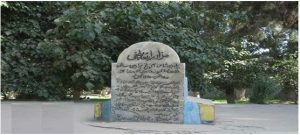
There are no historical sources that explicitly mention the location of Rābiʿah’s tomb. However, Qavīm suggests that since she passed away in Balkh, it is most likely that she was buried there. In AH 1344/1926, a grave discovered to the east of the mausoleum of Khvājah Muhammad Pārsā in Balkh was tentatively identified as hers, and a small structure was subsequently erected over it.47Qavīm, Tārīkh-i adabiyāt-i Darī, 149. Shamim Homayun, in an article highlighting the constructed nature of Rābiʿah’s mausoleum, contends that its emergence reflects a synthesis of state narratives and local traditions. Drawing upon cultural frameworks such as “site-making through dreams,” a concept rooted in Sufi traditions across the Islamic world, officials relied on visions and poetry to locate graves and inscribe meaning into the cultural landscape.48 Shamim Homayun, “Unearthing Rābiʿah’s Grave: Placemaking, Shrines, and Contested Traditions in Balkh, Afghanistan,” International Journal of Middle East Studies 55, no. 1 (2023): 3.
The Dawn of Persian Women’s Poetry
Rābiʿah’s poetry marks the beginning of the literary history of Persian-speaking women. She is believed to be the first woman to compose poetry in Dari Persian—or, at the very least, the earliest whose verses have survived.49Nafīsī, “Rābiʿah dukhtar-i Kaʿb,” 42. In a similar vein, Gilbert Lazard observes that “Rābiʿah of [Qusdār] was the first poetess of the Persian language and the author of love-poems of a touching sincerity.”50Zhīlbir Lāzār [Gilbert Lazard], “Zuhūr-i zabān-i adabī-i Fārsī-i nawīn” [The rise of the New Persian literary language], trans. Tīmūr Qādirī, in Tārīkh-i adabiyāt-i kuhan va adabiyāt-i Īrānī-i miyānah [The history of ancient literature and Middle Persian literature] (Tehran: Mahtāb, 1391/2012), 339. Originally published as Gilbert Lazard, “The Rise of the New Persian Language,” The Cambridge History of Iran, ed. R. N. Frye (Cambridge: Cambridge University Press, 1975), 4:595–632. Hermann Ethé also identifies her as the earliest Iranian woman poet.51Ethé, Tārīkh-i adabiyāt-i Fārsī, 39. According to Muhammad Taqī Bahār, even prior to the widespread dissemination of Persian under the Seljuks from Aleppo to Kashgar, and before it attained such prominence in Baghdad that even the Abbasid caliphs began to take interest in it, Rābiʿah Quzdārī, the daughter of Kaʿb and a contemporary of the Samanids, was composing poetry in Persian.52Bahār, Sabkʹshināsī, 110.
Rābiʿah occupies a foundational place in the early canon of Persian literature, some renowned modern scholars recognize her as a significant literary figure in her own right. Badiʿ al-Zamān Furūzānfar includes her among the great figures of Iranian poetry, listing her alongside Firdawsī.53 Similarly, Nafīsī asserts that the emergence of Persian poetry in the AH 4th/10th century can be attributed to the contributions of poets such as Rūdakī and his contemporaries, including Rābiʿah Quzdārī.54Nafīsī, “Rābiʿah dukhtār-i Kaʿb,” 42.
Rābiʿah is scarcely mentioned in biographical anthologies and literary histories. Her name is likewise absent from Javāhir al-ʿajāyib, Tazkirat al-nisāʾ (Jewels of wonder, Memoirs of women). Precise details regarding her birth and death remain unknown. The earliest explicit reference to her poetry appears in Tarjumān al-balāghah (Interpreter of eloquence), authored by Rādūyānī, who likely composed the text during the reign of Sultan Masʿūd Ghaznavī (AH 389–421/988–1030). Rādūyānī was the first to authoritatively preserve Rābiʿah’s verse, citing two couplets by her as an example of the rhetorical device known as iltifāt (apostrophe),55al-Rādūyānī, Tarjumān al-balāghah, 81. meaning shifts in address:
Would that my body could once more grasp the heart’s fate.
Would that my heart could again perceive the body’s state,
Would that I might escape from you in peace
Ah, alas! From where can such release be found?
As Shafīʿī Kadkanī notes, these two couplets are entirely consistent with the biographical accounts that ʿAttār attributes to Rābiʿah.56ꜥAttār Nayshābūrī, Ilāhīʹnāmah, 697. The second major work to mention Rābiʿah bint Kaʿb in the section titled “Zikr-i shuʿarā-yi Āl-i Nāsir” (Mention of the poets (under the rule) of the house of Nāsir) is Lubāb al-albāb, compiled in AH 618/1221 by ʿAwfī. He records her name as Rābiʿah bint Kaʿb Quzdārī, praises her poetry in both Persian and Arabic, and cites fourteen of her couplets. It appears that the earliest recorded information about Rābiʿah is found in this work. ꜥAwfī includes her among the poets of Sabuktigin dynasty,57ʿAwfī, Lubāb al-albāb, 548. a classification that may have influenced Hermann Ethé’s decision to list Rābiʿah among the panegyrists of Sultan Mahmūd Ghaznavī. Ethé further observes that only a few of her verses have survived, in which she offers praise for Mahmūd and some of his contemporaries.58Ethé, Tārīkh-i adabiyāt-i Fārsī, 39. In his description, ʿAwfī writes:
The daughter of Kaʿb, in her erudition, outshone the men of the world, and took pride in her distinction [literally, “she laughed at all the men of the world”]. A master of both realms and a sovereign of both expressions, she possessed command over Arabic verse and excelled in Persian poetry. Endowed with exceptional intelligence and a keen wit, she was perpetually enraptured by love and enamored with beauty. She was known as “the brass fly” (magas-i rūyīn). The reason for this epithet, lies in a poem she once composed:
They say rain fell upon Job’s head,
Locusts from the sky, with golden heads.
If golden locusts fell upon him for his patience,
Then surely a single brass fly should fall upon me.59ʿAwfī, Lubāb al-albāb, 548.
Shams al-Dīn Muhammad ibn Qays al-Rāzī is the third author to mention a verse by Rābiʿah in his work al-Muʿjam fī maʿāyīr ashʿār al-ʿajam (Compendium on the conventions of Persian poetry), written in AH 630/1233. In the first section on the art of prosody (ʿarūz), which consists of four chapters, the fourth chapter covers the fifteen poetic meters (buhūr), the five circles (dawāʾir), and the scansion of verses (taqtīʿ). In this chapter, while discussing the second variable circle and its four meters, al-Rāzī provides an example of the meter muzāraꜥ musaddas mukhannaq (mafʿūl fāʿilātun mafʿūlun),60al-Rāzī, al-Muʿjam fī maʿāyīr ashʿār al-ʿajam, 152. illustrating it with a couplet by Rābiʿah:
The beloved entered through my door, smiling
That graceful, fair-faced, sprightly little guest
Mafʿūl fāʿilātun mafʿūlun
Mafʿūl fāʿilātun mafʿūlun
No complete collection of poetry (dīvān) by Rābiʿah has survived, and her scattered verses have been compiled in later centuries. According to Mahmūd Mudabbirī, the extant poetry of Rābiʿah consists of seven ghazals, four couplets, two individual verses, and a total of fifty-five couplets.61Mahmūd Mudabbirī, Sharh va ahvāl-i shāʿirān-i bīʹdīvān [Biography and condition of poets without a dīvān] (Tehran: Pānivīs, 1370/1991), 73. In her compilation of Rābiʿah’s poetry, Sughrā Bānū Shikuftah has recorded forty-three couplets,62Sughrā Bānū Shikuftah, “Kulliyāt-i ashʿār-i Rābiʿah Quzdārī” [The complete works of Rābiʿah Quzdārī], Hilāl 114 (1350/1971): 11–13. though it appears she may not have had access to all available sources. While there is some uncertainty regarding the definitive attribution of all of Rābiʿah’s poems, according to Rūhangīz Karāchī “upon consulting the oldest available sources, such as the biographical dictionaries and poetry anthologies, sixty-one couplets of Rābiʿah’s poetry, including five ghazals, three individual verses, and thirteen quatrains, have been discovered.”63Rūhangīz Karāchī, Tārīkh-i shiʿr-i zanān [A history of women’s poetry] (Tehran: Pazhūhishgāh-i ʿUlūm-i Insānī va Mutālaʿāt-i Farhangī, 1394/2015), 141.
There is no consensus regarding the exact number of Rābiʿah’s surviving verses. As Saꜥīd Nafīsī has observed, her well-known ghazal beginning with “When the garden became a sanctuary for countless blooms / The meadow assumed the hues of Mānī’s Arzhang,” which is commonly attributed to her, has also been ascribed to Rūdakī and Adīb Sābir.64Nafīsī, Rūdakī, 373. However, in Mūnis al-ahrār (The free man’s companion), the ghazal is attributed to ʿĀʾishah Samarqandiyyah, known as ʿĀʾishah Maqriyyah, a renowned poet of the AH 6th/12th century.65Nafīsī, Rūdakī, 373. In addition, the second couplet of another ghazal, “His love once again ensnared me in its chains / And all my striving proved of no avail,” is attributed to Abū al-Hasan Āghājī in Asadī’s lexicon. Beyond the verses recorded in literary anthologies, Rābiʿah’s poetry is also preserved in various compilations and manuscript collections. Among these is a ghazal, of which only the opening two couplets are cited in Majmaʿ al-fusahā (Assembly of the eloquent):
The breeze scattered lilies, flowers, silver, and gold,
Oh, what a wind—may mercy on the wind unfold.
It etched the mark of Āzar’s idols on the water’s face,
And revealed Mānī’s magic’s trace.66Nafīsī, Rūdakī, 373.
The Representation of Rābiʿah in Mysticism and Sufism
Rābiʿah Quzdārī is mentioned in several mystical texts. Asrār al-tawhīd (Secrets of God’s oneness) is the earliest mystical work to quote four couplets from one of her romantic ghazals. These verses are quoted by Abū Saʿīd Abū al-Khayr (AH 357–440/967–1049), though her name is not explicitly mentioned. In the second chapter of Asrār al-tawhīd, a poignant episode is narrated:
The shaykh had a young son whom he loved dearly. When the child passed away and was taken to the cemetery, the shaykh personally laid him to rest. As the shaykh stepped out of the burial pit, tears welled in his blessed eyes, and he recited the following couplets:
One must gaze on ugliness and deem it fair
Taste bitter poison, and feign sweetness there
I stood defiant, blind to the thread
The more I pulled, the more it clenched instead67Muhammad ibn Munavvar, Asrār al-tawhīd fī maqāmāt al-Shaykh Abī Saʿīd [Secrets of God’s oneness in the letters of al-Shaykh Abī Saꜥīd], ed. Muhammad Rizā Shafīʿī Kadkanī (Tehran: Āgāh, 1366/1987), 1:193.
Another episode, recorded in the third chapter of Asrār al-tawhīd, recounts the following:
Our shaykh, may God sanctify his noble soul, turned to his esteemed son in the midst of the gathering. Khvājah Bū Tāhir said: “O Bā Tāhir! Rise to your feet!” Khvājah Bā Tāhir stood. The shaykh then took hold of his robe and drew him near, saying: “We have consecrated you and your descendants to the service of the Sufis. Take heed of this counsel we offer you”:
If you wish to see love through to the end,
You must learn to embrace what none would commend.
One must gaze on ugliness and deem it fair,
Taste bitter poison and feign sweetness there.68Muhammad ibn Munavvar, Asrār al-tawhīd fī maqāmāt al-Shaykh Abī Saʿīd, 1:343.
The mystical exegesis and esoteric interpretation of Abū Saʿīd on the poetry of Rābiʿah bint Kaʿb contributed to the creation of a mystic and ascetic for her in later tradition. Consequently, the Sufi image of Rābiʿah is prominently reflected in the works of ʿAttār and Jāmī. In the twenty-first chapter of Ilāhīʹnāmah, ʿAttār recounts Rābiʿah’s story in verse. According to him, following the death of her father, Rābiʿah fell in love with Baktāsh, a Turkish slave and military commander who was among the slaves of her brother Hāris. During this period of passionate love, she composed poetry. However, when the affair was discovered, her brother tragically executed.
Jāmī also mentions this story in the section titled “On the women mystics who reach the ranks of men” (Zikr al-nisāʾ al-ʿārifāt al-wāsilāt ilā marātib al-rijāl) in his Nafahāt al-uns (Breaths of fellowship):
Shaykh Abū Saʿīd Abū al-Khayr, may God sanctify his secret, remarked: “The daughter of Kaʿb was enamored with that slave, yet the elders unanimously agreed that what he says is not something that can be said about a created being. Her affairs must be elsewhere.” On one occasion, the slave suddenly seized the girl by her sleeve. She cried out, saying: “Is it not sufficient that I am with my God, where I am wholly absorbed? Why do you seek to exploit what I have disclosed to you?” Shaykh Abū Saʿīd concluded: “The words she spoke are not the sort that can be spoked about a mere creature.”69Mawlānā ʿAbd al-Rahmān ibn Ahmad Jāmī, Nafahāt al-uns min Hazrāt al-Quds [Breaths of fellowship from the holy presences], ed. Mahdī Tawhīdīʹpūr (Tehran: Mahmūdī, 1336/1957), 625.
Shafīʿī Kadkanī notes that Jāmī’s account draws primarily from ʿAttār, while the information provided by Rizā Qulī Khān Hidāyat is based on Nafahāt al-uns and Ilāhīʹnāmah. The details that ʿAttār conveys through Abū Saꜥīd do not appear in any of the latter’s surviving Maqāmāt works, and what Jāmī quotes in Nafahāt al-uns is undoubtedly derived from ʿAttār.70ʿAttār Nayshābūrī, Ilāhīʹnāmah, 697. On this basis, and following ʿAttār’s Ilāhīʹnāmah, Rizā Qulī Khān Hidāyat composed the narrative poem Gulistān-i Iram (The garden of Iram), which centers on Rābiʿah’s life and love story. In Majmaʿ al-fusahā, Hidāyat further portrays Rābiʿah as a mystic, describing her as “the peerless figure of her age, unparalleled across all eras, the possessor of both literal and metaphorical love, and the unrivaled champion in Persian and Arabic eloquence.”71Hidāyat, Majmaʿ al-fusahā, 1:820. Bertels contends that Rizā Qulī Khān Hidāyat’s account lacks historical reliability; nevertheless, the emergence of an extensive romance about Rābiʿah in the twelfth century CE attests to a deep and sustained engagement with her poetry.72Evgeniĭ Ėduardovich Bertelʹs Tārīkh-i adabīyāt-i Fārsī az kuhanʹtarīn rūzgār tā pāyān-i ʿasr-i Firdawsī [The history of Persian literature from the earliest times to the end of Firdawsī’s era], trans. Sīrūs Īzadī (Tehran: Hīrmand, 1374/1995), 242–43. Originally published as Evgeniĭ Ėduardovich Bertelʹs, Istorii͡a persidsko-tadzhikskoĭ literatury [History of Persian-Tajik literature] (Moscow, 1960).
The reflection and interpretation of Rābiʿah’s character and poetry within Sufism suggest that some Sufi poets may have conflated Rābiʿah Quzdārī, the poet, with Rābiʿah ʿAdavīyyah, the ascetic and mystic of the AH 2nd/8th century. Much of the integration of Rābiʿah Quzdārī into the domain of mysticism appears to originate from the words of Abū Saʿīd in Asrār al-tawhīd, although these references are themselves marked by ambiguity and interpretive license. Idārahʹchī Gīlānī, in refuting the idea that Rābiʿah was a Sufi, emphasizes that not only does ʿAwfī omit such a claim, but foundational Sufi texts such as Kashf al-mahjūb (Revelation of the hidden), al-Risālah Qushayrīyyah (Epistle of al-Qushayrī), and Tabaqāt al-Sūfiyyah (Generations of Sufis), are likewise silent on the matter. Even ʿAttār, in his Tazkirah al-awliyāʾ (Biographies of the saints), does not mention Rābiʿah, and his Ilāhīʹnāmah is more poetic narrative than historical documentation. In Hikāyat-i Rābiʿah (Rābiʿah’s tale), Rizā Ashrafʹzādah concludes that Abū Saʿīd’s Sufi disposition predisposes him to interpret any poetic utterance through a mystical lens; however, his interpretation does not necessarily reflect Rābiʿah own mystical perspective. Ashrafʹzādah further notes that the tale of Rābiʿah’s self-sacrifice in pursuit of pure, unconsummated love transforms her into a paragon of spiritual sincerity and chastity, an idealized image that lends itself to mystical interpretation.73Idārahʹchī Gīlānī, Shāʿirān-i hamʿasr-i Rūdakī, 89–90. Rizā Ashrafʹzādah, Hikāyat-i Rābiʿah (Tehran: Asātīr, 1383/2004), 23. Moreover, the shared name “Rābiʿah” among three women mystics—Rābiʿah Quzdārī, Rābiʿah ʿAdavīyyah, and Rābiʿah Shāmīyyah—all of whom spoke of love, may have further contributed to the perception of Rābiʿah Quzdārī as a mystic.74Ashrafʹzādah, Hikāyat-i Rābiʿah, 23.
The portrayal of Rābiʿah Quzdārī within mysticism appears to have been influenced by later interpretations that sought to align her with the broader Sufi tradition. Notably, mystics such as ʿAttār and Abū Saʿīd Abū al-Khayr may have characterized her as a mystic and Sufi to preserve her name and works and shield them from the scrutiny of narrow-minded individuals. In ʿAttār’s rendition, Rābiʿah symbolizes the spirit (rūh)—joyous in its union with the Beloved—while Baktāsh represents the carnal soul or lower self (nafs). For the carnal soul or lowers self to ascend from the state of ammārah (the commanding [toward evil] soul) to the state of mutmaʾinnah (the peaceful soul), it must pursue Rābiʿah through ascetic discipline.75Nāhīd Jaʿfarī, “Bayān-i ramzī-i ʿAttār Nayshābūrī dar sharh-i nukāt va daqāʾiq-i ʿirfānī-i dāstān-i Rābiʿah va Baktāsh” [The symbolic expression of ʿAttār Nayshābūrī in explaining the subtle and mystical aspects of the story of Rābiʿah and Baktāsh], ʿIrfān-i Islāmī 13, no. 52 (1393/2014): 255.
According to Safā, the claim by some Sufi poets that Rābiʿah was the earliest poet in Iran with a Sufi inclination is mistaken. He contends that this misattribution appears to stem from a confusion between her narrative and that of another ascetic woman bearing the same name. Rābiʿah’s poetry, marked by intense expressions of (earthly) love, does not conform to the foundational principles of Sufism. Nevertheless, it is plausible that her verses were used to inspire the hearts and intensify the longing of spiritual seekers.76Safā, Tārīkh-i adabiyāt dar Īrān, 2:359. Approaching the matter from a different angle, Sayyid Mahdī Zarqānī argues that the predominance of a patriarchal cultural tradition has obscured Rābiʿah’s historical identity and literary voice, enveloping them in layers of myth. He suggests that her identity was conflated with that of Rābiʿah ʿAdavīyyah. This merging, Zarqānī contends, served a strategic purpose: to reinterpret the transgressive elements of Rābiʿah Quzdārī’s poetry and life story within the acceptable parameters of mystical love.77Sayyid Mahdī Zarqānī, Tārīkh-i adabī-i Īrān va qalamʹraw-i Fārsī [History of Iranian literature and the Persian realm] (2nd repr. ed., Tehran: Sukhan, 1390/2011), 378.
The influence of Rābiʿah is discernible in a ghazal by Jalāl al-Dīn Rūmī. According to Mazāhir Musaffā, the following renowned verses of Mawlānā are inspired by Rābiʿah’s two couplets:
O Lord, to that unkind beloved of mine,
Send him a match—coquettish, sly, and daring in kind.
So he may know how my dark nights pass,
Give him love’s sorrow, give him love, and give it vast.
The following are the couplets by Rābiʿah that are believed to have influenced the verses by Mawlānā:
My prayer is this: May God make you fall in love
One as harsh and unkind as you’re guilty of
So you may know love’s pain, its wound and its sorrow
And in separation twist, to grasp my worth tomorrow78Musaffā, Pāsdārān-i sukhan, 47–48.
Beyond the Sufi tradition, several biographers have also recognized Rābiʿah as a mystic. For example, ʿAlāmah Shiblī Nuʿmānī observes that “Rābiʿah entered the circle of Sufism, and consequently, her name has been included among the ranks of the Sufis.”79ʿAlāmah Shiblī Nuʿmānī Hindī, Shiʿr al-ʿajam [Persian poetry], trans. Sayyid Muhammad Taqī Fakhr Dāʿī Gīlānī, (2nd repr. ed., Tehran: Dunyā-yi Kitāb, 1363/1984), 1:25.
Stylistics of Rābiʿah’s Poetry
The phonetic, linguistic, literary, and intellectual style of Rābiʿah’s poetry is situated within the Khurāsānī style. In Sabk-i Khurāsānī dar shiʿr-i Fārsī (The Khurāsānī style in Persian poetry), Muhammad Jaʿfar Mahjūb, cites Rābiʿah’s works as examples for the use of various rhetorical figures and stylistic devices, including mulammaʿ (literally, “polished” or “of various colors,” macaronic verse, a type of poetry in which mixed languages are used), tashbīh-i muzmar (implicit or implied simile, a rhetorical figure where the similarity between two things is not explicitly stated, but rather implied through the use of imagery and context), irsāl al-masal (proverbial expression, a poetic technique of introducing or “sending” a proverb into a verse), iltifāt (apostrophe), jamʿ va tafrīq (combining and differentiating, a device in poetry where meaning is shaped either by identifying a trait that links multiple elements together by emphasizing the differences between them, or by first listing the elements and then outlining their respective qualities), the syntactical phenomenon of employing two prepositions for one complement, the diminutive suffix -ak used for endearment (in Persian, the suffix “َک,” conveys intimacy, affection, or tenderness toward the modified noun(, the art of the ghazal, and some of the earliest instances of rhyme in the opening sections of Persian poetry.80Muhammad Jaʿfar Mahjūb, Sabk-i Khurāsānī dar shiʿr-i Fārsī: Barʹrasī-i mukhtasāt-i sabkī-i shiʿr-i Fārsī az āghāz tā pāyān-i qarn-i panjum-i Hijrī [The Khurāsānī style in Persian poetry: An examination of the stylistic characteristics of Persian poetry from the beginning to the end of the fifth century Hijri] (Tehran: Firdaws, 1345/1966), 47, 50, 57, 64, 67, 72, 80, 88, 94, 95, 107, 116. For example, the stylistic use of two prepositions for a single complement is evident in the following verse by Rābiʿah:
به عشقت اندر، عاصی همینیارم شد
به دینم اندر، طاغی همیشوی به مثل
In love for you, I dare not be rebellious
Yet in my faith, you become the rebel, it seems81Mudabbirī, Sharh va ahvāl-i shāʿirān-i bīʹdīvān, 75.
Similarly, the use of -ak to convey either affectionate diminutive or mild derision is seen in this line:
ترک از درم درآمد خندانک
آن خوبروی چابک مهمانک
The beloved entered through my door, smiling
That graceful, fair-faced, sprightly little guest82Mudabbirī, Sharh va ahvāl-i shāʿirān-i bīʹdīvān, 75.
Another instance is the use of implicit simile in the following verse:83Mudabbirī, Sharh va ahvāl-i shāʿirān-i bīʹdīvān, 74.
If the cloud has gone mad, then why
Does it offer the morning wine to the wind in a golden cup?
In Rābiʿah’s poetry, the use of rhetorical devices such as talmīh (allusion), murāʿāt-i nazīr or tanāsub (literally, “the observance of the similarity” and “congruity,” which involve bringing together homogeneous things within the frame of a couplet), tashbīh-i mahsūs bih mahsūs (a simile of the perceptible to the perceptible), jamʿ va tafrīq, alongside other stylistically simple figures of speech, is readily discernible. The themes and motifs explored in her verses are consistent with those of her contemporaries and, in keeping with the Khurāsānī style, are notably free from esoteric vocabulary and technical terminology drawn from fields such as astronomy and medicine. In addition to the simplicity and clarity of both thought and expression, her poetry is characterized by delicacy, vivid descriptions of nature, an intense longing born of love, and an elegant use of meter. However, it is devoid of wisdom (hikmat) or mysticism in the formal sense.84Safā, Tārīkh-i adabiyāt dar Īrān, 308, 403–405. Herman Ethé categorizes Rābiʿah’s poetry as non-courtly, associating it with the expressive traditions of the common people.85Ethé, Tārīkh-i adabiyāt-i Fārsī, 28. As Khurāsānī poetry is grounded in tangible, accessible realities and relatable experiences, Rābiʿah’s compositions are rooted in a sincere, human love. While later mystics such as Abū Saʿīd and ʿAttār cloaked her poetry in mystical framework, these Sufi interpretations should not be uncritically generalized or regarded as definitive.
In examining the stylistic features of Rābiʿah’s poetry, particular attention should be given to her use of mulammaʿ, involving the blending of Arabic and Persian. ʿAwfī, in Lubāb al-Albāb, presents the following a semi-structured example of such a mulammaʿ composed by her:
شاقنی نایــــــــــــــح من الاطیار
هاج ســـــــقمی و هاج لی تذکاری
دوش بر شاخک درخت آن مرغ
نوحه می کرد و می گریست به زاری
قلت للــــــطیر: لم تنوح و تبکی
فی دجــــــی اللیل و النــجوم دراری
من جــدایم ز یار از آن می نالم
و چه نالی که با مســــــــــاعد یاری؟
من نگویم چو خون دیده بــبارم
تو چه گویی چو خون دیده نبــاری؟
The cry of a mourning bird has stirred my pain
And awakened my sickness and memories again.
Last night, upon the tree’s slender branch,
That bird was wailing and weeping in sorrow.
I said to the bird: Why do you wail and weep
In the darkness of night, while the stars are shining?
I lament because I am parted from my beloved
But why do you mourn, when you have your companion’s support?
I do not claim to weep tears of blood,
But what do you say, who do not shed such tears? 86ʿAwfī, Lubāb al-albāb, 549.
These bilingual lines, characterized by a romantic theme and drawing on the stylistic conventions typical of the AH 4th/10th century, evoke the tone and atmosphere of the formative period of Persian poetry. The verse is shaped by direct expression and emotional resonance grounded in lived experience, making a restrained use of rhetorical figures and largely avoiding elaborate ornamentation. Rābiʿah’s composition is a semi-structured mulammaʿ (in which the alternation of languages is not strictly regular or systematic), and scholars such as Jalāl al-Dīn Humāyī, Safā, and Mudabbirī attribute the first fully structured mulammaʿ in Persian literary history to Shahīd Balkhī (d. AH 325/937).87Jalāl al-Dīn Humāyī, Funūn-i balāghat va sanāʿāt-i adabī [The art of rhetoric and literary devices] (2nd repr. ed., Tehran: Tūs, 1363/1984), 146; Safā, Tārīkh-i adabiyāt dar Īrān, 1:356; Mudabbirī, Sharh va ahvāl-i shāʿirān-i bīʹdīvān, 27. Nevertheless, some researchers consider the mulammaʿ to be one of Rābiʿah’s own innovations, identifying her as the earliest poet to experiment with this hybrid form.88Muhammad ʿAlī Kishāvarz Sadr, Az Rābiʿah tā Parvīn [From Rābiʿah to Parvīn] (Tehran: Kāvyān, 1334/1955), 126. Others go still further, contending that she may have been the very first Persian poet who originated the mulammaʿ form of poetry altogether.89Shikuftah, “Rābiʿah Quzdārī,” 8.
According to Muhammad ʿAlī Kishāvarz Sadr, Rābiʿah’s mulammaʿ was perfected three centuries later by Saʿdī.90Kishāvarz Sadr, Az Rābiʿah tā Parvīn, 127. Riyāz al-shuʿarā also notes that Rābiʿah “had a taste for both Arabic and Persian poetry and wrote many exquisite verses in both languages.”91Vālih Dāghistānī, Tazkirah-ʾi riyāz al-shuʿarā, 813. In her study of the influence of Arabic on Persian and the blending of the two languages in the early development of Persian literature, Karāchī analyzes five of Rābiʿah’s ghazals and concludes that out of one hundred and seventy seven words, one hundred are Persian, seventy three are Arabic, and four are muʿarrab (word that have undergone Arabicization). This is understandable, given that Persian had not yet reestablished its former status amid the dominant cultural and literary prestige of Arabic during that period.92Karāchī, Tārīkh-i shiʿr-i zanān, 132.
Is Rābiʿah’s Poetry “Women’s Poetry”?
At first, one might ask whether the term “woman” refers to a historical woman or to a modern one. More critically, should “women’s poetry” be assessed by contemporary criteria, or should it be examined within its own historical context? The more nuanced response acknowledges that while environmental, historical, and sociological conditions have shaped women differently across eras, certain physiological, biological, and psychological constants have contributed to shared traits among women that transcend specific temporal or geographical settings. Similarly, in the realm of literature or poetry, there exist overarching features that allow for the identification of “women’s poetry” as a transhistorical category. As some scholars have noted, distinct linguistic patterns, affective expressions, and psychoanalytic dimensions characterize much of what can be recognized as “women’s poetry.”93Karāchī, Tārīkh-i shiʿr-i zanān, 113–36.
On the other hand, differentiating between “women’s language” and “men’s language” is not always straightforward and often invites ambiguity and oversimplification. Nevertheless, certain markers may indicate a “feminine style” or “feminine mode of expression.” As Mahmūd Futūhī contends, “while it is true that there is no such thing as a ‘women’s language,’ we cannot deny the existence of a ‘women’s speech.’ Feminine discourse is marked by distinctive features at the phonetic, lexical, syntactic, pragmatic, and rhetorical level.”94Mahmūd Futūhī Rūdmaʿjanī, Sabkʹshināsī: Nazariyahʹhā, rūykardʹhā va ravishʹhā [Stylistics: Theories, approaches, and methods] (2nd repr. ed., Tehran: Sukhan, 1390/2011): 426. Gender influences both the style and content of language, affecting phonetic patterns, lexical choices, grammatical constructions, semantic nuances, poetic meter, and communicative strategies. A “feminine style” may be identified with emotive and expressive vocabulary; syntactically, through vocatives and repetition; and rhetorically, through a preference for similes and metaphors.
This raises a critical question: does Rābiʿah’s poetry exhibit a distinctly feminine structure, sensibility, and content, or is it simply poetry authored by a woman? On this issue, two divergent perspectives emerge:
- The Absence of a Distinctly Feminine Voice in Rābiʿah’s Poetry
Some scholars of women’s poetry maintain that the works of female poets prior to the Constitutional Revolution lack a distinctly feminine voice but rather operates within a predominantly masculine literary paradigm. Shamīsā observes that many female poets have mirrored both the internal and external worlds through a male gaze, adopting male-centric themes and emotional frameworks, romanticizing features such as dark tresses, delicate physiques, and the idealized beloved in a manner indistinguishable from their male counterparts. He argues that Persian literature has long been deprived of a genuinely feminine perspective, an introspective and external worldview as seen through discerning women’s eyes. In his view, a truly feminine gaze upon the world has yet to be meaningfully articulated in the Persian literary tradition.95Sīrūs Shamīsā, Nigāhī bih Furūgh Farrukhʹzād [A glance at Furūgh Farrukhʹzād] (3rd repr. ed., Tehran: Murvārīd, 1376/1997), 285. Similarly, Pigāh Ahmadī notes:
One might argue that prior to the Constitutional Revolution, the phrase ‘linguistic and thematic subjugation’ accurately encapsulates the state of Iranian women’s poetry. Despite the considerable number of female poets and the widespread inclination toward poetic expression across various social strata, the constraining ideologies that governed their thought are palpably present in their work. Moreover, the poetic language employed by women during this period is markedly masculine, imitative, and devoid of individuality—a language that, fundamentally, fails to encompass any of the ontological layers or gender-specific attributes of women, even at the sensory or emotional level.96Pigāh Ahmadī, Shiʿr-i zan az āghāz tā imrūz [Women’s poetry from the beginning to the present] (Tehran: Chashmah, 1384/2005): 11.
On this basis, Hijāzī contends that Rābiʿah’s poetry does not exhibit a distinctly feminine sensibility.97Banafshah Hijāzī, Zanān-i muʾaddab [Women of eloquence] (Tehran: Qasīdahʹsarā, 1396/2017), 96. Similarly, Inām Allāh Alburzī contends that while Rābiʿah articulates her emotional states with remarkable candor, her poetry lacks the imagery, vocabulary, and emotive nuances that would signify a distinctively feminine voice. He suggests that if the poet’s name were removed, little in her verses would reveal that they were composed by a woman.98Inām Allāh Alburzī, Nigarishī bar shiʿr-i zanān az ibtidā-yi shiʿr-i Fārsī tā āghāz-i Inqilāb-i Islāmī [A survey of women’s poetry from the beginning of Persian poetry to the onset of the Islamic Revolution] (Master’s thesis, Shahid Chamran University of Ahvaz, 1375/1996), 33–34. Elsewhere, Alburzī reinforces this perspective by asserting that Rābiʿah laid the foundation for an imitative and non-feminine emotionality. The surviving body of her work, he argues, does not reflect a woman’s emotional world. Although love and romantic longing dominate her poetic themes, her extant work, he argues, does not reflect the emotional world of a female lover. Notably, there is not a single verse that unambiguously portrays the affection of a woman directed toward a male beloved.99Alburzī, Nigarishī bar shiʿr-i zanān az ibtidā-yi shiʿr-i Fārsī tā āghāz-i Inqilāb-i Islāmī, 51.
- The Presence of a Feminine Voice in Rābiʿah’s Poetry
Rābiʿah’s poetry attests to the fact that, even within the traditionally male-dominated sphere of Persian literary history, women found ways to articulate their emotions and assert their voices. From the earliest stages of Persian poetry through the end of the AH 6th/12th century, despite the prevailing patriarchal context, there were women poets who did not shy away from articulating their feelings and desires. Although only a limited corpus of their work has survived, a distinctly feminine sensibility is discernible within it. The poetry of this period reflects love not merely as an abstract literary theme but emerges as a lived experience, voiced by women who, perhaps for the first time, narrated it through the lens of their own emotional and gendered subjectivity. Their poetry, therefore, becomes a site for articulating female identity and individuality. Among these early poets, figures such as Rābiʿah—often considered a pioneer of women’s poetry in Persian—and Mahsatī Ganjavī stand out for composing verses in praise of their male beloveds. Rābiʿah distinguishes herself as a poet who loved with unrestrained passion and, according to tradition, ultimately sacrificed her life for that love. Her surviving verses are delicate and poignant, and their prevailing tone is lyrical and emotional. In Rābiʿah’s poetry, one encounters raw emotional expression: romantic longing, the anguish of love, protest and lamentation, ecstasy, union and separation, curses and self-reproach—all conveyed with striking candor. As Bertels notes, “her poetry clearly reveals its feminine origin, and it is imbued with a warmth and sincerity that distinguish it from the conventional romantic ghazals.”100Bertels, Tārīkh-i adabiyāt-i Fārsī, 224.
Zarqānī, drawing on verses such as the following, underscores the feminine quality of Rābiʿah’s poetry:
My prayer is this: May God make you fall in love
One as harsh and unkind as you’re guilty of
So you may know love’s pain, its wound and its sorrow
And in separation twist, to grasp my worth tomorrow
He writes: “The personal and unimitated nature of the experience captured in these verses is one of the hallmarks of their artistry. Her poetry makes clear that such qualities are no accident. The curse, though simple, is piercing and it is this aching tenderness that lends her verse its feminine tone.”101Zarqānī, Tārīkh-i adabī-i Īrān va qalamʹraw-yi Fārsī, 379. From this perspective, which affirms the feminine distinctiveness of Rābiʿah’s poetry, one may begin to identify certain features that characterize its gendered voice. These elements can be categorized into three primary domains, which are as follows:
- Linguistic Domain
Rābiʿah skillfully employs the linguistic resources of Persian poetry, including vocabulary, suffixes, prepositions, and idiomatic expressions, to describe the male beloved in her verse. Her diction frequently features sorrowful and grief-laden expressions, reflecting the emotional depth of a woman who, within the constraints of a patriarchal society—a society in which themes of joy and celebration traditionally dominate poetic expression—dares to make her voice heard. The gentle and nuanced quality of her language exemplifies the stylistic hallmark of women’s poetry. The lyrical, feminine verse written in such a tender style is imbued with emotion and love, which, in separation from the beloved, manifests as sorrowful laments of a woman.102Karāchī, Tārīkh-i shiʿr-i zanān, 239. The words and combinations Rābiʿah employs to express such themes include the pain of love, being entangled in love, tears of blood, lamenting, burning in love like fish burning in a pan, eating one’s heart out, the lover’s ruby-cheek turned to straw-pale, shedding tears at cruel taunts, rebellious in love, hellish torment, longing, woe, alas, restlessness, unappealing, ugly, wrath, burning, cruelty, oppressor, separation, unkind, heartache, and emotional burden. Her imagery includes vivid metaphors such as Majnūn’s tearful eye abiding in the heart of a cloud, seeking refuge in the tulip, a body reduced to a hoop, and so on.
Linguistically, the use of the suffix -ak as a marker of endearment and diminutiveness functions as a distinctive feature of women’s poetry. Its frequency may be taken as an indicator of a feminine stylistic register. Diminutives inherently carry emotional nuance and convey a tone of intimacy and affection. Robin Lakoff, in outlining fourteen characteristics of feminine language, highlights the frequent use of diminutive forms as central to this mode of expression.103Futūhī Rūdmaʿjanī, Sabkʹshināsī, 398. In this light, Rābiʿah makes deliberate use of the -ak suffix in her portrayal of the male beloved, often accentuating words ending in -ak to enhance affective resonance. For instance:
The beloved entered through my door, smiling
That graceful, fair-faced, sprightly little guest104Naʿīmah al-Sādāt Ārang, Siyr-i digargūnī-i zībāyīʹshināsī-i shiʿr-i zanān [The evolution of aesthetics in women’s poetry] (PhD diss., University of Mazandaran, 1400/2021), 80.
In this verse, Rābiʿah combines the diminutive suffix -ak with two other terms ending in -k—“Turk” (the beloved) and “chābūk” (sprightly) —to soften the image of her beloved Baktāsh, a military commander, imbuing the scene with warmth, tenderness, and emotional immediacy.105al-Sādāt Ārang, Siyr-i digargūnī-i zībāyīʹshināsī-i shiʿr-i zanān, 79. Through this linguistic strategy, she transforms what might have been a forceful or imposing entrance into a moment characterized by affectionate familiarity. Beyond the words khandānak (smiling) and mihmānak (little guest) in the cited couplet, Rābiʿah’s corpus contains additional instances where she skillfully exploits this expressive potential of language, such as:
کاشک تنم بازیافتی خبر دل
کاشک دلم بازیافتی خبر تن
کاشک من از تو برستمی به سلامت
آی فسوسا کجا توانم رستن
Would that my body could once more grasp the heart’s state.
Would that my heart could again perceive the body’s state,
Would that I might escape from you in peace
Ah, alas! From where can such release be found?106Mudabbirī, Sharh va ahvāl-i shāꜥirān-i bīʹdīvān, 75.
دوش بر شاخک درخت آن مرغ
نوحه می کرد و می گریست به زاری
Last night, upon the tree’s slender branch,
That bird was wailing and weeping in sorrow.107Mudabbirī, Sharh va ahvāl-i shāꜥirān-i bīʹdīvān, 76.
Rābiʿah’s language aligns closely with what may be terms the “soft pole” (qutb-i narm). She makes less use of words that require strong vocal stress in their pronunciation. Consequently, the structure of her poetry lacks the epic harshness and is instead dominated by lyrical and sensual imagery.108Zarqānī, Tārīkh-i adabī-i Īrān va qalamʹraw-yi Fārsī, 379.
- Aesthetic Domain
Women’s poetry is often characterized by lyrical and emotional qualities, frequently employing soft and melodious musicality to convey personal and affective experiences. In lyrical poetry, the rhythm of the words is gentle and soothing, effectively conveying the poet’s emotional essence to the reader. During the early centuries of Persian poetry, the metrical system was still evolving, and Rābiʿah, like other poets of the AH 4th/10th century, played a significant role in this development, even pioneering new metrical forms.109Kishāvarz Sadr, Az Rābiʿah tā Parvīn, 127. Despite the limited number of surviving works, Rābiʿah’s poetic genius is unmistakable. Shams Qays al-Rāzī notably cited one of her verses as a prime example of a metrical form.110Qays al-Rāzī, al-Muʿjam fī maʿāyīr ashʿār al-ʿajam, 152. Rather than using heavy, cumbersome meters, Rābiʿah favored short, light, flowing, and melodious meters that harmonize with her feminine emotions and sentiments. For example, her ghazal beginning with “You make me endure the trials of love with deceit” is composed in the meter mafāꜥilun faʿlātun mafāꜥilun faʿalun, a smooth and gentle rhythm from the mujtass metrical system. Similarly, the poem beginning with “O night-wind, carry my message to my beloved” employs the meter mafāꜥīlun mafāꜥīlun mafāꜥīlun mafāꜥīlun. The recurring verb “bar” (carry) at the end of each hemistich imparts a natural softness that complements the lyrical quality of the verse. This meter is exquisitely suited to love letters and may well be the most fitting choice for Rābiʿah’s own romantic correspondence.111Pūhandvāl Muhammad Nāsir Rahyāb, “Naqd-i zanʹmadārānah-ʾi shiʿr-i Rābiʿah Balkhī” [A woman-centered critique of Rābiʿah Balkhī’s Poetry], Ghālib 2 (1394/2015): 10–11. One of Rābiʿah’s quatrains, beginning with “Would that my body could once more grasp the heart’s state” is composed in the muftaʿilun faʿalāt muftaʿalun faʿ meter, categorized under the munsarih system. It is melodic, smooth, and pleasing to the ear.112Munsarih (“flowing and easy moving”) is one of the meters with variable feet (meters subject to alteration). Its original form is derived from four repetitions of mustafʿilun mafʿūlāt per line. The intact (pure) form of this meter is not used in practice, but its altered forms (zihāf) are varied and are commonly used as maftaʿilun fāʿilun or maftaʿilun fāʿilāt. The munsarih meter conveys a sense of softness, lightness, and gentleness. Mujtass (“uprooted”), in the terminology of Arabic prosody, is one of the meters with varied feet (meters subject to variation). Its original weight is derived from repeating mustafʿilun fāʿilātun four times in each line. Its altered forms (zihāf) are used as mafāʿilun faʿilātun or mafāʿilān fāʿilātun, among others. This meter is famous for its speed and special rhythmic movement, and it is popular in joyful, lively, and dance-like poetry. A sense of lightness and gentleness is also felt from this meter.
In terms of poetic form, Rābiʿah’s experimentation with the ghazal form, which provides a fitting framework for lyrical poetry and further enhances the distinctly feminine character of her poetry. Her most famous surviving poem, composed in the ghazal form, is a romantic piece that embodies this lyrical and emotive quality.
His love has once again ensnared me,
All my efforts have proven useless.
Love is a sea with no visible shore,
How can you swim across it, O wise one?113Mudabbirī, Sharh va ahvāl-i shāʿirān-i bīʹdīvān, 74.
One of the critical approaches to understanding women’s poetry is the analysis of rhetorical figures.114Karāchī, Tārīkh-i shiʿr-i zanān, 239. Women poets have generally employed fewer rhetorical devices in their poetry, particularly metaphors, compound creation, and descriptive language. Despite this tendency, Rābiʿah manages to skillfully utilize the aesthetic potentials of the Persian language. In the realm of aesthetics in Rābiʿah’s poetry, simile and metaphor are the most salient rhetorical devices. Her similes, in particular, often conform to the pattern of comparisons between perceptible elements, which is termed tashbīh-i mahsūs bih mahsūs (“simile of the perceptible to the perceptible”).
One of the most distinctly feminine verses of Rābiʿah’s corpus is one in which the poet metaphorically compares her lips or cheeks to ruby. The phrase “my ruby hue” is undoubtedly a feminine metaphor—arguably the first instance in Persian literary history where a woman poet uses such imagery. This serves as the strongest evidence against the notion that Rābiʿah’s poetry lacks a distinctly feminine voice:
Your lips115In the edition by Mudabbirī which serves as the basis for our study, the phrase appears as labkād but in the variant manuscripts, it is recorded as lab va kām (“lip and palate”). See Mudabbirī, Sharh va ahvāl-i shāʿirān-i bīʹdīvān, 76. are like honey, your face like the moon,
Your cheeks are tulip-petals, your hair is black as night.
The color of those tulip-like cheeks of yours
Has turned my ruby hue into the color of straw.116Mudabbirī, Sharh va ahvāl-i shāʿirān-i bīʹdīvān, 76.
On the other hand, another noteworthy verse that reveals a distinctly feminine sensibility is the following, in which Rābiʿah uses a vivid simile to liken the intensity of her passion to “a fish burning in the pan”:
You are like a fish, and I burn like a fish in the pan
The sorrow of your love is not enough; you have added cruelty from afar117Mudabbirī, Sharh va ahvāl-i shāʿirān-i bīʹdīvān, 75.
In other verses, Rābiʿah continues to use the rhetorical figure of simile, specifically the comparison of perceptible-to-perceptible elements, to depict the physical beauty of her male beloved in the following manner:
Your lips are like honey, your face like the moon,
Your cheeks are tulip-petals, your hair is black as night.
God’s faith is undone by
My obsession with those moon-like cheeks.
Thirty-two hidden pearls
Lie beneath two tulip-petal lips—ah!118Mudabbirī, Sharh va ahvāl-i shāʿirān-i bīʹdīvān, 74.
The principal rhetorical device in Rābiʿah’s poetry is metaphor, and her themes of compassion, nature, and love are built upon it. In the following verses, her themes are constructed through metaphorical expression:
The morning breeze carried no musk from Tibet
Then how did the world become filled with such fragrance?
A teardrop, finding shelter in the tulip
Remained, like wine, in a ruby-red cup119Mudabbirī, Sharh va ahvāl-i shāʿirān-i bīʹdīvān, 74.
Of the notable aesthetic features of women’s poetry is the use of color-rich vocabulary. Female poets, more so than their male counterparts, rely on chromatic language and visual patterning to articulate and evoke emotion, set the tone, and convey layered meaning. This feature is also evident in Rābiʿah’s poetry, where she employs color imagery in references to grass, flowers, garments, and even the forms and patterns of fire, among others. Such use contributes to the distinct stylistic signature of her poetry. This tendency is illustrated in the following example:
When the garden became a sanctuary for countless blooms
The meadow assumed the hues of Mānī’s Arzhang
Perhaps Majnūn’s eyes are in the clouds
For the roses have taken on the hue of Laylī’s face
Like a monk dressed in a blue robe,
Perhaps the violet has embraced the Christian faith120Mudabbirī, Sharh va ahvāl-i shāʿirān-i bīʹdīvān, 74.
In another extant poem, she writes:
It etched the mark of Āzar’s idols on the water’s face,
And revealed Mānī’s magic’s trace.
I fear the fragrant flower will lose its color—
For this tattletale dawn will tear away its veil with the wind.
It seems, for every unworthy eye,
The wind has unveiled the bride of the garden.121Mudabbirī, Sharh va ahvāl-i shāʿirān-i bīʹdīvān, 74.
- Conceptual Domain
In Persian literature, although women poets have engaged with didactic, mystical, and panegyric genres, their poetry tends to favor emotional themes, often marked by a refined romantic sensibility and an embodiment of feminine affect. In contrast, male poets have more frequently explored epic, instructional, and mystical genres, transforming poetry into a domain of pride (heroism), pedagogy, and spiritual exploration. Women, by comparison, have turned to poetry to express emotion, thought, and sentiment.122Karāchī, Tārīkh-i shiʿr-i zanān, 126. In light of this distinction and based on the surviving poems attributed to Rābiʿah, her poetry, characterized primarily by lyrical and romantic themes, may be regarded as distinctly feminine. While her poetic repertoire was not confined exclusively to motifs of love and lyricism, the extant verses are largely cast in the ghazal form and exhibit a pronounced emphasis on romantic expression. Rābiʿah appears to have favored themes of love over those of moral instruction, mysticism, or warfare.
Some scholars maintain that until the AH late 5th and early 6th/11th and 12th centuries, the ghazal had primarily served as a vehicle for describing the physical beauty of the beloved. In contrast, Rābiʿah bint Kaʿb Quzdārī is often credited as the first poet to articulate the very nature and emotional reality of love itself.123Ashrafʹzādah, Hikāyat-i Rābiʿah, 24. Love emerges as the central motif in her poetry, conveyed either through intimate depictions of romantic states or in whispered dialogue with the beloved. As Shamīsā notes, both Rābiʿah and Mahsatī Ganjavī dared to express their love for men openly.124Shamīsā, Nigāhī bih Furūgh Farrukhʹzād, 224. This is a bold literary gesture in their cultural context. From this perspective, Rābiʿah’s poetry may rightly be described as feminine. The following lines exemplify these themes:
His love has once again ensnared me,
All my efforts have proven useless.
Love is a sea with no visible shore,
How can you swim across it, O wise one?125Mudabbirī, Sharh va ahvāl-i shāʿirān-i bīʹdīvān, 74.
Elsewhere, Rābiʿah conveys the burning anguish of love in the following terms:
Not once did you show me a moment of care,
Nor think of this heart in its deep despair.
We drank the bitter cup for you in pain,
We died for love, but our deaths were in vain.126Mudabbirī, Sharh va ahvāl-i shāʿirān-i bīʹdīvān, 75.
Rābiʿah depicts separation and the pain it entails in a manner that is distinctly feminine—evocative, emotionally charged, and deeply sorrowful:
I lament because I am parted from my beloved
But why do you mourn, when you have your companion’s support?
I do not claim to weep tears of blood,
But what do you say, who do not shed such tears? 127Mudabbirī, Sharh va ahvāl-i shāʿirān-i bīʹdīvān, 77.
The emotional tenor, often more pronounced in poetry associated with a feminine voice, also finds expression in elements such as supplication, yearning, lamentation, and cursing, all of which are discernible in Rābiʿah’s poetry. For instance:
You make me endure the trials of love with deceit
What excuse will you offer before God, the Glorious and Exalted?
In love for you, I dare not be rebellious
Yet in my faith, you become the rebel, it seems
Without you, I want no paradise; with you, even hell will do
For without you, sugar is poison, and with you, poison is honey128Mudabbirī, Sharh va ahvāl-i shāʿirān-i bīʹdīvān, 75.
Another significant surviving couplet in Rābiʿah’s poetry reveals the sorrowful inner world of a solitary woman, offering a clear testament to the feminine quality of her verse. Here, the love-stricken Rābiʿah, overcome with grief at the pain of separation, scratches her face with her nails—a culturally specific, gendered gesture of mourning. In a striking escalation, the wounded poet claws even at the wounds already inflicted:
I was a lover, ailing, and without means
My face torn by nails; my wounds scratched open anew129Mudabbirī, Sharh va ahvāl-i shāʿirān-i bīʹdīvān, 75.
Rābiʿah is the first woman poet in Persian literary history to speak with unapologetic candor, emotional intensity, and assertive individuality about her distinctly feminine desires, ultimately sacrificing her life for the fervent passion that consumed her. Free from pretense or artifice, she claimed the authority to portray a man from a woman’s perspective.130al-Sādāt Ārang, Siyr-i digargūnī-i zībāyīʹshināsī-i shiʿr-i zanān, 81. Rābiʿah is also the earliest known poet—male or female—to articulate the nature of love not as an abstract or mystical ideal but as an embodied, concrete experience, directed toward a vividly characterized beloved. This thematic approach remains rare in the broader corpus of Persian literature. As Zarqānī notes, Rābiʿah was not only the first woman to compose poetry in the Darī language but also the first to devote a portion of her poetic expression to the theme of earthly, human love.131Zarqānī, Tārīkh-i adabī-i Īrān va qalamʹraw-yi Fārsī, 378.
One of the most significant indicators of Rābiʿah’s distinctly feminine sensibility is her poetic engagement with (the theme of) her “body.” She is the first female poet in Persian literary history to explicitly reference her own body as a site of emotional and existential reflection:
Would that my body could once more grasp the heart’s state.
Would that my heart could again perceive the body’s state,
Would that I might escape from you in peace
Ah, alas! From where can such release be found?132Mudabbirī, Sharh va ahvāl-i shāʿirān-i bīʹdīvān, 75.
Elsewhere, she writes:
My body has become like a hoop, in longing I stay,
Hoping a curl of your hair will pass through it one day.133Mudabbirī, Sharh va ahvāl-i shāʿirān-i bīʹdīvān, 75.
For this reason, some scholars, emphasizing the feminine dimensions of Rābiʿah’s poetry, argue that her romantic verses convey a depth of feeling and emotional sincerity, coupled with a clarity of expression, that holds resonance for female readers.134Shikuftah, “Rābiʿah Quzdārī,” 9.
Conclusion
Rābiʿah Quzdārī is the earliest known female poet in Persian literary history whose works have survived. She is widely regarded as the first woman to articulate the nature of love in verse. Her poetry affirms the identity and individuality of a female voice within a predominantly male literary tradition. The poetic style of mulammaʿ—a technique that blends Persian and Arabic—is attributed by some scholars to Rābiʿah as one of her innovations, marking her as the earliest poet to experiment with this form.
In the limited corpus of poetry attributed to her, the emotional intensity emerges as a defining feature, conveyed with palpable sincerity and heartfelt immediacy. Although Rābiʿah’s expressions of love are earthly and human in nature, later Sufi commentators have interpreted her verses allegorically, portraying her as a mystic devotee. This tendency has led to a conflation of her identity with that of the renowned mystic Rābiʿah ʿAdavīyyah in various Sufi texts.
Contrary to the claim that Rābiʿah’s poetry lacks a distinctly feminine voice, a close analysis across three domains—linguistic, aesthetic, and conceptual—demonstrates a profound and unmistakable femininity in her work. Linguistically, her use of soft, nuanced language, including diminutives such as the Persian suffix -ak, as well as expressions of sorrow and longing, reflect a tone marked by emotional intimacy. Aesthetically, her poetry favors gentle musicality and fluid metrical patterns that enhance its lyrical and romantic character. She draws upon color-rich vocabulary and “perceptible to perceptible” similes that are rooted in sensory imagery, such as likening a restless lover to “a fish burning in a pan,” or describing her crimson lips as “ruby,” all of which contribute to the feminine texture of her verse. Conceptually, love stands as the dominant motif in her poetry. Her verses reflect subtle and tender emotions, voiced in a direct, palpable, and at times painful manner, as she speaks of her beloved, Baktāsh. Among the clearest indicators of the feminine quality of her poetry is her explicit reference to her own body and physical presence, a rarity in early Persian poetry. In sum, Rābiʿah Quzdārī’s poetry is distinctly feminine in language, form, and content. Her pioneering role and literary contributions deserve full recognition within the historical framework of women’s poetry in Iran.