Excavating Language: Poetic Experimentation in Aurā’s Work


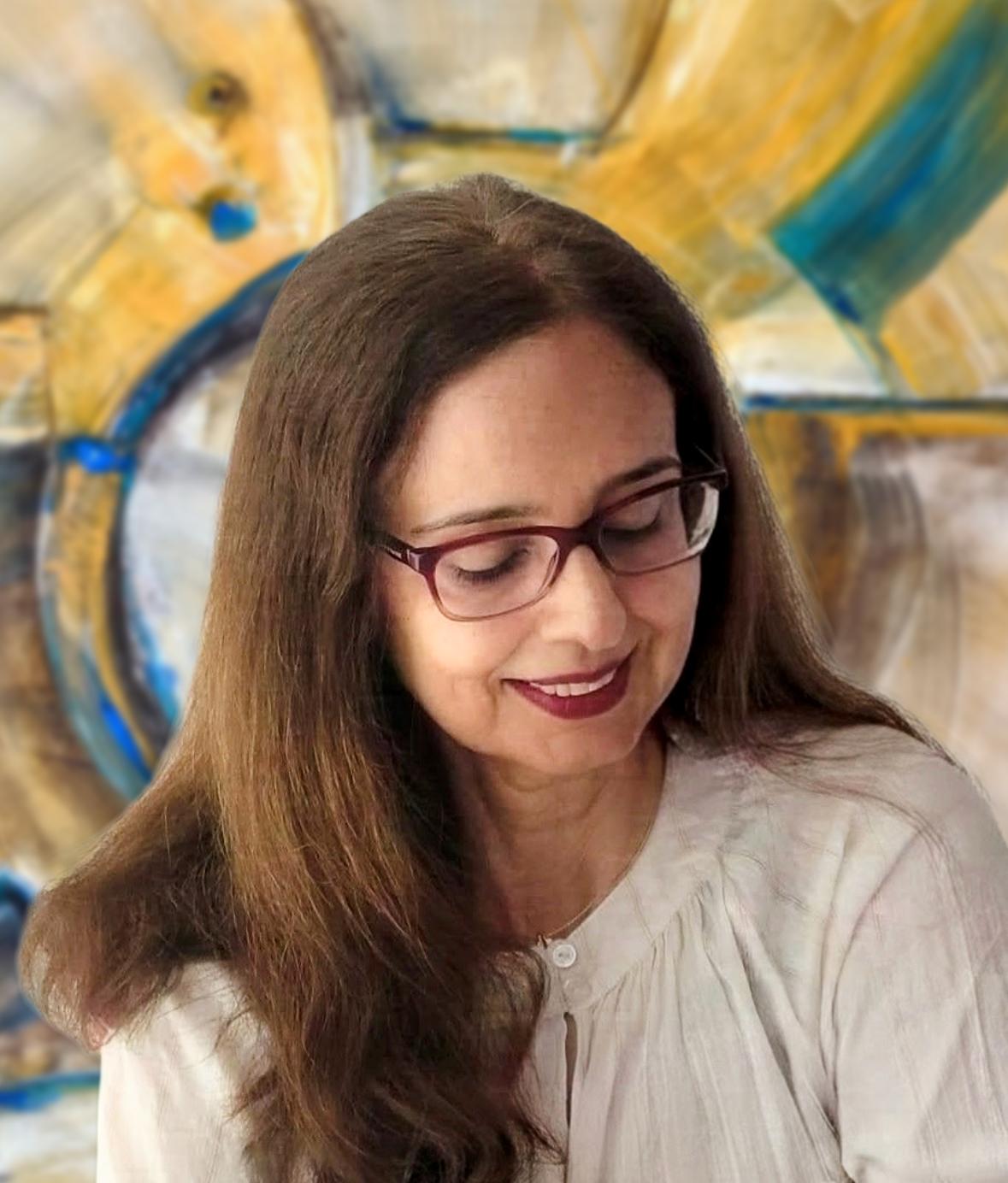
It is no irony that the development of Persian poetry in the twenty-first century—marked by a pluralization of voices and a decentralization of form—unfolded, at least partly, outside the capital, Tehran. Poetic voices that emerged in these regional centers, distant from the hustle and bustle of dominant literary currents, often display a distinctive originality shaped beyond dominant trends. As a result, many of these voices remained relatively inaccessible to both elite and general audiences and did not receive the critical attention they deserve. This article addresses this gap by introducing Shahīn Khusravīʹnijād (Aurā), a poet from the city of Kerman. Her poetry from the early decades of the twenty-first century represents an original intervention in contemporary Persian poetics, characterized by experimentation with language, motifs, and perspectives in the search for identity, origin, and poetry itself.
Despite a substantial body of published poetry, Aurā remains largely absent from major surveys of contemporary Iranian women’s poetry and has received little critical attention in Iran or abroad.1Aurā is not included in either of these surveys: Kāmyār ʿĀbidī, Sad sāl shiʿr-i zanān-i Īrān: Muntakhab-i shiʿr-i āzād, Nīmāʾī va sipīd [One hundred years of Iranian women’s poetry: A selection of free, Nimaic, and blank verse] (Tehran: Murvārīd, 1400/2021); Parvīn Shakībā, Zanān-i sarāyandah-i muʿāsir [The poetry of contemporary Iranian women], 3 vols. (Champaign, IL: Kayumars Books, 1376/1997–1386/2008; Los Angeles: Ketab Corp., 1390/2011). This relative neglect reflects a broader gap in the study of post-Revolutionary Iranian women’s poetry, particularly the poetry of the 1370s/1990s and 1380s/2000s.2Roja Chamankar, “Voices of Transformation: Women’s Poetry of the 1990s and 2000s,” Women Poets Iranica (2025), https://doi.org/10.70501/wpidmz0-qrpv.
Aurā began writing poetry at an early age. Born and raised in Kerman in southeastern Iran, she grew up in a region marked by an arid landscape, deep archaeological history, and a distinctive local vocabulary—all of which would later leave traces in her poetry. Her very first line of poetry, composed in the second grade, expressed her excitement after visiting the lush Caspian shores of northern Iran. She continued to improvise poems and record them in a personal notebook throughout her youth. Upon graduating from high school, however, she burned the notebook containing all her poems—works she dismissively referred to as miʿr, a playful distortion of shiʿr (“poetry”)—promising herself not to write poetry again until she had acquired sufficient knowledge of the craft.3 This information is based on a conversation with the author.
Over the years, Aurā fulfilled that promise and became a self-taught poet. She never formally participated in any literary circle, partly due to her physical and intellectual distance from the canon, and partly out of a deliberate desire to experience and discover her own voice. As she writes:
چه خوب که قارچ ها را
خودم چیده باشم
خودم چشیده باشم
سمی اگر چند
How nice it is
that I have picked the mushrooms myself,
tasted myself,
even if poisonous.4Shahīn Khusravīʹnijād (Aurā), Rāmish [Solace] (Kerman: self published, 1382/2003), 37. The translations are mine unless stated otherwise.
By the late 1370s/1990s, a growing impulse toward renewal had become evident among poets and critics engaged with contemporary Persian poetry, giving rise to new circles and poetic tendencies in Tehran. Particularly influential was the circle around Rizā Barāhanī, the renowned poet, critic, and scholar, who criticized dominant Nimaic poetry for its reliance on a language that ultimately referred to something outside itself.5Rizā Barāhanī, “Chirā man dīgar shāʿir-i Nīmāʾī nīstam?” [Why I am no longer a Nimaic poet], in Khatāb bih parvānahʹhā va chirā man dīgar shāʿir-i Nīmāʾī nīstam? [Address to the butterflies and why I am no longer a Nimaic poet] (Tehran: Nashr-i Markaz, 1374/1995), 182. His workshops became an important site for theoretical and poetic experimentation. Despite Aurā’s efforts to engage with these circles, they remained largely inaccessible to her. Her poetry nevertheless shows aesthetic affinities with some of the language-oriented experimentation associated with Barāhanī, particularly in its transgression of grammatical and syntactical conventions for poetic effect. More broadly, the emergence of new poetic voices and approaches in the literary marketplace encouraged her to publish her own.
Aurā published ten poetry collections, including selected works, during the 1380s/2000s. This decade marked the most intensive period of publication of her poetry, though much of it had been written earlier. Her publication career began with Va rabt dārad har chīzī bih hamah chīz (And anything relates to everything, 1379/2000), followed by Bargʹhā dar vāy (Leaves in the void, 1380/2001), and Rāmish (Solace, 1382/2003), the latter of which won the prestigious Kārʹnāmah award. Her sequence of works continued with the selected volume of the first three books, Dar aꜥmāq-i īn shiꜥr (In the depth of this poem, 1384/2005), followed by Pistahʹhā-yi kūhī (Wild pistachio trees, 1385/2006) and Dar rāh (On the way, 1386/2007). Despite her growing national recognition, the Iranian publishing industry remained reluctant to invest in a poet who lacked widespread public visibility. In 1389/2010, Aurā self-published a trio of collections– Hamīn kih ast (It is what is), Aftāb pīsh az alif (The sun before the alif); and Bā mūryānahʹhā dar rāh (With termites on the way). The last of these was awarded the Khvurshīd Prize for Iranian Women’s Poetry in 1392/2013. This period was followed by Ampirsīyūn bīrūn-i ghār (Impression outside the cave, 1390/2011), and her final poetry collection, Dar hayn-i ʿishq (Whilst love), appeared in 1396/2017. Following her immigration to Canada, Aurā’s poems have appeared primarily in literary journals.
Some of Aurā’s poetry collections are created around dominant themes. Themes such as pre-birth, childhood, excavation, and the world of household objects allow her to explore non-ordinary configurations of time, space, perspective, and subjectivity, opening up distinctive poetic possibilities. Across these different domains, writing itself repeatedly emerges as a means of crossing boundaries between states of being, temporalities, and perspectives.
In “Bā mūryānahʹhā dar rāh,” she explores the realm of pre-birth and experiments with a radically different sense of time. In this pre-natal state—one that, in certain respects, recalls the Sufi notion of primordial unity in classical Persian poetry—existence is governed by probability and uncertainty. Here, beyond ordinary coordinates of time and place, the poetic voice speaks in the first person while negotiating a future physicality that has not yet materialized:
تنها یک اشتباه کوچک یک اشتباه کوچک
می تواند ماهی ام کند
از اشتباه شما متشکرم
خالق
من دریا را
ترجیح داده بودم
Just a small mistake, a small mistake
could turn me into a fish
Thank you for your mistake
Creator–
I had preferred
the sea.6Shahīn Khusravīʹnijād (Aurā), Bā mūryānahʹhā dar rāh [With termites on the way] (Kirmān: self-published, 1389/2010), 18.
In this realm, connection to the material world is made possible only through the mother:
چشمان جنینیام در پیازهای خرد کرده مادر
گریست
In my mother’s diced onion,
my fetal eyes
wept.7Khusravīʹnijād (Aurā), Bā mūryānahʹhā dar rāh, 19.
Writing, in this context, is comparable to being born and giving birth. Emerging as an embryonic act, writing illuminates the passage between non-being and becoming. At the same time, writing exceeds ordinary temporality: from the pre-birth state, the poem reaches forward to register the memories of an aging subject afflicted with Alzheimer’s. In doing so, poetic writing collapses the temporal distance between origin and decline. Aurā articulates this paradox vividly:
سفر در پیچ و خم تاریکی
چراغی آویزان می کنم در نیمه راه رحم
چیزهایی باید بنویسم
خاطرات آلزایمریم
بوقت استراحت تنگ
Traveling through the labyrinth of darkness,
I hang a lamp halfway in the womb.
There are things I must write down—
my Alzheimer memories,
in the narrow breaks of rest.8Khusravīʹnijād (Aurā), Bā mūryānahʹhā dar rāh, 21.
Aftāb pīsh az alif centers on childhood as its dominant theme. The aesthetics of this collection emerge from rhetorical recreations of childhood experience. Casting childhood into language—as a way of encountering the world through a child’s eyes—allows Aurā not only to undermine adult expectations and imposed regulations, but also to depart from dominant poetic norms. The innocence of childhood, as she renders it, mirrors the core of Aurā’s poetry itself: raw, lively, full of wonder, and continually constrained by cultural norms.
The poem “Raʿāyat” (Good manners) crystallizes this tension through a child’s humorous yet reflective perspective on a culture that over-values decorum toward guests. Beneath the playful tone, the child’s enforced obedience exposes an underlying structure of social coercion:
«رعایت» یه هیولاست
موقع اومدن مهمون
که شیرینی های خوشمزه
ردیف میشه روی میز
جون میده اتاق پذیرایی
برای دست درازی و جست و خیز
ولی تو
باید ساکت بشینی سر جات
ساکت بنشینی سر جات
دوخته بشی به مبل – چه بدبختی بزرگی
“Good manners” is a monster
when the guests arrive.
Yummy sweets
line up on the table.
The guest room begs
for grabbing and jumping
but you
must sit quietly in your place,
quietly in your place,
stitched to the sofa — what great misery.9Shahīn Khusravīʹnijād (Aurā), Aftāb pīsh az alif [The sun before the alif] (Kirmān: self-published, 1389/2010), 31.
Aurā’s treatment of pre-birth and childhood thus disrupts chronological time, creating poetic voices that occupy more than one temporal position at once. The prenatal speaker can write down the memories of old age, while the child’s immediate perception is preserved through the retrospective act of writing. In both cases, writing mediates between moments of life that cannot coexist in the real world: before and after birth, childhood and adulthood. Through these themes, Aurā presents poetry as an experience that is simultaneously primordial and newly lived.
In Hamīn kih ast (It is what is), Aurā shifts her focus to ordinary objects and grants them a new poetic function. The title itself participates in this gesture: replacing hast (exists) with ast (is) suggests a different mode of being. In this world, household objects—plates, tissues, cups, utensils—move to the center of the poems.
Domestic objects are of course not new to contemporary Persian poetry, particularly poetry by women, where everyday life and material objects have often carried gendered significance.10Ruzā Jamālī, “Shiʿr dar khalāl-i zindigī-i zanānah, rūzmarrigī va ashyāʾ” [Poetry through women’s life, everydayness, and objects], in Mukāshifātī dar bād [Discoveries in the wind] (Ahvaz: Nashr-i Hasht, 1400/2021), 89–94. Aurā’s innovation, however, lies elsewhere. Rather than merely granting objects speech or emotion, she adopts their point of view to frame human presence through its encounters with objects in domestic spaces such as kitchens and bathrooms. The poem “Bushqāb” (The plate) exemplifies this reversal:
در تمامی جرمش
گشودگی ست
دهانی گشوده است یکسره
بشقاب
که آدم را میبلعد
وزن آدم را میبلعد
می چرخاند در جاذبه
در جاذبه می چرخا
می چرخا می چرخاند بشقاب
In every particle of it
there is openness—
a mouth endlessly open,
the plate
that swallows a human
swallows the human’s weight,
spins it in gravity,
in gravity, spi,
spi, spins—spinning,
the plate.11Shahīn Khusravīʹnijād (Aurā), Hamīn kih ast [It is what is] (Kirmān: self-published, 1389/2010), 64.
The creation of internal rhythm—through word fragmentation, repetition, and syntactic circling—enacts the plate’s openness, spinning, and perpetual insatiability.
Aurā’s treatment of objects differs from the long tradition of personification in Persian poetry, from classical works to those of modern poets such as Parvīn Iʿtisāmī. What is distinctive here is the relocation of perception itself: the object becomes the vantage point from which the human world is observed. In such a world, tissues used to wipe mourners’ tears come to narrate memorial gatherings themselves. The shift in perspective is intensified by a deliberate ambiguity in pronoun usage, which blurs the boundary between object-narrators and human outsiders:
به میانمان که آمدند
یکیشان کم شده بود
مشکی هایمان را پوشیدند
چهارگوشه های سفید نرممان را
تند تند بیرون کشیدند
به چشمهاشان مالیدند که خیس می شدند هی
خیس
When they came among us
one of them was missing.
They wore our blacks.
Our soft white corners.
they pulled out quickly,
rubbed us against eyes
that kept getting wet—
Wet.12Khusravīʹnijād (Aurā), Hamīn kih ast, 50.
Once the objects occupy the first-person position, humans become the outsiders—the “they” who enter the objects’ world. The ambiguity of the pronouns makes it momentarily unclear whether the collective voice belongs to the mourners or to the tissues they use in their grief. Aurā thus does more than turn domestic objects into poetic subjects: she shifts the center of perception away from the human. Objects no longer provide the passive background to human experience; they become the observers of human rituals.
The hallmark of Aurā’s poetry is her striking use of language. Drawing on both quotidian vocabulary and specialized terminology, she foregrounds language itself as a medium, disrupting its habitual and often unconscious use.
Trained as a linguist, Aurā combines disparate morphemes, coins neologisms, and remixes grammatical units to produce syntactic structures that resist closure. This manipulation of language is not ornamental; it serves the poem’s conceptual core. In the poem “Gumʹzadigī” (Lostification), for example, the unconventional use of the Persian direct object marker rā—appearing without an accompanying noun—enacts the very condition of disorientation the poem explores. The speaker oscillates between certainty and doubt, possession and loss, as the grammatical placeholder itself becomes the object of inquiry:
را که در حال مفقودی بود
نمی دیدم در حال مفقودی بود
را می دیدم از من بود
یقین دارم از من بود
شک دارم از من
شک دارم
را بشود دوباره بدست آورد
the rā that was in a state of being lost
I could not see in its lost
the rā I saw was mine
I am certain it was mine
I doubt it was mine
I doubt
the rā can ever be retrieved again13Shahīn Khusravīʹnijād (Aurā), Dar hayn-i ʿishq [Whilst love] (Mashhad: Būtīmār, 1396/2017), 25.
Aurā’s exploration of language extends beyond semantics and syntax to its visual form. Through the use of suffixes on lexemes that normally resist them, non-standard spacing, and typographic play, she tests the limits of the language. In the following lines, this formal experimentation registers the vulnerability of the self within a bureaucratic atmosphere—one that finds clear parallels both in social structures and in language itself:
پیش از این هم خودم را بارها
قابل لمس
قابل خراش
قابل بالا و پایین شدن از پلههای
ادارات
قابل آمار
و قابل حذف
در چنان فرضهایی
لطافت هایم را چگونه حفظ
آیا باید حفظشان کنم؟
مثلا بمیرم برای سر بریدن سـیـ ب
یا فریاد پـ یـا ز هـ ا متاثرم کند
در زیر کارد؟
Before this, too, I had myself many times
touchable,
scratchable,
subject to being moved up and down the staircases
of offices,
statistically legible,
and removable.
In such hypotheses,
how am I to preserve
my tendernesses?
Should I preserve them at all?
Should I, for example, die
for the beheading of an a p p l e,
or let the scream of o n i o n s move me
beneath the knife?14Khusravīʹnijād (Aurā), Dar hayn-i ʿishq, 34.
These linguistic strategies readily lend themselves to a deconstructive reading. Critics have noted, for instance, the Derridean sensibility of Dar hayn-i ʿishq, where language repeatedly slips out of its conventional referential roles.15Firishtah Vazīrīʹnasab, “Hubūt-i kalamāt: Nigāh bih majmūꜥah-ʾi shiꜥr-i Dar hayn-i ʿishq az Shahīn Khusravīʹnijād (Aurā)” [The descent of words: A reading of the poetry collection Dar hayn-i ʿishq by Shahīn Khusravīʹnijād (Aurā)], Jung-i Hunar-i Mis (Kirmān) 5–6 (Summer and Fall 1396/2017): 75–82. Similarly, Bā mūryānahʹhā dar rāh has been described as a text that dismantles contemporary belief systems through fragmented mini-narratives that together form a grotesque yet self-contained poetic world.16Mahdī Samdānī, “Khām būdam, pukhtah shudam, sūkhtam: Barrasī-i sih kitāb yā trīluzhī-i Aurā (Shahīn Khusravīʹnijād),” in Jung-i Hunar-i Mis (Kirmān) 5–6 (Summer and Fall, 1396/2017): 66–74. From this perspective, Aurā unsettles the usual meanings of words by placing them in unexpected combinations. Their juxtaposition generates associations rarely encountered outside the space of the poem:
نه اسطوره میشوم
نه جوراب
بر سر مزار خودم گریه کنم؟
I will become neither a myth,
nor socks—
should I weep at my own grave?17Shahīn Khusravīʹnijād (Aurā), Va rabt dārad har chīzī bih hamah chīz [And anything relates to everything] (Kirmān: Kitābʹkhānah, 1379/2000), 22.
By arranging, rearranging, and disarranging familiar words, Aurā subverts the expected. As each word activates its own network of associations, meaning emerges through their syntagmatic relations—an effect that has been described as possible only within the space of poetry.18 Samdānī, “Khām budam, pukhtah shudam, sūkhtam,” 66–74.
This defamiliarization—borrowing from Russian Formalism—enables Aurā to move beyond entrenched dichotomies, notably that between the personal and the public, as well as conventional distinctions between time and place.
که خصوصیهایمان
در انحصار عموم
و هر رفتارمان تحت دید
رویاها را یادمان رفته بشود فردی چرخید
امنیتشان را بشود چشید
در خشکسالی
نوشید
That our privacies
belong exclusively to the public,
and every gesture of ours is under watch.
That dreams — we’ve forgotten — one could circle individually,
one could taste
their safety,
and, in the drought,
drink.19Khusravīʹnijād (Aurā), Dar hayn-i ʿishq, 68.
Aurā’s engagement with the private and the public is particularly striking in light of the oscillation between these poles in the trajectory of Persian poetry. One important development of twentieth-century shiʿr-i naw was the move away from classical lyricism toward social and political engagement, reaching a particularly visible form in the committed poetry of the mid-century.20See Shams Langarūdī, Tārīkh-i tahlīlī-i shiʿr-i naw (Tehran: Nashr-i Markaz, 1377/1998), 4:127. At the same time, another development was the emergence of a more individualized poetic self, represented in less conventional and more immediate ways.21Ahmad Karimi Hakkak, Recasting Persian Poetry: Scenarios of Poetic Modernity in Iran (Salt Lake City: University of Utah Press, 1995), 55–56. Furūgh Farrukhʹzād exemplifies this reconfiguration of selfhood by foregrounding women’s desires, emotions, and subjectivities in modern Persian verse.22Kamran Talattof, “Personal Rebellion and Social Revolt in the Works of Forugh Farrokhzād: Challenging the Assumptions,” in Forugh Farrokhzad, Poet of Modern Iran: Iconic Woman and Feminine Pioneer of New Persian Poetry, ed. Dominic Parviz Brookshaw and Nasrin Rahimieh (London: I.B. Tauris, 2010), 86. In Aurā’s poetry, however, the relation between the personal and the public takes a different form. Rather than merely renegotiating the boundary between the two, she registers the erosion of individuality in a world where private experience is increasingly exposed to public view. In doing so, she dismantles the dichotomy itself: while the most intimate experiences, such as dreams, are rendered public, what is conventionally understood as communal or inherited becomes sharply individualized:
شاه نعمت الله ولی
ما نوه هایی نافرمان بوده ایم
که تنها جنونمان
مرده ریگ تو بود.
Shāh Niꜥmatʹallāh Valī23The poet, mystic, and founder of the Niʿmatʹallāhī Sufi order from Kirman who died in 834/1431.
we’ve been disobedient grandchildren
For whom insanity alone
was your inheritance.24Khusravīʹnijād (Aurā), Va rabt dārad har chīzī bih hamah chīz, 9.
Another distinction Aurā unsettles is that between time and place. In her poetic worlds, chronology and geography overlap, merge, and transform into one another, becoming increasingly indistinguishable. Yet neither history—from the ancient past to an imagined future—nor geography—from oceans to continents—offers stable coordinates for the poetic subject, who remains marked by historical and spatial dislocation:
یک اینکا بوده ام
کسی چه می داند
و شاید یک مایا
در قاره ای پرت شده به این سوی جهان
با موهای قهوه ای غلیظ
و سه اقیانوس آرام
قلبم تند می زند در آغوشم گیر
جغرافیای من تاریخش را مدام
گم می کند
گم می شوم مدام
I have been an Inca
Who knows
And perhaps a Maya,
on a continent thrown to this side of the world
with thick brown hair
and three oceans.
My heart is beating fast—embrace me
My geography constantly
loses its history
I’m lost constantly.25Khusravīʹnijād (Aurā), Va rabt dārad har chīzī bih hamah chīz, 10.
It is precisely through this confusion—this unstable sense of identity produced through shifting historical, geographical, and linguistic coordinates—that Aurā renders the disorientation of contemporary experience. The lyric intensity of her work culminates in moments when the instability of time and place reaches the body and language themselves:
این دست ها از آن منند یا از آن تو
این نفس ها
این حروف چینی تند
این کروموزوم های گیج
محکم دهانم را بسته ام
که پرتاب نشود قلبم به آن طرف شعر.
Are these hands mine or yours?
These breaths?
This rapid typesetting,
these confused chromosome
I have tightly shut my mouth
So my heart is not hurled
to the other side of the poem.26Khusravīʹnijād (Aurā), Va rabt dārad har chīzī bih hamah chīz, 11.
Moving beyond time and place, Aurā’s poetry turns to language as a means of exploring deeper questions of existence. This inquiry is closely tied to her sustained engagement with origins and identity, which surfaces repeatedly in motifs of birth, childhood, and, most notably, excavation. Excavation occupies a distinctive place in Aurā’s work. Coming into prominence in her poetry around the time of the archaeological discoveries at Jīruft and the ancient site of Kunārsandal in Kerman in the early 1380s/2000s, excavation functions both as a historical backdrop and as a key poetic tool:
…و سنگ چخماق از ته دهانم بیرون میکشم
داغم
به داغی مصوتهای خیلی خیلی بلند…
…and I pull a flintstone
from the back of my mouth.
I am burning hot,
as hot as very, very long vowels…27Khusravīʹnijād (Aurā), Va rabt dārad har chīzī bih hamah chīz, 29.
This recurring language of excavation gives Aurā’s regional setting a particular poetic significance: the archaeological landscape of Kerman becomes a means of uncovering not only the poet’s origins but also her poetic voice. Aurā excavates disparate “roots”—vegetables, ancestral bones, and poetry itself:
پیازها و سیبزمینیها
بیل که میزنید
برهوت آلود
استخوانهای پدرم
استخوانهای مادرم
استخوانهای شعرم
…
Onions and potatoes,
when you strike the soil with your spade,
desolate,
my father’s bones,
my mother’s bones,
my poem’s bones,
…28Shahīn Khusravīʹnijād (Aurā), Ampirsīyūn bīrūn-i ghār (Impression outside the cave, 1390/2011), 28.
Digging is no longer merely an archaeological act. It becomes temporal, linguistic, and generative—an archaeology of the self, of memory, and of language. In this sense, excavation aligns with female fertility and creative power: uncovering the past becomes inseparable from birth and the act of writing itself:
به مامانم میگویم
چرا مردهای اینهمه ماقبل جانگرفتن من
میگوید به دنیا میآورمت بلبلکم
از کتیبهام
از گوشهای از شعر سعدی
I tell my mom:
Why are you so dead, long before my coming to life?
She says: I’ll give birth to you, my little nightingale,
from my epitaph,29In Kermani usage, katībah can refer specifically to an epitaph or funerary inscription; Aurā’s use of the word carries a regional resonance beyond its more general meaning of “inscription.”
from a corner of Saꜥdī’s poem.30Khusravīʹnijād (Aurā), Bā mūryānahʹhā dar rāh, 5.
Aurā’s work represents a distinctive form of linguistic experimentation in contemporary Persian poetry. Through fragmentation, shifting perspectives, the placement of familiar words in unfamiliar contexts, and the forging of new associations among them, she explores the capacities of language itself. Aurā’s particular contribution lies in turning linguistic experimentation into a mode of perception: rather than using formal disruption for its own sake, she employs it to unsettle the boundaries between humans and objects, past and present, inherited language and poetic experience.
Through layered images of birth, childhood, and excavation, Aurā develops a poetics that not only renders the fragmented experience of existence in an unstable contemporary world, but also articulates a search for identity, origin, and poetic lineage. Writing, in this poetic universe, becomes the connective force that holds these fragments together: it transcends linear temporality, moving between pre-birth and aging, memory and erosion.
Writing thus functions analogously to childhood as Aurā conceives it—both are sites of possibility constrained by social norms, yet charged with creative potential. Excavation, meanwhile, is not merely a return to the past but a generative act: by digging into ancestral layers, Aurā searches for the roots of her poetic voice. Beneath the linguistic experimentation and formal play, then, lies a fundamental inquiry into how poetry makes possible a mode of dwelling in the world.
Cite this article

Abstract
This article examines the poetry of Shahīn Khusravīnijād (Aurā) through her experimentation with language, perspective, and poetic form. Focusing on pre-birth, childhood, domestic objects, and excavation, the article shows how Aurā disrupts language and shifts perspective to unsettle familiar ways of experiencing time, identity, and the material world. Her linguistic experimentation is not merely formal; it becomes a mode of perception through which boundaries between human and object, past and present, and inherited language and individual experience are reconfigured. The article thus introduces an understudied voice in contemporary Persian women’s poetry and argues that Aurā’s poetry links linguistic innovation to a broader search for origin, poetic identity, and the possibilities of writing itself.