
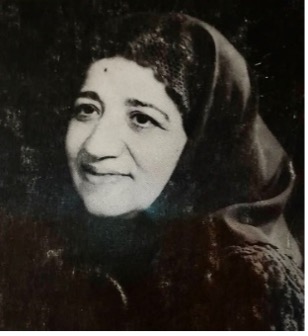
Mahīnʹdukht Muʿtamidī: A Torchbearer of Classical Poetry in the Contemporary Era



Women’s poetry in contemporary Iran has gained increasing attention in recent decades, yet it remains relatively underexplored. While scholarship on women poets has grown in recent years, twentieth-century women who wrote in classical Persian styles have received comparatively less attention. One such lesser-known poet is Mahīnʹdukht Muʿtamidī (1308–1393/1929–2013), an accomplished writer, translator, and scholar. She was also the first Kurdish woman to earn a doctorate in Persian language and literature. A longtime faculty member at the University of Tehran, she made significant contributions to Persian poetry, translation, and academic research. In her two published poetry collections, Daryā-yi ashk (The sea of tears) (1353/1974) and Gulʹhā-yi Ābīdar (Flowers of Ābīdar) (1366/1987), Muʿtamidī conveys her personal experiences as a silent lover, using a poetic style that merges traditional forms with profound emotional expression. Her poems explore themes of love, grace, solitude, and a profound appreciation for Kurdish culture. Though most of her work is written in classical Persian style, its mystical undertones and cross-cultural influences lend her poetry a unique identity. This article explores the linguistic, thematic, and intertextual dimensions of Mahīnʹdukht Muʿtamidī’s poetry through investigating her life and works and assessing key stylistic features, dominant themes, and her position among contemporary women poets. Given that Muʿtamidī was proficient in Arabic and French, a section of this article examines the influence of foreign literature on her poetry. This aspect, often overlooked in studies of female poets, presents an area for further research.
The Life and Works of Mahīnʹdukht Muʿtamidī
Despite growing scholarly interest in women’s literature in recent years, Mahīnʹdukht Muʿtamidī’s poetry remains underexplored. Existing research is mostly limited to biographical accounts, introductions to her works, and occasional references in journals and books. The only source dedicated to her life and academic career is a special issue of Kashkūl—Faslʹnāmah-ʾi Takhassusī-i Asnād va Nusakh-i Khattī-i Manātiq-i Kurdʹnishīn (A specialized quarterly journal focusing on documents and manuscripts from Kurdish regions).1Faslʹnāmah-ʾi Kashkūl 12 (Fall and Winter 1398/2019). Mahīnʹdukht Muʿtamidī was born on Day 1, 1308/December 22, 1929, in Baneh, Kurdistan province. Her family came from the cultural and religious background of the region. Her father, ʿAtā Allāh Muʿtamidī, was a pioneering teacher in the region and the head of a school in Baneh, while her mother, Hāj Saʿādat “Kurdʹdukht,” was regarded as one of the educated and cultured women of the area. The Muʿtamidī family originally came from the shaykhs of Kani Moshkan, near Sanandaj. Her grandfather, Hāj Shaykh Muhammad Muʿtamid al-Islām, was a well-known scholar and mystic in Kurdistan, serving as a judge and jurisprudent. Muʿtamidī’s great-grandfather came from Shām (Greater Syria) to this village, where he founded a Sufi lodge (khānqāh).2Mahīnʹdukht Muʿtamidī, Daryā-yi ashk [The sea of tears] (Tehran: Amīr Kabīr, 1353/1974), preface by Nusrat Allāh Kāsimī. See also, “Vaqtī az Mawlā kumak giriftam (Guftugū bā Mahīnʹdukht Muʿtamidī),” Kayhān-i Farhangī 86 (Bahman 1380/February 2001): 22. Muʿtamidī began her education in 1316/1937, though her studies were interrupted as she moved between Kermanshah, Sunqur, Sanandaj, and Tehran due to her parents’ work. The separation of her parents and the family struggles during her adolescence had a profound impact on her life. As she later wrote, “This was the first blow that struck my body and shattered my soul.”3Muʿtamidī, “Sukhanī chand bā khvānandigān” [A few words with the readers], in Daryā-yi ashk.
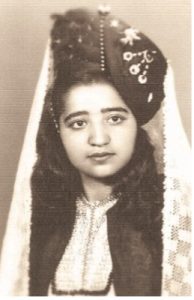 Figure 1: Mahīnʹdukht Muʿtamidī4Hāmid Sharīʿatī, Ālbum-i Sanandaj [Sanandaj album] (Sanandaj: Kāni Katīb, 1394/1995), 122.
Despite the challenges, Mahīnʹdukht Muʿtamidī remained committed to her education. After finishing secondary school in 1335/1956, she attended Tehran Teachers College (Dānishʹsarā-yi ʿĀlī) and earned a bachelor’s degree in Persian literature in 1338/1959. She started her teaching career in Tehran but soon returned to Sanandaj to teach at a high school. In 1346/1967, she went back to Tehran to pursue a Master’s degree, which she earned in 1348/1969. In 1352/1973, she defended her doctoral thesis titled “Suvar khiyāl shiʿrī dar dīvān-i Masʿūd Saʿd Salmān” (The poetic imagery in the dīvān of Masʿūd Saʿd Salmān) at the University of Tehran.5Muʿtamidī composed a ghazal with the opening verse: “I was never freed from the hardship of the days / My heart was estranged from itself and separated from the Beloved,” addressed to Masʿūd Saʿd Salmān. She recited it on the day of her doctoral dissertation defense at the University of Tehran. See Muʿtamidī, Daryā-yi ashk, 5. Her doctoral advisor was Parvīz Nātil Khānlarī, a distinguished scholar and poet with a strong interest in classical Persian literature. Studying under such an influential literary figure exposed Muʿtamidī to an intellectual environment that was closely connected to the classical tradition to which she remained committed throughout her career. Mahīnʹdukht Muʿtamidī is considered a pioneering figure, being the first Kurdish woman to earn a PhD in Persian language and literature. She later taught as a professor at Tehran University.
 Figure 2: Mahīnʹdukht Muʿtamidī (Mihr 1353/October 1974)6Muʿtamidī, Daryā-yi ashk, 194.
Her first known poem, a ghazal titled “Bih mādaram” (To my mother), was written in Urdībihisht 1328/May 1949, when she was around twenty years old. Although Muʿtamidī never officially discussed the start of her poetic career, the date at the end of this ghazal suggests she began writing poetry in her early youth. She published two poetry collections, titled Daryā-yi ashk (The sea of tears) in 1353/1974 and Gulʹhā-yi Ābīdar (Flowers of Ābīdar) in 1366/1987, using the pen name “Mahīn” for her poems. Her poetry is rooted in the classical Persian tradition and often adopts a reflective and introspective tone. Muʿtamidī maintained a deep connection to culture, literature, and research throughout her life. In addition to her educational and literary work, she was also an active member of literary societies such as the Anjuman-i Adabī-i Īrān (Literary society of Iran)7The quatrain “Ākharīn dīdār” (The last meeting) is dedicated to “the candle of a gathering that was canceled.” The gathering refers to the Anjuman-i Adabī-i Īrān (Literary society of Iran), which was founded in 1327/1948 through the efforts of Muhammad ʿAlī Nāsih and was disbanded after his death. See Mahīnʹdukht Muʿtamidī, Gulʹhā-yi Ābīdar [Flowers of Ābīdar] (Tehran: Pāzhang, 1366/1987), 167. and Anjuman-i Adabī-i Gawhar (The jewel literary society), where she would present her poems and receive critiques and feedback.8Nusrat Allāh Kāsimī, preface to Daryā-yi ashk, by Mahīnʹdukht Muʿtamidī (Tehran: Amīr Kabīr, 1353/1974). Her active involvement not only helped her poetry gain recognition but also reflected her humble approach to cultural engagement.
Mahīnʹdukht Muʿtamidī was not only a poet and scholar, but also a skilled musician. In her youth, she studied music under Hasan Kāmkār and Husayn Yūsufʹzādah, becoming proficient in playing the violin.9According to Najm al-Dīn Shukatʹyāriyān in “Bahār-i bīʹkhazān: Buzurgʹdāsht-i Duktur Mahīnʹdukht Muʿtamidī” [Honoring Dr. Mahīnʹdukht Muʿtamidī, Sanandaj], University of Kurdistan, Urdībihisht 27, 1393/May 17, 2014. The Kurdistan Studies Research Institute at the University of Kurdistan held a commemoration ceremony for Mahīnʹdukht Muʿtamidī titled Bāhar-i bīʹkhazān on Urdībihisht 27, 1393/May 17, 2014. During this event, it was mentioned that Muʿtamidī had donated two thousand volumes of her books to the Kurdistan Studies Research Institute. A report on the event is available online: https://oldksi.uok.ac.ir/activity/28?lang=fa. After her retirement, she devoted much of her time to studying, conducting research, and travelling for cultural exploration. She visited Saudi Arabia, Syria, Turkey, Lebanon, Japan, the Philippines, India, and Singapore.10Muʿtamidī, Gulʹhā-yi Ābīdar, 20. During this period, her interest in Sufism, the Naqshʹbandī order, and comparative literature deepened. She also wrote a book about Mawlānā Khālid Naqshʹbandī11Mahīnʹdukht Muʿtamidī, Naqshī az Mawlānā Khālid Naqshʹbandī va payʹrawān-i tarīqat-i ū [A portrait of Mawlānā Khālid Naqshʹbandī and his followers] (Tehran: Pāzhang, 1368/1989). and translated a collection of letters by Kahlil Gibran12Jubrān Khalīl Jubrān, Shuʿlah-ʾi kabūd: Rasāʾil-i khattī-i Khalīl Jubrān bih May Ziyādah, trans. Mahīnʹdukht Muʿtamidī (Tehran: Vahīd, 1367/1988). during her travels.
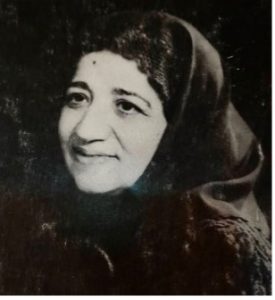 Figure 3: Mahīnʹdukht Muʿtamidī (1366/1987)13Muʿtamidī, Gulʹhā-yi Ābīdar, 193.
Mahīnʹdukht Muʿtamidī never married.14She states: “I never took a husband but spent my life with my writings […] Throughout my life, I grew accustomed to two old companions: the flower and the book. Both console the sorrow of my lonely world; one is beautiful and fleeting, the other eloquent and silent.” See Muʿtamidī, “Sukhanī chand bā khvānandigān,” in Daryā-yi ashk. In the final years of her life, she lived in a nursing home and died on November 7, 2013. She was buried in the Bībī Sakīnah Cemetery in Karaj.15ʿAbd al-Jabbār Muhammad Jabbārī, Zanān-i nāmdār-i kurd [Famous Kurdish women], trans. and ann. by Muhammad Ahmadī (Sanandaj: Muhammadī, 1382/2003), 72. In a note in Ittilāʿāt, Mīr ʿAbbās Rūh al-Amīnī refers to Muʿtamidī as a prominent scholar who, in 1350/1971, delivered a compelling lecture on Muhammad Muʿīn and Badīʿ al-Zamān Furūzānʹfar, which deeply moved the students. He also reflects on her untimely and quiet death with profound sorrow and regret. See Mīr ʿAbbās Rūh al-Amīnī, “Ba qalam-i chashm va gūsh-i ahl-i maʿnī darj-i gawhar mīʹshavad,” Ittilāʿāt 2183, Tīr 1394/July 2015.
The Literary Contributions of Mahīnʹdukht Muʿtamidī
Mahīnʹdukht Muʿtamidī is one of the poets who, in addition to writing poetry, was also active in translation and literary research. Her works can be divided into three main areas: poetry, translation, and literary studies.
- Poetry Collections
Muʿtamidī has published two poetry collections:
Daryā-yi ashk, 1353/1974 (The sea of tears)
This collection is Muʿtamidī’s first poetry collection, originally titled Qatrah-ʾi chand az daryā-yi ashk (A few drops from the sea of tears) from 1353/1974. Many of the poems in this collection had previously been published in newspapers of Kurdistan, including Ābīdar, Nidā-yi Gharb, and Khāk-i Khusraw. The themes of the collection revolve around love, sorrow, separation, and the poet’s personal experiences. All poems are written in traditional forms. Nusrat Allāh Kāsimī wrote the book’s preface, and in the introduction, the poet discussed the role of pain, tears, and solitude in her poetry. The collection begins with the following couplet: “I have adorned this extraordinary book of poetry / All in remembrance of you, I have adorned it.”16This verse also appears at the end of the poem “Yād-i tū” (Your memory). See Muʿtamidī, Daryā-yi ashk, 97. This reflects a personal and emotional tone in the poet’s approach, showing that the creation of this collection was driven by emotion and meant to honor a specific audience.
Gulʹhā-yi Ābīdar, 1366/1987 (Flowers of Ābīdar)
Muʿtamidī’s second poetry collection, titled Gulchīnī az gulʹhā-yi Ābīdar (A selection from the flowers of Ābīdar), appears more refined in both language and depth compared to the earlier work. In this collection, alongside the recurring themes, there are traces of mystical reflection, the passage of time, travel experiences, attachment to Kurdistan, and a critical perspective on society. Like in the first collection, the poet wrote the poems here in traditional forms.
- Translations
One of the prominent aspects of Mahīnʹdukht Muʿtamidī’s literary career was her mastery of Arabic and French and her passion for translating literary works. Some of these translations were in verse and were published in her poetry collections. She translated three qasīdas (odes): Lāmiyah al-ʿArab by Shanfarī, Lāmiyah al-ʿAjam by Tughrāʾī, and Lāmiyah al-Kurd by ʿIrfān into Persian. She also published a translation of the famous qasīdah (ode) Banat Suʿād by Kaʿb ibn Zuhayr.17Mahīnʹdukht Muʿtamidī, Qasāyid-i sihʹgānah [The three odes] (Tehran: Partaw-i Bayān, 1388/2009). Other notable works she translated include a collection of letters written by Kahlil Gibran to May Ziadeh, titled Shuʿlah-ʾi kabūd (The blue flame),18Khalīl Jubrān, Shuʿlah-ʾi kabūd. Ashkʹhā va labkhandʹhā (Tears and smiles), based on May Ziadeh’s Arabic translation, Ibtisāmāt va Dumūʿ, of Friedrich Max Müller’s novel Deutsche Liebe,19Originally published as the German novel Deutsche Liebe by Friedrich Max Müller. May Ziadeh translated it into Arabic as Ibtisāmāt va Dumūʿ, and Mahīnʹdukht Muʿtamidī translated the Arabic version into Persian under the title Ashkʹhā va labkhandʹhā (Tehran: Vahīd, 1368/1989). and Kanz al-Lisān by the Kurdish scholar Allāmah Sayyid Ahmad Fāʾiz Barzanjī, titled Ganjīnah-ʾi zabānʹhā (Treasure of languages). Her mastery of the Arabic language is evident in her precise translation of Kanz al-Lisān.20Sayyid Ahmad Fāʾiz Barzanjī, Ganjīnah-ʾi zabānʹhā [Treasury of languages], trans. Mahīnʹdukht Muʿtamidī, ed. Muhammad Khāl (Tehran: Ittilāʿāt, 1379/2000). This book is full of definitions and terminology from Islamic sciences. Muʿtamidī also translated selections from French literature, including some poems by Lamartine, Anatole France, and Victor Hugo, reinterpreting them into Persian, often in the form of masnavī (rhymed verse) or as qitʿah. Her translations were not mere direct renditions; with her deep understanding of language and poetry, she recreated them in Persian poetic form. This demonstrates that she not only grasped the essence of the original but also appreciated and conveyed its beauty.
- Scholarly Works
Due to her academic background, Muʿtamidī also wrote several research papers and scholarly works, including a book titled Naqshī az Mawlānā Khālid Naqshʹbandī va payʹrawān-i tarīqat-i ū (A portrait of Mawlānā Khālid Naqshʹbandī and his followers),21Muʿtamidī, Naqshī az Mawlānā Khālid Naqshʹbandī va payʹrawān-i tarīqat-i ū. which resulted from her travels to Syria and her research on the Naqshʹbandī Sufis. She also wrote a series of articles titled Sukhanʹvarān-i kurd (Kurdish poets), published in the journal Armaghān, where, she introduced Kurdish poets such as Mastūrah Ardalān, Vāliyyah Kurdistān, and Gulshan Kurdistānī.22Mahīnʹdukht Muʿtamidī, “Sukhanʹvarān-i kurd” [Kurdish poets], Armaghān 42–43 (1352–1353/1973–1974). Several of her other research papers were published in journals such as Qāmūs, Qand-i Pārsī, and Yaghmā. Some of her works, including a study on Mastūrah Ardalān and her editions of Safīnah al-awliyāʾ and Hasanāt al-ʿārifīn by Dārā Shukūh, have never been published but are mentioned in the poet’s manuscripts and lectures.23See Shīlān Gīlānī, Zhinānī kurd [Kurdish women] (Sanandaj: Kitābchah, 1401/2022), 150; Sayyid Navīd Naqshʹbandī, “Dīn va ʿulūm-i dīnī dar āsār-i Dr. Mahīnʹdukht Muʿtamidī [Religion and religious sciences in the works of Dr. Mahīnʹdukht Muʿtamidī],” Kashkūl 12 (Fall–Winter 1398/2019): 239.
- Language and Poetic Style
Mahīnʹdukht Muʿtamidī’s poetry is written in traditional Persian forms, and its diction and poetic language remain faithful to the classical Persian tradition. However, at times, it also carries traces of contemporary and personal experiences. The most distinctive aspect of her style is the simplicity and clarity of her language, while maintaining the traditional structure of Persian poetry.
She incorporates elegant, ancient, and occasionally rare words into her writing—such as dayyār [dweller],24Muʿtamidī, “Dar khānah-ʾi dil ghayr-i tū dayyār-i dīgar nīst” [There is no other dweller in the heart but you], in Daryā-yi ashk, 22. zurāh [Bayt al-Maʿmūr, or a house in the fourth level of heaven opposite the Kaʿba],25Mahīnʹdukht Muʿtamidī, “Zurāh ast īn sarāy-i āsmānī / kih bakhshad rawshanāʾī az rah-i dūr” [Which radiates light from afar], in Gulʹhā-yi Ābīdar, 131. chamānī [cupbearer],26Mahīnʹdukht Muʿtamidī, “Mabīn bih jāmah-ʾi zuhdam chamānī-i zībā / kih ʿumr ast siyahʹmastam az chamānah-ʾi tū” [Do not judge me by the robe of my asceticism, O beautiful cupbearer, I have long been intoxicated by your cup], in Gulʹhā-yi Ābīdar, 50. and chamānah [a cup of wine]27Muʿtamidī, “Mabīn bih jāmah-ʾi zuhdam chamānī-i zībā,” 50.—but her language stays simple and unaffected. Her choice of vocabulary reflects a deep familiarity with classical texts and extensive research into the works of ancient poets. In many of her poems, mystical terms, Arabic words, and classical poetic expressions are woven in. However, her style is closer to the simplicity and fluidity of Saʿdī than to the intricate meanings of Hāfiz. This quality makes her poetry more accessible to modern readers, while still preserving the beauty of classical literature. For example, in a couplet from Daryā-yi ashk, the meter, diction, and syntactic balance recall Saʿdī’s lyric style. Its direct address to the beloved, fluent expression, and balanced structure are characteristic features of Saʿdī’s poetry: “Tonight, oh light of my eyes, you are my guest / I am joyful that, like a flower, you adorn my garden.”28Muʿtamidī, Daryā-yi ashk, 56.
One of the prominent features in Muʿtamidī’s poetry is her frequent use of verbal refrains. This feature adds clarity and fluidity to the musicality of her poems. Moreover, her use of verbs creates a sense of movement and flow in her poetry, reflecting the inner essence of her work:
“You came, and how eager and troubled I was,
Without you, I was like a lifeless form.”29Muʿtamidī, Daryā-yi ashk, 90.
“Last night, in the Kaaba of my heart, I saw the light of God,
I saw myself separate from all but the Beloved.”30Muʿtamidī, Daryā-yi ashk, 29.
“I have no other benefit in life, except for my tearful eyes,
Except for my bleeding heart and my enchanting pen.”31Muʿtamidī, Daryā-yi ashk, 31.
From a syntactical standpoint, the precise arrangement of sentence elements in Muʿtamidī’s poetry often resembles prose. On the other hand, she has a distinct affinity for narration, and many of her ghazals, much like those of ʿIraqī, Rūmī, and Hāfiz, feature a narrative structure. For example, the poem “Kaʿbah-ʾi dil” (The Kaaba of the heart), which is a homage to Hāfiz’s ghazals:
Last night, in the Kaaba of my heart, I saw the light of God,
I saw myself separate from all but the Beloved.
The khānqāh, the sanctuary, the mosque, the tavern, and the monastery,
All manifested as a divine light from God.
Oh, you who are oblivious to our world,
How could you know what I witnessed beyond that veil?
The holy ones, all descended from the throne to the earth,
In His remembrance, I saw them all singing32Muʿtamidī, Daryā-yi ashk, 29.
Muʿtamidī’s odes possess a narrative quality; although shorter than those of many other poets, they often convey a story or event within their limited length. Many of her masnavīs (rhymed verse) and other works feature a narrative structure, and even her dūʹbaytīs (couplets) often follow a continuous storyline. This quality ensures that most of her poetry remains focused on a central theme or motif.
“In a dark night, the healer of my heart
Came and sat at my bedside.
My vigilant eye, through tears of desire,
Tied “the necklace of Parvīn” around my neck.
I said, ‘O soul, the sorrow of time has crushed me, / The bond of my heart broke from being apart from you….’”33Muʿtamidī, Daryā-yi ashk, 80.
Musically, Mahīnʹdukht Muʿtamidī uses the same widely used prosodic meters of Saʿdī and Hāfiz in her poetry. In terms of musicality, most of her poems have verbal refrains and a correct order of sentence structure, with simple language and without excessive imagery, making her poetry resemble prose. In the collection Gulʹhā-yi Ābīdar (Flowers of Ābīdar), the poet’s language has become more refined and deliberate, as she addresses a wider variety of themes and demonstrates greater precision in her word choice. For example, in the qasīdah “Bahār-i Sanandaj” (The spring of Sanandaj), her poetic imagery blends seamlessly with a dreamlike language, harmonizing with the rhythm of the words:
“O wind of spring, passing through Kurdistan,
Bring us a message from the king!
Let the fragrance of the willow’s branch calm our souls,
Let the dawn’s breeze scatter the scent of spring.
The night’s bells will summon the dawn, a sword of morning’s light,
The New Year’s wind will open the Tatar’s fragrant pouch…”34Muʿtamidī, Gulʹhā-yi Ābīdar, 61–62.
This blend of music and imagery goes beyond just imitating tradition, lifting her language into a more poetic space. Compared to her first collection, this book conveys emotion more beautifully through imagination and language.
Overall, it can be said that Muʿtamidī’s poetry, characterized by its elevated language, precise syntax, deliberate word choices, and structured internal rhythm, effectively bridges the gap between the literary heritage of the past and her personal, feminine experiences.
Poetic Forms and Structures
One notable feature of Muʿtamidī’s poetry is its use of various poetic forms, along with a strong adherence to classical Persian literature. In her two poetry collections, she employs various forms such as ghazal, masnavī, qasīdah, qitʿah, rubāʿī, dūʹbaytī, and tarkībʹband; although the ghazal remains the predominant form in her work. In her ghazals, emotional, romantic, or personal reflections are often expressed, with verbal or nominal radīfs (refrains) adding a gentle rhythm to the structure. Muʿtamidī’s ghazals are generally short in length (5 to 8 couplets), and although they are fully aligned with the traditional form, they sometimes reflect personal experiences or a feminine perspective in their content. For example, in many of her ghazals, she expresses a sense of loss and longing without naming or describing the beloved:
“At last, O moon, apart from that beautiful moon, what can I do?
Without the radiance of her face on Yaldā night, what can I do?”35Muʿtamidī, Daryā-ʾi ashk, 41.
Some of her masnavīs draw on stories inspired by Saʿdī’s works. For example, in Qissah-ʾi angushtarī (The story of a ring),36Muʿtamidī, Daryā-ʾi ashk, 89–91. narrated by a father to his child to introduce Saʿdī’s ideas, she incorporates several of Saʿdī’s poems:
“My son, my wise little child,
You are the single jewel in the shell of my heart.
You have gone to the garden in the spring,
You have seen gardens, plants, flowers, and thorns.
Every garden that has beauty,
Has a nightingale that sings melodies…”37Muʿtamidī, Daryā-yi ashk, 89.
In her rubāʿīs and dūʹbaytīs, she conveys her thoughtful ideas in the briefest form possible. All her dūʹbaytīs follow a consecutive pattern and address themes such as the nature of Kurdistan, death, or national and religious topics. One of her most famous dūʹbaytīs, about the bombing of Baneh during the Iran-Iraq War (1980–1988), explores a patriotic and humanistic theme in simple language:
“As long as your soil is my birthplace,
Baneh, a city full of joy and grace.
With the morning breeze, your fragrance comes,
Reaching me from this distant place.”38Muʿtamidī, Gulʹhā-yi Ābīdar, 148.
Some of Muʿtamidī’s tarkībʹbands evoke the style and atmosphere of Parvīn Iʿtisāmī’s poetry, such as Kūdak-i faqīr (The poor child),39Muʿtamidī, Daryā-yi ashk, 185. and Dukhtar-i changī (The girl harpist),40Muʿtamidī, Daryā-yi ashk, 188. which narrate the life and suffering of an oppressed individual in an unequal society. In terms of structure, Muʿtamidī sometimes includes, at the end of her poems, the exact date of composition, the place, and even the reason for writing them. This feature, uncommon among classical poets, shows that she documents her poetry, giving her work a narrative feel. Overall, it can be said that Muʿtamidī used traditional forms but blended them with her personal, emotional, and social world, creating poetry that is not merely a repetition of literary traditions but a creative and distinctive continuation of them.
Mahīnʹdukht Muʿtamidī’s poetry can’t be limited to one category. She is a poet with a unique life experience, rooted in Kurdish culture yet familiar with Persian and Arabic literature, as well as Islamic mysticism. Despite the diversity of her poetry, her work can be categorized into several key themes: love and separation, mysticism (ʿirfān) and rebellion (rindī), homeland and Kurdistan, and religious thoughts.
- Love and Separation: Silent and Feminine Love
The theme of love is strongly present in Muʿtamidī’s poetry, but not in the conventional or impassioned form. In her poetry, she does not focus on typical elements found in many love poems, such as describing the beloved’s physical beauty, using erotic and sensual language, or engaging in romantic conversations. In her view, love is an inner, silent attachment, sometimes accompanied by tears, and often unrequited; a love expressed more through silence and suggestion than through direct description. Instead of describing the beloved, the poet mainly focuses on expressing the pain of separation and loneliness:
“My sweet soul burns so deeply from your absence, O Moon,
That my tears descend like a thousand stars from the sky, draping the hem.
Between water and fire, I have burned, yet I know not
Whether my healer will come to my bedside or not.”41Muʿtamidī, Daryā-yi ashk, 42.
In her second collection, the poet portrays love as a moment of intense emotion or a forgotten memory, captured in the form of a few brief couplets:
“In the sorrow of your love, I spent all my days
My life passed like the sun’s rays upon the rooftop.
Sweetheart, I cannot explain my troubled heart
And all that has befallen me and my soul in the sorrow of time”42Muʿtamidī, Gulʹhā-yi Ābīdar, 32.
In the introduction to Daryā-yi ashk, the poet states: “If I were to go into the details of my life, I must briefly say that I have a painful past and a story that has torn the fabric of my life apart. Since that time, it seems I have been disconnected from the world, so that I might have a God in my heart who rules over me, with no sovereignty but His. I have distanced myself from society and sought refuge in solitude.”43Muʿtamidī, “Sukhanī chand bā khvānandigān,” in Daryā-yi ashk. An unfulfilled love seems to be the issue that has torn apart the fabric of Mahīnʹdukht Muʿtamidī’s life, although the name and memory of this lover are never mentioned. The poet, out of caution or a desire to maintain social propriety, avoids revealing the lover’s name in her poetry.
In some of Muʿtamidī’s romantic poems, themes such as separation, travel, absence, and longing are explored. However, her distinguishing feature compared to her contemporaries is her avoidance of directly or overtly expressing personal emotions. She speaks about love and the lover in such a way that the nature of the relationship remains ambiguous and open to interpretation. This subtlety makes her work important for study, particularly when looking at how women are represented in the tradition of Persian poetry. In the introduction to her poem “Bahārī dar khazān” (Spring in autumn), she addresses this, writing: “Some discerning and perceptive critics have pointed out that in my poems, my feminine identity is not clear. In other words, it is not obvious whether the poet is a woman or a man. I believe that a good poem is not dependent on gender.”44 In the following couplet, the poet somewhat breaks the structure and writes a poem suited to the taste of “wise men.” In the evening, when “the bride of the night lights the moonlit lamp, the poet asks the beloved to secretly call her to the private retreat, “so that the sweet scent of my hair / may spread across your chest,” and “that the ivy of my graceful body / may wrap around the elegance of your figure.” Muʿtamidī writes: “In any case, this is an example of a poem that aligns with their wishes; however, I personally agree with Hāfiz when he says: “In the matter of rose and wine, the eternal decree was this: / That the market observer and the one behind the veil should be together.” Muʿtamidī, Gulʹhā-yi Ābīdar, 159. In the collection Daryā-yi ashk, such poems are rarely seen: “How delightful it would be, Mahīn, to spend the dawn with a moon-faced one / To gaze at the sky’s moon and forget the loneliness for a while.” Muʿtamidī, Daryā-yi ashk, 55.
Although Muʿtamidī does not explicitly address “being a woman” in her poetry, her work is nevertheless shaped by a feminine perspective and sensitivity. Of course, Isolation, attachment to homeland, compassion for others, and emotional repression are recurring themes in many of her poems. Muʿtamidī’s religious background, the cultural norms of her time, and her role as a university professor are factors that have limited the open expression of her feminine identity. In other words, what appears in Muʿtamidī’s poetry is not the absence of a feminine identity, but rather reflects a deliberate and restrained form of feminine expression.
In this context, Nusrat Allāh Kāsimī, in the preface to the first volume of Muʿtamidī’s poetry (Daryā-yi ashk), discusses the societal restrictions imposed on women, without directly referring to the poet herself. He writes: “Initially, certain social necessities, familial constraints, religious boundaries, and political conditions may have created this limitation. Over time, however, it has become deeply rooted and entrenched, depriving more than half of human societies of the rights that God has bestowed upon them.”45Kāsimī, preface to Daryā-yi ashk. Despite this, Muʿtamidī’s poetry reflects the situation of a poet who, within a conservative cultural framework, strives to preserve her feminine voice and concerns, while doing so without overt expression.
In Muʿtamidī’s poetry, love is more closely intertwined with classical etiquette, mysticism, and fatalism than with being a purely personal emotion. The romantic tales of Laylā and Majnūn, as well as Shīrīn and Farhād, are frequently reflected in her poetry, highlighting the poet’s connection to the deeply rooted traditions of Persian romantic literature. Even her trip to Lebanon, the visit to the tomb of Kahlil Gibran, and her exploration of Gibran’s fascination with May Ziadeh suggest that the concept of love has been both a mental and emotional preoccupation for her.46During her trip to Syria, Muʿtamidī accidentally came across a book by Kahlil Gibran in a bookstore. This book was the collection of letters Gibran had written to May Ziadeh, which she later translated. She says, “I traveled from Syria to Turkey and then to Lebanon just to learn more about this exceptional and fascinating relationship.” See Muʿtamidī, “Vaqtī az Mawlā kumak giriftam,” 24. In her poem “ʿIshq-i jāvidān” (Everlasting love), this perspective can clearly be seen:
“Come and look at these lovers,
Who sleep in each other’s arms in peace.
Thousands of years after the cycle of existence,
They remain the ones who speak of a fiery love.”47Muʿtamidī, Daryā-yi ashk, 134. In this poem, Muʿtamidī refers to a story where archaeologists uncovered a grave in a garden near Vienna, Austria, where a man and a woman were buried together. They discovered that it was a love story that took place in the 5th century AD. See Mahīnʹdukht Muʿtamidī, “ʿIshq-i jāvidān,” Khvāndanīʹhā 16, no. 41 (Day 5, 1334/December 26, 1955).
In both of her poetry collections, the depiction of romantic emotions and inner states takes precedence over the portrayal of the lover. It appears that the poet intentionally refrains from describing the lover’s external features, a choice that can be interpreted as emotional repression or a form of propriety shaped by her cultural upbringing. In her first collection, the poet’s emotions have a more passionate and intense tone, whereas in the second one, the feelings are calmer and, in a sense, more mature. In this second book, love is expressed less through lament and fiery emotions and more through acceptance of fate and a serene, mystical calm. As the poet says: “Whatever fate has decreed, that will be done / Besides your will, I have no other desire.”48Muʿtamidī, Gulʹhā-yi Ābīdar, 55.
And in another poem, with a tone of acceptance and surrender, she writes: “I will not lament the twisted path of the cruel wheel of existence / If no way to the sanctuary of the beloved was given to me.”49Muʿtamidī, Gulʹhā-yi Ābīdar, 34. In fact, love in Muʿtamidī’s poetry, especially in her second book, isn’t about idealizing the beloved or protesting separation, but about surrendering to the flow of life.
- Mysticism, Ethics, and Rebellion (rindī)
The poetry of Mahīnʹdukht Muʿtamidī is not merely a reflection of personal and emotional experiences; it is also shaped by the culture and society of her time. Although many of her poems begin with the “individual self,” they gradually give rise to the “social self,” a self that holds a critical perspective and seeks dialogue with the world around it. One of the techniques Muʿtamidī uses to express this critical perspective is the use of mystical language. Unlike much of contemporary women’s poetry, which employs modern language, philosophical terms, and Western concepts, Muʿtamidī turns to the treasure of Islamic mysticism, particularly the Naqshʹbandī Sufi order. Mysticism in her poetry is not only a spiritual concept but also a critical tool for protesting superficiality and unjust social relations. In some of her poems, she expresses this critique with clarity and honesty. For example, in one of her ghazals, she writes: “Ascetic! There is no room for hypocrisy in our private quarters / It is because of the people that we have sought refuge in the tavern.”50Muʿtamidī, Gulʹhā-yi Ābīdar, 46.
This tone evokes the figures of the qalandar (a mystic who rejects conventional social norms) and the rind (a libertine), themes commonly found in the works of Sanāʾī, ʿAttār, and Hāfiz.51See Muhammad Rizā Shafīʿī Kadkanī, Qalandariyah dar tārīkh [Qalandariyah in history] (Tehran: Sukhan, 1386/2007). A tone that projects the world not from the perspective of jurisprudence (fiqh) and outward appearances, but from the perspective of truth, love, and authenticity. In another ghazal, this critical approach is reflected as follows: “The ascetics have no knowledge of the state of the drunken ones / For they have no path leading to the tavern of love.”52Muʿtamidī, Daryā-yi ashk, 57. Also “How sweet it is to live as a carefree soul in the tavern, / Unaware of the world’s affairs, always in company with the wine cup.” See Muʿtamidī, Daryā-yi ashk, 43. Such poems can be seen as a poetic expression of the struggle against social pretense and hypocrisy; an inner protest wrapped in the language of mysticism.
On the other hand, Muʿtamidī’s interest in Khwājah Bahāʾ al-Dīn Muhammad Bukhārī, one of the leaders of the Naqshʹbandī Sufi order, is reflected in a poem titled Jilvah-ʾi dūst (The manifestation of the beloved). This poem is written in response to one of Jāmī’s verses and says: “What a manifestation you are, that from your radiance, the sound of a celestial cry resonates / Through the heights of the boundless. How glorious is the beauty of the eternal, how glorious!”53Muʿtamidī, Gulʹhā-yi Ābīdar, 107.
- Homeland, Region, and Mother Tongue
In the poetry of Mahīnʹdukht Muʿtamidī, Kurdistan is not merely a geographical location; it is an element of identity, emotion, and even spirituality that has a strong presence in her works. The poet’s attachment to Baneh, Sanandaj, Arbaba (a mountain in Baneh), Zagros, and Ābīdar is reflected repeatedly in both of her poetry collections, often accompanied by an emotional, sorrowful, or symbolic tone.
In her longest poem, “Mihr-i vatan” (The love of the homeland), written after the bombing of Baneh during the Iran-Iraq War, the poet, with simple and sincere language but a deep and human message, refers to war as the “shame of humanity.” The theme of this poem—deep attachment to the homeland—is presented from a female perspective, one that is tender, thoughtful, and aware:
“Let the hand of the cruel enemy be broken
For it has added a new sorrow to the sorrows.
The plague of war, which is the shame of humanity
May it be erased from the expanse of the world.”54Muʿtamidī, Gulʹhā-yi Ābīdar, 149.
In another poem, “Bahār-i Sanandaj” (Spring of Sanandaj), Muʿtamidī, by using symbols from nature, compares the Zagros Mountains to Mount Tūr, the divine place of revelation. This imagery not only expresses the poet’s attachment to the region of Kurdistan, but also reflect the cultural, historical, and mystical role that this region plays in her poetic consciousness: “The Zagros shall become like Sinai, the manifestation of the Beloved / So that the fire of the flower may blaze upon the peaks of the branches.”55Muʿtamidī, Gulʹhā-yi Ābīdar, 62.
Although Muʿtamidī’s poems are predominantly written in Persian, her love for her mother tongue, Kurdish, is evident. In the introduction to her first poetry book, she writes: “Due to my attachment to my mother tongue, I have included only a Kurdish ghazal in this book. If life permits, the rest will be published in a future collection.”56Muʿtamidī, “Sukhanī chand bā khvānandigān,” in Daryā-yi ashk. The above-mentioned poem, “Gulālah-ʾi kūyistān” (The mountain’s Lālah), is the only work by Muʿtamidī published in Kurdish.57“I am a flower in the valley, far from you, / My secret is my loneliness, given to me like a gift by the nightingale.” Muʿtamidī, Daryā-yi ashk, 49. The promise of publishing more Kurdish poetry was never fulfilled. However, Muʿtamidī’s interest in Kurdish poetry is also clearly reflected in her translations and the sources she uses. She was one of the primary admirers of Gurān, the father of modern Kurdish poetry,58ʿAbd Allāh Sulaymān (1904–1962), pen name Gurān, is regarded as the father of modern Kurdish poetry and one of the prominent poets of Kurdistan, Iraq. Muʿtamidī considered Gurān to be the most imaginative among Kurdish poets. See Gīlānī, Zhinānī kurd, 151. and translated his famous poem “Gulī khvīnavī” (The bloody flower) into Persian, under the title “Gul-i khūnīn”.59“He told the beautiful beloved, / The neighbors are having a joyful and lively gathering…” Muʿtamidī, Gulʹhā-yi Ābīdar, 125. This translation is a clear example of the connection between her mother tongue and the dominant cultural language in her works—a bond that has given her poetry a bilingual identity.
- Religion and Faith
Mahīnʹdukht Muʿtamidī, born into a religious family and having worked for many years as a professor of Persian literature at the university, was always closely engaged with Islamic culture and tradition. Her family background and academic position clearly influence her religious views and how she references religion in her works. Two clear examples of this are found in her two poems: “Mihr-i gul” (The love of the flower) and “Kamāl-i husn” (The perfection of beauty), both written in praise of the Prophet of Islam. Although written in simple language, these poems are full of heartfelt devotion and spiritual praise for the Prophet. They clearly show the connection between religious faith and poetic expression in her works:
“One night in my prayer, his face appeared in my sight
The face of the master of religion, the pride of humanity.”60Muʿtamidī, Daryā-yi ashk, 95.
“How wonderfully has the Life-Giver drawn His image
With the eternal creation, He has breathed life into the soul.”61Muʿtamidī, Gulʹhā-yi Ābīdar, 106.
In addition, in some of her other poems, there are direct or indirect references to religious elements, such as Quranic verses, the rituals of Hajj, religious holidays, and Quranic stories like the tales of the Prophets. These references are not merely literary devices but rather form an integral part of the poet’s worldview.
An examination of these themes reveals that Mahīnʹdukht Muʿtamidī’s poetry is grounded in a blend of personal experiences, religious beliefs, ethnic identity, and cultural concerns. She speaks from a deeply feminine, mystical perspective, grounded in her culture and homeland; an experience that, within classical poetic forms and classical language, takes on a unique and distinctive character. Muʿtamidī is not simply pursuing superficial modernity, nor does she merely repeat tradition. Instead, she has forged a creative link between the literary heritage of the past and the emotions and identity of the present.
Poetic Influences
Mahīnʹdukht Muʿtamidī’s poetry, while rooted in classical language and forms, has developed into a personal style through engagement with a variety of diverse sources of inspiration. An analysis of her poems reveals that at least three key domains must be considered in shaping her poetic worldview: Persian classical poets, Arab poets and writers, and Western poets and writers.
- Influence of Classical Persian Poets
Muʿtamidī often alludes to classical Persian poets in her works. The influence of these poets can be analyzed on multiple levels. At the first level, she incorporates their archaic vocabulary and expressions, including words like “gulshan” (garden), “sabā” (morning breeze), “khargah” (tent), “zāhid” (ascetic), “rind” (libertine), “mayʹkadah” (tavern), and phrases like “nawʹgul-i khandān” (smiling new flower), “ghamzah-ʾi nargis” (the wink of the narcissus), “āb-i hayāt” (the water of life), “dukhtar-i tabʿ” (daughter of nature), and “charkh-i jafāʹpīshah” (the wheel of cruelty), which recall the language of Saʿdī and Hāfiz.
At the second level, she draws on the syntactical and rhetorical structures of past poets. At times, her narrative style mirrors that of Sanāʾī, ʿIrāqī, and Hāfiz, while at other times, like Saʿdī, her syntax is simple and prose-like, with more frequent use of verbal rhymes.
At the third level, Muʿtamidī occasionally engages directly with the poetry of classical poets, incorporating their verses into her own work. For example, in the ghazals “Gham-i dil” (The sorrow of the heart) and “Kaʿbah-ʾi dil” (The Kaaba of the heart), she draws influence from Hāfiz:
“I am like your hair, so tangled that you should not ask; / I have wandered so deep in your sorrow, beyond life, that you should not ask.”62Muʿtamidī, Daryā-yi ashk, 25.
“Last night, I saw the light of God in the Kaaba of my heart / I saw myself separated from everyone except the Beloved.”63Muʿtamidī, Daryā-yi ashk, 29.
In the poem Qissah-ʾi angushtarī, she incorporates several couplets from Saʿdī and narrates a story from his Būstān.64Muʿtamidī, Daryā-yi ashk, 89–91. In addition to Saʿdī and Hāfiz, she sometimes adopts the poetic style of Khāqānī (1126–1199). For example, in the two qitʿah, “Gul-i nāyāb” (The rare flower),65“Last night, O flower, when you left my side, / Turmoil arose in the realm of my imagination…” Muʿtamidī, Daryā-yi ashk, 81. and “Dāgh-i tanhāʾī” (The wound of solitude),66“When spring arrived in the red flower garden, / The royal tent was pitched in the meadow…” Muʿtamidī, Daryā-yi ashk, 82. she takes inspiration from Khāqānī’s Mantiq al-Tayr (The Conference of the Birds) and depicts a conversation among flowers. The poet’s love for flowers is reflected in many of her poems, like in “Nargis-i mast” (The drunken narcissus) and “Pāsukh-i gulʹhā” (The response of the flowers).67Muʿtamidī, Daryā-yi ashk, 93, 162; Muʿtamidī writes in the introduction to her first collection: “In my life, I’ve grown attached to two old companions, the flower and the book, both of which comfort me in my solitude; one is beautiful and fleeting, the other is silent yet full of meaning.” See Muʿtamidī, “Sukhanī chand bā khvānandigān,” in Daryā-yi ashk.
She has also incorporated verses from Rūmī’s Masnavī, including a verse from the story of the king and the young maid, which appears in the Masnavī and is used in her poem “Nargis-i mast”: “He saw from her lamenting that she was heartbroken / The body is at ease, but she is captive to the heart.”68Muʿtamidī, Daryā-yi ashk, 93.
The most significant influence from classical poets is found in her first collection, but in the second collection, she moves closer to her personal style.69In her second poetry collection, “Ganj-i gawhar” (The treasure of pearls), Muʿtamidī talks about the poets who influenced her. She mentions Firdawsī, Nizāmī, Rūmī, Saʿdī, and Hāfiz, saying that she has learned from each of them. She adds, “I became the keeper of treasure, just as I believed the sea of my tears / Would someday bring forth wisdom and lift my head to the heavens.” See Muʿtamidī, Gulʹhā-yi Ābīdar, 64. Even in her second book, a section called tazmīn shows that her connection to the classical tradition remains strong.70She incorporates the quatrain of Abū Saʿīd and the couplet of Bābā Tāhir in this section. See Muʿtamidī, Gulʹhā-yi Ābīdar, 177–78.
- Influence of Arab Poets
Undoubtedly, one of the most prominent features of Mahīnʹdukht Muʿtamidī is her familiarity with Arabic poetry; at times, she translated Arabic poetry into Persian poetry; for example, she translated one of the qasīdas of the Arab poet Asmaʿī (d. AH 216/831) into Persian in the form of qitʿah: “One day Asmaʿī happened to pass through a desert / On a stone he saw inscribed a verse full of admonition…”71Muʿtamidī, Daryā-yi ashk, 73.
Muʿtamidī also translated many of Kahlil Gibran’s poems into Persian poetry and drew inspiration from his themes. During a trip to Lebanon, she visited the Bsharri Museum in Gibran’s birthplace; while there, she copied down his poems and later translated them into several qitʿahs, including:
“My family has gone, and I am left alone in the fetters of life
Bound to lament day and night over their death…”72Muʿtamidī, Gulʹhā-yi Ābīdar, 59.
She also composed the qitʿah poem “Man va daryāchah” (Me and the lake),73“Into this lake full of wonder, / God cast me like a grain of sand…” Muʿtamidī, Gulʹhā-yi Ābīdar, 80. This is a translation of “When God threw me, a pebble, into this wondrous lake I disturbed its surface with countless circles.” Gibran Kahlil, Sand and Foam (New York: Alfred A. Knopf, 1926), 5. and the quatrain “Daryā va sangrīzah” (The sea and the pebble)74“They tell me knowingly, / That the beauty of the world comes from the beloved’s pen. / Why would you be in such a world, / Where it feels as though you are a tiny grain of sand by the sea?” See Muʿtamidī, Gulʹhā-yi Ābīdar, 129; “They say to me in their awakening, ‘You and the world you live in are but a grain of sand upon the infinite shore of an infinite sea.’ And in my dream I say to them, ‘I am the infinite sea, and all worlds are but graves of sand upon my shore.’” Kahlil, Sand and Foam, 2. inspired by the words of Gibran Kahlil. In addition, Muʿtamidī translated and published a number of Arabic poems into Persian prose, which demonstrate the poet’s command of the Arabic language and literature. This aspect of her poetry is rarely seen among contemporary women poets and is one of the distinctive features of Muʿtamidī’s style.
- Familiarity with French Language and Literature
While the majority of Muʿtamidī’s influences stem from the Persian and Arabic literary traditions, her familiarity with the French language and literature is also evident in both her poetry and translations. She translated pieces from Lamartine,75Muʿtamidī, Daryā-yi ashk, 171. Oscar Wilde,76 Muʿtamidī, Gulʹhā-yi Ābīdar, 90. Victor Hugo,77Muʿtamidī, Gulʹhā-yi Ābīdar, 96. and Anatole France into Persian. These translations are usually rendered in the form of qitʿah or masnavī, and their themes are mostly love, freedom, and the philosophy of life; for example, “Bahs-i hayāt” (The discourse of life), which is a translation from Anatole France: “In three words, life is: / to be born, to suffer, to die.”78Muʿtamidī, Gulʹhā-yi Ābīdar, 174. “Il n’y a pour l’homme que trois événements: naître, vivre et mourir” (Anatole France). Or the poem “Āb-u ātash-u ābirū” (Water and fire and honor), which also exists in other versions in Persian literature: “Honor, water, and fire embarked on a journey— / All three became companions along the way.”79Muʿtamidī, Gulʹhā-yi Ābīdar, 91. Rahī Muʿayyirī has also translated this story: “Fire, water, and honor together / The three of them went on a journey together.”
Conclusion
Mahīnʹdukht Muʿtamidī’s poetry represents a distinctive fusion of feminine experience, Kurdish culture, Islamic mysticism, and classical Persian poetic traditions. Her position as a university professor and the unique characteristics of her literary works deserve greater scholarly attention.
An analysis of the themes in her works reveals that the feminine perspective, though not overtly stated, is strongly embedded in the emotional and linguistic fabric of the poetry, as well as in the unsaid and repressed elements within the text. In her second collection, her view of humanity occasionally merges Eastern mysticism with philosophical concerns, while the language and structure remain faithful to the classical tradition.
Muʿtamidī’s poetry reflects a creative interaction among the Persian, Arabic, and European literary traditions. These influences are not mere imitation but rather creative. She is one of the few Persian-speaking women poets who successfully combined classical Persian poetic forms with contemporary concerns, while preserving her Kurdish cultural identity and Islamic mystical outlook. Her poetry demonstrates that classical Persian poetry remained a living and creative medium for expressing diverse cultural identities in twentieth-century Iran.
Cite this article

Abstract
This article examines the poetry of Mahīnʹdukht Muʿtamidī with particular attention to her literary style, intellectual background, and cultural identity. Drawing on textual analysis, it argues that although Muꜥtamidī wrote in classical Persian forms, her poetry expresses a distinctive synthesis of feminine experience, Kurdish cultural identity, and Islamic mysticism. Her work remains rooted in the classical Persian tradition while incorporating elements from Arabic literature and her own lived experience. Rather than simply preserving tradition, she reshapes it to articulate a personal poetic voice. The article further suggests that Muꜥtamidī occupies a distinctive place among twentieth-century Persian-speaking women poets and that her literary contribution deserves greater scholarly attention.