
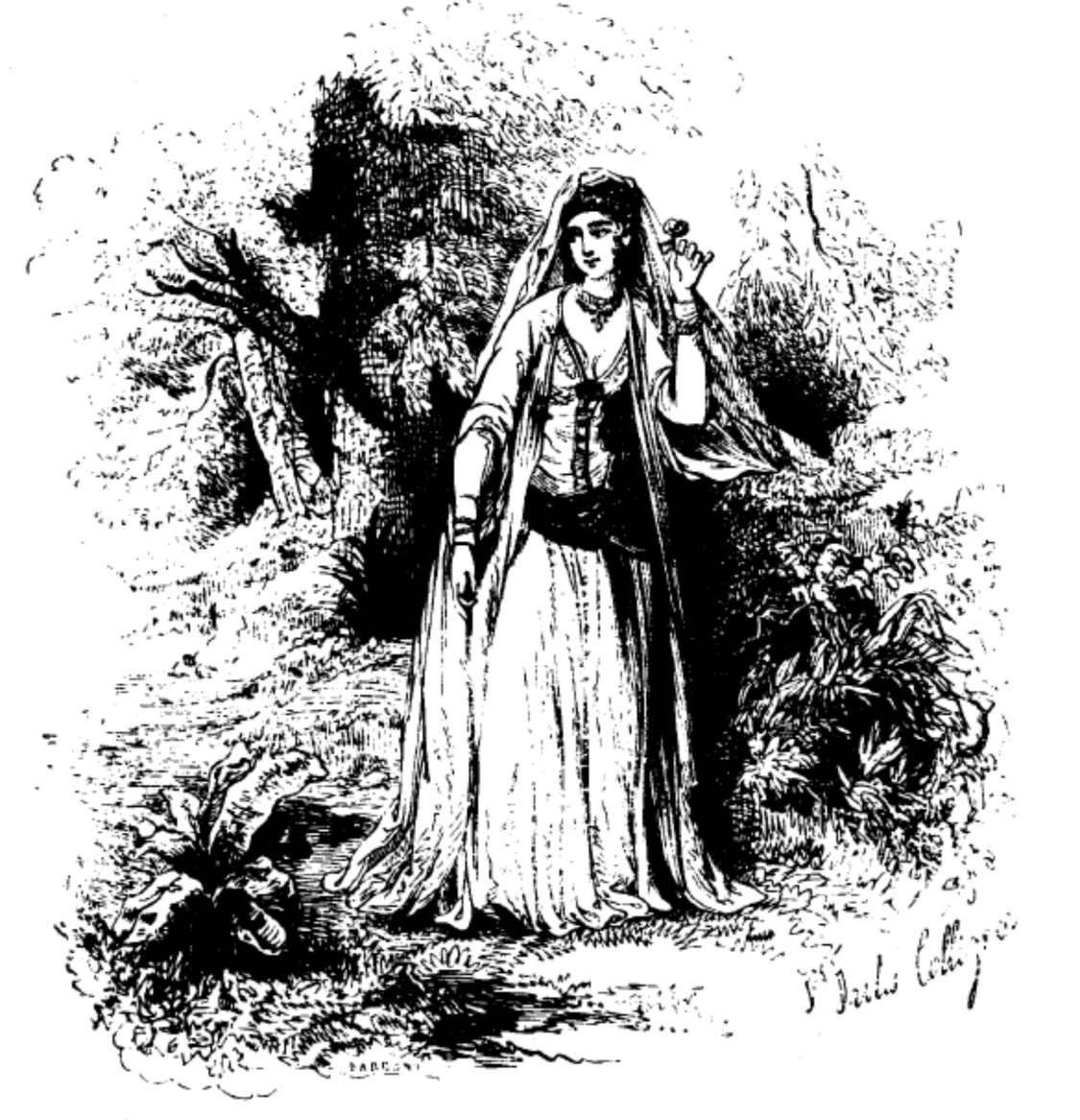
The Image of the Beloved in Hayrān Khānum Dunbulī’s Epic Poetry


Introduction
The corpus of poetry preserved from Persian-speaking female poets is markedly limited compared to that of their male counterparts. As the editor of Hayrān Khānum’s Dīvān (Book of poems) observes, “At the inception of my research, upon consulting the third volume of Ahmad Munzavī’s Fihrist nuskhahʹhā-yi khattī [Catalogue of Persian manuscripts],1Ahmad Munzavī, Fihrist-i nuskhahʹhā-yi khattī [Catalogue of Persian manuscripts] (vol 3., Tehran: Markaz-i dāʾirat al-Maʿārif-i Buzurg-i Islāmī [The Centre for the Great Islamic Encyclopaedia], 1377/1998). I encountered a startling statistic: against 5,899 dīvāns attributed to male poets, only 8 belonged to female poets.”2Hayrān Dunbulī, Dīvān-i Hayrān Khānum, ed. by Rūhʹangīz Karāchī (Tehran: Chāpār, 1393/2014). This disparity reflects multiple factors, including the different social positions of men and women, the political and social conditions of a patriarchal society, traditional ideologies, the subordination and objectification of women, and the hierarchical nature of society, all of which have excluded or distanced women from the enigmatic realm of poetry.3Hayrān Dunbulī, Dīvān-i Hayrān Khānum, 12–13. Although the body of poetry composed by Persian-speaking women is significantly smaller than that of men, thematic parallels exist between the two. In the works of female poets, the dominant theme is often love and the adoration of the beloved. By contrast, it is rare to find examples of panegyrics dedicated to powerful figures, a task often considered the primary duty of court poets, or narrative poems. The chief point of convergence between the poetry of male and female poets thus lies in their shared emphasis on romantic themes. Since most of the recorded Persian literary corpus, whether surviving as manuscripts or in published editions, is composed by men, this imbalance can be attributed to factors such as men’s greater access to literary education and the societal acceptance of poetry as a legitimate profession for them. Men’s wider access to education and the freedom to compose and publish poetry meant that their works became models for the relatively few women with literary training. Among the concepts that captivated male poets, those dealing with emotion resonated more closely with the sensibilities of women. As a result, female poets adopted romantic themes and the portrayal of the beloved from male poetry. This emulation produced a degree of similarity between the poetry of women and men. Yet the inherent delicacy of the feminine sensibility inclined women’s poetry more toward the expression of emotion and themes centered on the pursuit of affection from the beloved. In male poetry, by contrast, such imagery is often less nuanced and marked by greater robustness. The style of male poets in composing romantic poetry and their portrayal of the beloved thus became a model for women poets, and by virtue of its origin in male poetic traditions may be termed “masculine.” This approach to expressing concepts and presenting imagery can therefore be regarded as the “masculine” model of poetic composition.
The influence of the “masculine” model in Hayrān Khānum’s poetry can also be analyzed in the light of the poets from whom she drew inspiration. Hayrān Khānum was familiar with classical Eastern canon, including “Firdawsī, Saʿdī, Hāfiz, Nizāmī Ganjavī, ʿAlī Imād al-Dīn Nasīmī, Muhammad Fuzūlī. The influence of Hasan Ughlū, Nasīmī, and especially Fuzūlī is particularly evident in her poetry. Indeed, several of her poems were composed as homages to Fuzūlī. In poems inspired by Fuzūlī, some of which appear even more innovative than the works of this great poet, she praises love and laments the tyranny of the times and the cruelty of fate.”4Faiq Ələkbərli (Qəzənfəroğlu), “Azərbaycan Türk ictimai-fəlsəfi fikir tarixinə töhfə vermiş qadınlar: HEYRAN XANIM” [Women who have contributed to the history of Azerbaijani-Turkish socio-philosophical thought: Hayrān Khānum],” Fəlsəfə və Sosiologiya İnstitutu Azərbaycan Milli Elmlər Akademiyasının [Institute of Philosophy and Sociology of the Azerbaijan National Academy of Sciences] (February 02, 2024): 5. Because she combined innovation with a conscious engagement with the great poets of the past, Hayrān Khānum stands among those poets whose verse, while rooted in “masculine” models, is not devoid of feminine sensibility. Beyond this synthesis of masculine expression and feminine sensibility, her poetry exhibits a distinctive hallmark: the portrayal of warriors and heroic figures within the persona of the beloved. Her lexical choices reinforce this tendency. Although she is a poet of tenderness, articulating romantic and delicate emotions, the image of the ideal beloved in her imagination is imbued with courage and strength. Indeed, what renders the beloved attractive in her eyes is bound to the themes of bravery and valor.
The roots of this valorous and steadfast image of the beloved in Hayrān Khānum’s poetry can be traced to the events of her own life. In many ways, the inspiration for this imagery stems from key moments and experiences that shaped her personally. One of the most significant factors influencing her depiction of the beloved is the specific period of her life during which she encountered these formative events. This article examines the subtleties of Hayrān Khānum’s portrayal of the beloved and explores the origins of these images in her lived experience and poetic imagination.
Review of Literature
Hayrān Khānum Dunbulī is one of the lesser known female poets of Persian literature. Among the studies concerning her life and poetry, the most significant is the meticulous critical edition of her Dīvān. A remarkable and rare point about her works is the survival of a manuscript of her poems in her own handwriting. The original manuscript of Hayrān Khānum’s Dīvān-i Hayrān Khānum (Book of poems), penned by the poet herself, is preserved under the reference number M–217 at the Institute of Manuscripts of the Azerbaijan National Academy of Sciences named after Muhammad Fuzūlī. A facsimile of this manuscript, comprising of 299 pages, was published in Baku in 2002 by the Azerbaijan National Academy of Sciences, Institute of Manuscripts named after Muhammad Fuzūlī (Azərbaycan Milli Elmlər Akademiyasi Məhəmməd Füzuli Ad. Əlyazmalar İnstitutu).5Hayrān Dunbulī, Dīvān-i Hayrān Khānum, 37. This represents an exceptionally rare and invaluable opportunity for the critical editing of a poet’s Dīvān, a privilege seldom available for most poets. Since the manuscript is in the poet’s own handwriting, its text can be considered highly reliable and credible, provided that no subsequent alterations were made. This autograph manuscript was used extensively in the preparation of the critical edition of her Dīvān, which was published in 1393/2014. Earlier efforts to present her poetry predate this critical edition. For the first time, in 1324/1945, selected works of Hayrān Khānum were published in the Azeri Turkish language by the Society for Cultural Relations between Iran and the Soviet Union in Baku. This collection was republished in 1330/1951 by Āzarʹnashr and again about a decade later by the Idārah-ʾi Intishārāt.6Cənnət Nağıyeva, Heyran xanım Dünbülü (həyat və yaradıcılığı) [Hayrān Khānum Dunbulī (Her life and works)] (Baku: Yazıçı, 1989). Following this, in 1989, an illustrated pocketbook titled Heyran xanım Dünbülü (həyat və yaradıcılığı) (Hayrān Khānum Dunbulī (Her life and works)), spanning 252 pages and featuring an introduction by Cənnət Nağıyeva, was published in Baku. This volume included a selection of her Persian poems.7Nağıyeva, Heyran xanım Dünbülü, 1. In 1368/1989, Husayn FayzʹAllāhī Vahīd published Āzarbāyjān Klassik Ulduzlari, Divan-i Hayrān Khanim (Azarbaijan’s classical stars, Hayrān Khanum’s Dīvān) in Tabriz, which focused primarily on her Persian ghazals.8Hussayn FayzʹAllāhī Vahīd (Husayn Uldūz), Āzarbāyjān Klassik Ulduzlari, Divan-i Hayrān Khanim (Azarbaijan’s classical stars, Hayrān Khānum’s Dīvān) (Tabriz: Yārān, 1368/1989). In 2002, the facsimile edition of Dīvān-i Khattī-i Hayrān Khānum (The manuscript of Hayrān Khānum’s Dīvān) was published in Baku by the Azerbaijan National Academy of Sciences, Institute of Manuscripts named after Muhammad Fuzūlī.9Hayrān Dunbulī, Dīvān-i Hayrān Khānum (Fūtūfāksīmīla Nashrī) (Baku: Azərbaycan Milli Elmlər Akademiyası Məhəmməd Füzuli adına Əlyazmalar İnstitutu [Azerbaijan national manuscripts academy, institute of manuscripts named after Muhammad Fuzūlī], 2002).
Beyond the descriptions given in the preface to Hayrān Khānum’s Dīvān concerning her poetry and life, most scholarly works have mainly been introductory. In addition to the artistic and aesthetic aspects of her poetry noted in the preface, several studies in Turkish can be cited. One such book, Women Who Made a Mark in History and Contributed to the Culture of Azerbaijan: “Heyran Khanim Dunbuli,” focuses on her life, migration, and poetry composed in the style of Fuzūlī.10Tahmina Asgarova, Women Who Made a Mark in History and Contributed to the Culture of Azerbaijan “HEYRAN KHANİM DUNBULİ,” ed. by Hamlet Isakhanli (Baku: Khazar University Publishing House, 2023). Another study, “Hayrān Hanım Dünbüli’nin Türkçe Şiirlerinde Arkaizmler” (Archaism in Turkish poems of Hayrān Khānum Dunbulī), examines her vocabulary and phrases within dialectal structures and her lexical choices.11Ilnāz Malikī, “Hayrān Hanım Dünbüli’nin Türkçe Şiirlerinde Arkaizmler” [Archaism in Turkish poems of Hayrān Khānum Dunbulī], Türk Dünyası Dil ve Edebiyat Dergisi [Turkish world language and literature journal] 42 (December 2016): 49–61. The article “Ağabeyim Ağa Cevanşir ve Heyran Hanım Dünbüli Şiirinde Gurbet Motifi” (The motif of exile in the poetry of Āghā Baygum Āghā Javānshīr and Hayrān Khānum Dunbulī) explores her philanthropic themes, her expression of the people’s sorrows, and the pain and suffering of migration.12Lamiye Rahimova, “Ağabeyim Ağa Cevanşir ve Heyran Hanım Dünbüli Şiirinde Gurbet Motifi” [The motif of exile in the poetry of Āghā Baygum Āghā Javānshīr and Hayrān Khānum Dunbulī], Akademik Tarih ve Dusunce Dergisi [Academic journal of history and thought] 11, no. 2 (June 2024): 1025–43.
Among works published in Persian, research has focused largely on her personal life and formative experiences. An early article titled “Hayrān Khānum” by ʿAlāʾ al-Dīn Takish Bīglarbaygī briefly introduces Hayrān Khānum and her poetry, discussing her life, her works, and the surviving manuscripts of her Dīvān.13ʿAlāʾ al-Dīn Takish Bīglarbaygī, “Hayrān Khānum,” Armaghān 42, no. 2 (Urdībihisht 1352/May 1973): 120–26. Another article, “Āsār-i nisvān: Hayrān Dunbulī” (Works of women: Hayrān Dunbulī), provides a concise account of the poet.14“Āsār-i nisvān: Hayrān-i Dunbulī” [Women’s works: Hayrān Dunbulī], Armaghān 9, nos. 5 and 6 (Murdād– Shahrīvar 1307/August–September 1928): 307–11. Yet another, “Hayrān dar sāyah: Nigāhī bih shiʿr-i bānū Hayrān Dunbulī” (Hayrān in the shadows: A look at the poetry of Hayrān Dunbulī), addresses the limited fame of Hayrān and her poetic works.15Maryam Musharraf, “Hayrān dar sāyah (nigāhī bih shiʿr-i bānū Hayrān-i Dunbulī)” [Hayrān in the shadow: A look at the poetry of Hayrān Dunbulī)], Kilk 53 (Murdād 1373/August 1994): 125–29. A particularly useful study is “Dar shinākht-i shiʿr-i Hayrān Dunbulī va Dīvān-i dastʹnivīs-i Hayrān Dunbulī” (On understanding Hayrān Dunbulī’s poetry and her manuscript Dīvān), which examines various aspects of her poetry, details of the surviving manuscripts, and the different editions of her Dīvān.16Rūhʹangīz Karāchī, “Dar shinākht-i shiʿr-i Hayrān-i Dunbulī va dīvān-i dastʹnivīs-i ū” [On understanding Hayrān Dunbulī’s poetry and her manuscript Dīvān], Zabān va adab-i Fārsī [Persian language and literature] 67, no. 229 (Urdībihisht 1393/May 2014): 111–36. The author of this article expands these explanations in the preface to her critical edition of Hayrān Khānum’s Dīvān, published in the same year.
While the aforementioned works provide general overviews of Hayrān Khānum, a more recent article, “Nigāhī bih gham-i ʿishq va huviyyat-i mazlūm dar ghazalʹhā-yi Hayrān Dunbulī” (A look at the sorrow of love and the oppressed identity in Hayrān Dunbulī’s ghazals), offers a more detailed and nuanced analysis of her poetry.17Farahʹmand Rūyīnʹtan, “Nigāhī bih gham-i ʿishq va huviyyat-i mazlūm dar ghazalʹhā-yi Hayrān Dunbulī” [A look at the sorrow of love and the identity of the oppressed in Hayrān Dunbulī’s ghazals], Shiʿrʹpazhūhī [Poetry studies] 15, no. 1 (Khurdād 1402/June 2023): 143–68. This article adopts a psychological approach to examine the personas of Hayrān Khānum and her beloved, exploring the themes of longing for affection, the sense of victimhood in love, and their manifestations in her poems. No comprehensive research has yet been conducted on the artistic origins of Hayrān Khānum’s poetry or the poetic imagery of the beloved in her verses. This article seeks to address this subject.
Discussion
Hayrān Khānum’s Life Events
The trajectory of Hayrān Khānum’s life differs in notable ways from that of many other female poets. Whereas most women poets have focused primarily on themes of love, separation, and heartbreak, Hayrān Khānum’s experience of love and affection is deeply interwoven with war and displacement.
As Rūhʹangīz Karāchī writes:
Hayrān Dunbulī, the daughter or, according to some accounts, the sister of Karīm Khān Dunbulī, resided near the northern region of the Aras River. Following the first phase of the fourth Russo-Persian War (1183/1804–1192/1813), which ended in Iran’s defeat and the loss of territories north of the Aras River, she migrated with her family and tribe from the Nakhjavan region to the southern side of the river. Her father went to meet ʿAbbās Mīrzā Nāyib al-Saltanah, the Qajar prince during the reign of his father Fath ʿAlī Shāh Qajar (1158/1797–1213/1834). ʿAbbās Mīrzā granted Karīm Khān the village of Khanaghah Surkh (Qizil Khaniyah), located 18 kilometers from Urmia, as a fiefdom, and from that time onward, the Kangarlū Dunbulī settled there.18Hayrān Dunbulī, Dīvān-i Hayrān Khānum, 8.
This displacement intensified the prominence of valiant and protective male figures in her life. It also led Hayrān Khānum to compensate, at least partially, for the absence of her distant beloved and homeland by idealizing masculinity embodied in her protectors. Two perspectives have been proposed concerning her emotional life. The first points to the suffering caused by an ill-suited, unfaithful, or emotionally cold companion, whose absence, paradoxically, may have been a blessing for Hayrān Khānum. Her migration from the northern to the southern banks of the Aras was the most significant event of her life, and the feeling of separation from her beloved and her homeland permeates her poetry. One ghazal, in particular, hints at the possibility of an unhappy marriage. In it, she expresses the wish to part from her husband:
How long will you keep me bound?
Surely, you are not my Lord.
Thirsty and hungry, lacking fervor and flame,
How long will you cast me aside, abandoned and forlorn?
I know not what I have done to fate
That it has humbled me within your embrace.
Before such cruelty upon my destiny,
At times I weep, at times I laugh.
If you set me free,
By God, I shall find contentment in Him alone.
The second perspective attributes her lamentations to separation from her beloved fiancé:19Hayrān Dunbulī, Dīvān-i Hayrān Khānum, 9.
It is believed that around the year 1218/1839, when Hayrān Khānum was forced into exile, she was fourteen years old, unmarried, and engaged. This involuntary exile permanently separated her from her fiancé. This formative event cast such a profound shadow over her life that she repeatedly made it the theme of her poetry:
I lament my fate, O friends, this very night.
The pain of separation from that youth sets my frail body aflame.
I rejoiced in his union, yet my heart carried this regret—
To circle his form like a moth around the candlelight.
When my hope was severed from union with that beloved, moon-like face,
Tell the garden of my being: tonight, the autumn wind has blown.20Hayrān Dunbulī, Dīvān-i Hayrān Khānum, 10.
In either scenario of separation—whether from a desired or an undesired beloved—the pain of distance finds expression in Hayrān Khānum’s poetry. This separation is artfully conveyed through her replacement of absent beloved figures with valiant ones, animated through vivid imagery. In essence, whether mourning the absence of an unkind husband or a cherished lover during her years of exile, Hayrān Khānum idealizes the heroic beloved as an archetype. This theme forms the cornerstone of the aesthetics of her poetry, endowing it with a distinctive character. While her work reflects the poetic models of male poets, it remains closely intertwined with themes of heroism and valor.
To confirm these observations and to highlight the distinctiveness of Hayrān Khānum’s poetry, one can compare her work with the that of Parvīn Iʿtisāmī (1285/1906–1320/1941). Iʿtisāmī is one of the few female poets whose style diverges from that of most women poets. Because of the rigor of her language and the seriousness with which she treats her themes, Iʿtisāmī’s poetry is frequently compared to that of male poets. Moreover, a discernible difference exists between Iʿtisāmī’s poems and those of other female poets, whose works are typically more emotionally driven and predominantly romantic in tone. However, while Iʿtisāmī’s poetry parallels that of male poets in linguistic mastery and thematic depth, it does not possess a strong association with heroism and valor.
In contrast, Hayrān Khānum’s poetry, while resembling that of male poets, is distinguished by its valiant themes and mastery of language and eloquence. Notably, what aligns Hayrān Khānum’s work even more closely with male poets than with Iʿtisāmī’s is the presence of masculine, valiant beloveds in her verses.
Central Themes
Hayrān Khānum’s collected works encompass a wide array of concepts. Her poems include praise of God and supplication to the Divine, lamentations over the hardships of life, and romantic themes. Nevertheless, the central motif of these poems revolves around the expression of emotion and love. According to Faiq Ələkbərli, “In Hayrān’s Dīvān, there are nearly 4,500 poems in forms such as qasīdah (from the root qasada, meaning “to aim at”—a formal, elaborate and often polythematic poem usually translated as “ode”), ghazal, qitʿah (literally “piece” or “segment,” a short, monothematic poem), and tarjīʿʹband (literally, “return-tie,” a series of stanzas held together by a repeated refrain), written in both Turkish and Persian. A significant portion of these poems are dedicated to ʿAbbās Mīrzā and his sister.”21Ələkbərli, “Azərbaycan Türk ictimai-fəlsəfi fikir tarixinə töhfə vermiş qadınlar: HEYRAN XANIM”: 2. These poems carry an affectionate tone, blending devotion with love and respect. Such poems appear more frequently in Hayrān Khānum’s Dīvān and display a higher rhetorical quality compared to her poems with other themes. For this reason, the principal poetic theme of her Dīvān may be considered the expression of romantic feelings. This central theme can be further divided into several subthemes and classified according to the aesthetics of her poetry.
Aesthetics of Poetry
The romantic concepts and the expression of emotion in poetry prior to Hayrān Khānum can, at a broad level, be divided into two categories: poems written by women and those written by men. As Masʿūd Rawhānī and Sarvināz Malik observe in their discussion of gender and literary expression:
Since gender is a fundamental aspect of human identity, shaped by both biological differences and social structures, it influences not only everyday language but also literary expression. Similes and metaphors, in particular, often reveal a poet’s gender identity. Through imagery and figurative language, poets convey their thoughts and emotions, embedding their individual sensibilities into their work. Given that the emotions and perspectives of women and men frequently diverge, these distinctions shape their approaches to imagery in distinctive and meaningful ways.22Masʿūd Rawhānī and Sarvināz Malik, “Barrisī-i taʾsīr-i jinsiyat bar kārʹburd-i tashbīh va istiʿārah dar shiʿr-i zanān-i shāʿir-i muʿāsir” [An analysis of the impact of gender on the use of simile and metaphor in the poetry of contemporary women poets],” Faslʹnāmah-ʾi zabān va adabiyāt-i Fārsī [Persian language and literature quarterly] 19, no. 74 (Spring and Summer 1392/2013): 12.
Throughout the history of Persian literature, the majority of poets have been men who, alongside composing panegyrics and narrative poetry, also explored themes of love and emotion. Their poetic expressions often revolve around a beloved who is feminine in nature, yet direct references to her were not socially permissible. Consequently, poets employed indirect allusions to depict their beloveds. Such allusions appear, for instance, in the portrayal of lovers within the masnavī (rhyming couplet), where poets, drawing upon earlier literary sources as well as their own imagination and artistic sensibility, crafted these depictions. Given that the beloved in these narratives was often a fictional character or, if based on a historical figure, belonged to the distant past rather than being contemporary with the poet, these depictions rarely provoked social censure. Examples of this style can be found in Nizāmī Ganjavī’s Khusraw and Shīrīn (Khusraw va Shīrīn) and Laylī and Majnūn (Laylī va Majnūn).
Male poets often depicted the beloved in masculine form. This convention appears even more frequently in ghazals and other lyrical genres than the portrayal of a female beloved. In the majority of romantic verses composed by male poets, one can discern the image of a youthful male beloved, often in the bloom of adolescence. Attributes of bravery, combined with physical beauty and a warrior-like spirit, are considered defining characteristics of such figures. Traces of this literary tradition can be observed in the works of numerous poets.
In contrast, in the poetry of female poets, themes such as devotion and praise, descriptions of nature, and moral counsel are more prevalent, and few women poets have ventured into composing long romantic masnavīs. This tendency was not limited to poets preceding Hayrān Khānum but continued among those who followed her, including Parvīn Iʿtisāmī.
In the poetry of women preceding or contemporary with Hayrān Khānum, due to social constraints, either there is no mention of love and romantic longing for a male beloved, or such references are expressed in modest language and indirect language. For this reason, the presence of a poet such as Furūgh Farrukhʹzād (1313/1934–1345/1966) in the modern era, with her explicit portrayal of a male beloved, is regarded as novel and rare. This rarity, however, is relative, since certain poems attributed to earlier poets such as Rābiʿah bint-i Kaʿb-i Quzdārī (d. 839/1460) contain more direct references to a male beloved than the works of other female poets. This point is illustrated in the following poem attributed to Rābiʿah bint-i Kaʿb-i Quzdārī, which explicitly addresses a male beloved:
O midnight breeze, carry my message to the beloved.
Tell that sovereign of beauty that my soul and heart are one in their devotion.
O fair-faced beloved, with but one glance, you tore my heart in wrath,
Just as the Lion of Repeated Attack (Haydar-i Karrār) uprooted and conquered the fortress of Khaybar,23“Haydar-i Karrār” is one of the well-known epithets of Imam ʿAlī, used by both Shiite and Sunni communities. This epithet is mentioned in the account of the Battle of Khaybar, the conflict between Muslims and the Jewish inhabitants of the fortress of Khaybar in the seventh year of the Hijri calendar. In the battle-cry exchange, Imam ʿAlī introduces himself as “I am the one whose mother named me a fierce lion. I strike you with my sword in heavy, overwhelming blows. I am a roaring lion of the deep forests and a powerful panther with claws and fangs.” Ibn al-Asīr, Tārikh-i kāmil [Complete history], trans. by Siyyid Hussayn Rawhānī (3rd repr. ed., Tehran: Asātīr, 2005), 3:1069–70.
You are like the moon, and I, a fish, burning on the pan.
As if the sorrow of your love were not enough, you added cruelty to it.
My body has coiled like a ring, in hope that one day
A curl from your tresses might suddenly fall and entwine with it.
The beloved has turned cruel, and all my sorrow stems from this,
For never has anyone gained aught from the beloved’s tyranny.
If you desire to make the beautiful ones suffer the pain of separation,
Show your fair face to one of those beauties.
Muʾizzin (caller to prayer), if at dawn you care for the state of the lover,
Turn your attention to that Allahu Akbar (God is Great) for it rises
From the heart of a lover, restless from the pain of separation.
O Bint-i Kaʿb, grieve not that the beloved is far from you.
Though the rope may seem long, it must pass through the loop in the end.24Ghulām Habīb Navvābī, Rābiʿah Balkhī (Balkh: 1330/1951).
Some scholars have interpreted Rābiʿah’s poetry as centered on divine love rather than earthly passion. Accepting this view renders Hayrān Khānum’s poetry more concrete and grounded in worldly experience. In support of this argument, reference is often made to the aforementioned ghazal:
Great mystics, through deep reflection on Rābiʿah’s experiences of love and close examination of her life and works, have concluded that her love was not mundane. In the horizon of her imagination and aspirations, the story of Biktāsh and his love resembles the false dawn that precedes the true break of day and the radiant light of the sun. The intoxicating wine that enraptured and enthralled her was the wine of divine truth, not illusion. This claim is evident in the intensity of her ecstasy and fervor, as reflected in her invocation of the phrase Allahu Akbar in this ghazal.25Navvābī, Rābiʿah Balkhī, 10.
The social constraints imposed on women’s access to literary education, along with the necessity of obtaining familial and societal permission to write, their limited public presence and the scarcity of female poets, often led many women to adopt male poetic conventions in their own verse. They frequently took poems composed by men about their beloveds as models for crafting their own romantic poetry.
Throughout history, the circumstances of female poets and their relationship with society have been fundamentally different. Men, through a patriarchal lens, deprived women of individual rights and freedoms, restricting their roles in society, and limiting their access to wealth, property, and cultural and social resources. The constraints imposed by gendered division of labor, domestic roles, unequal opportunities, and prevailing value systems confined women within the rigid framework of male-dominated beliefs. This marginalization affected all aspects of women’s lives, and the realm of art has been no exception.26Rūhʹangīz Karāchī, “Chigūnahʹgī-i taʾsīr-i jinsiyat bar adabiyāt” [The influence of gender on literature], Zan dar farhang va hunar [Woman in culture and art] 7, no. 2 (Summer 1394/2015): 237.
Perceiving their societal status as lower than that of men, women often felt compelled to imitate male intellectual and literary traditions:
A complex interplay of biological and sociocultural differences plays an undeniable role in shaping individual identity. The social structure and cultural history of unequal gender relations, sustained over centuries, led women to develop a dependent and male-oriented identities, conforming to the desires of the dominant class while often suppressing their own aspirations. This dependency and lack of autonomy influenced their perspectives and personality traits, compelling them to align with traditional societal expectations. Even when women expressed interest in traditionally male-dominated subjects, entrenched cultural traditions and hegemonic social systems prevented them from crossing gendered boundaries and challenging established norms.27Karāchī, “Chigūnahʹgī-i taʾsīr-i jinsīyyat bar adabiyāt,” 237.
Given that men have historically enjoyed greater opportunities for poetic experimentation and access to literary knowledge, the emulation of their poetry elevated the poetic works of women. However, one aspect of this imitation introduced a notable complexity: the prevalent depiction of a youthful male beloved in men’s poetry. At times, the characteristics of such a beloved coincided with those portrayed by female poets, resulting in the creation of compelling literary works. At other times, however, this alignment was absent, producing incongruities and limitations in the imagery and conceptual depth of the poetry.
The following discussion examines the nuances of this imagery in greater detail. Before proceeding to this analysis, it is important to address the classification of Hayrān Khānum’s poetry. Her poems are composed in both Turkish and Persian and can therefore be categorized into two distinct groups, each exhibiting rhetorical differences. Born in Azerbaijan, Hayrān Khānum’s mother tongue was Turkish, and naturally, she possessed greater mastery of this language than of others. Her command of the nuances and intricacies of Turkish allowed her, when composing her love poetry in that language, to express her emotions with heightened sincerity and in greater detail.
Several points also merit clarification regarding Hayrān Khānum’s Persian-language poetry. During her lifetime, Persian was widely spoken beyond the borders of Iran, and individuals such as this poet, who aspired to acquire literary and poetic knowledge, learned it alongside their native tongue. One reason for this was the prominence of major literary works written in Persian. These prestigious texts, used for educational purposes, facilitated the transmission of the language to new learners. Like many of her contemporaries, Hayrān Khānum learned Persian by studying the poems of celebrated poets and courtly literature—especially eulogies—and utilized Persian for composing her formal poetry. In this context, “formal poetry” refers to works that stand in contrast to more personal, friendly poems. In formal poetry, unlike informal verse, one does not encounter a warm or familiar tone or a simple vocabulary. Instead, the poet strives to embellish her language with rhetorical and figurative devices, rendering it more sophisticated and more suitable to the refined tastes of her audience, who were generally individuals of high social standing. Examples of formal poetry in Hayrān Khānum’s works are more numerous in Persian, while her Turkish poems are more intimate and intertwined with personal emotions.
As stated above, Hayrān Khānum expresses emotional concepts in both Persian and Turkish. However, owing to her greater proficiency in Turkish, her poems in that language are imbued with intimacy and the direct expression of pure emotions, often intertwined with a heroic tone. By contrast, Persian serves as a formal medium for addressing individuals of higher social status, and thus her poems in this language are marked by elevated diction and grandeur. Since the expression of emotion in Persian poetry of the period tended to be somewhat dry and formal, Hayrān Khānum’s Persian works bear greater resemblance to masculine, eulogistic poetry. The analyses in the sections that follow demonstrate the differences in tone and linguistic usage between Hayrān Khānum’s Turkish and Persian poems.
Valiant Imagery
In Hayrān Khānum’s poetry, the beloved is regarded as worthy of respect and noble attributes when bravery and chivalry are identified as defining traits. This perspective reflects not only the high value placed on these qualities in her own era but also the historical and political circumstances in which she lived. Because of social turmoil and continuous conflict, Hayrān Khānum was separated from the city and homeland of her youth. In her imagination, she sought a beloved whose character and values corresponded to the demands of her time. In reality, Hayrān Khānum longed for a savior or companion who could provide safety and happiness amid the hardships of exile. This beloved is at times embodied in the figure of ʿAbbās Mīrzā, whom Hayrān Khānum describes with formality and deference, befitting his royal status:
Light of my eyes, more precious than life itself,
In truth, you are greater even than my soul.
In service to the noble lord, descended from Firīdūn,
An Alexander in power, a Solomon in rank.
The sun is abashed before the splendor of his face
Venus, Mercury, and Saturn as well.
What beauty he possesses, beyond the realm of mortals:
A king in essence, though clothed in human form.
Neither old nor young has ever seen his equal.
His speech revives the dead,
His wrath brings to ruin all that is perishable.
How many broken and bound desires you behold,
Born of Hayrān’s wandering thoughts.
His bright and noble judgment was held in esteem
And became cherished through the path of kindness and grace.28Hayrān Dunbulī, Dīvān-i Hayrān Khānum, 65.
This type of poetry, which presents the beloved in the guise of a king or a figure of elevated stature, is composed primarily in Persian and displays a moderate level of intimacy. In the verses above, Hayrān Khānum likens the king, in terms of worth, to the “light of the eyes” and, through an emphatic simile, elevates him above life or soul itself. She places him alongside legendary kings such as Firaydūn, Alexander, and even Solomon. The descriptions in these verses strongly recall the panegyric style of the Khurāsānī tradition and the court poets of the Ghaznavid era. Although social values evolved from the Khurāsānī period to Hayrān Khānum’s time, the people’s perception of the king as the central and salvific figure of society remained largely unchanged. Aware of this, Hayrān Khānum emphasizes qualities such as divine charisma, awareness, and knowledge that set the king apart from ordinary individuals.
In Hayrān Khānum’s poetry, the beloved sometimes appears as a figure whose conception is bound to an epic vision. Epic qualities flow through the veins of her verses. Her beloved is placed in a realm intertwined with battle, and for this reason his valor assumes great importance. In the opening couplet of the ghazal below, the image of the beloved’s black mole (khāl) on his lip is likened to a kingdom between two commanders. As the poem continues, martial concepts and imagery blend with elements of nature. By borrowing the foundations of her images from nature, Hayrān Khānum moderates the depicted atmosphere, tempering the harshness of epic visualization. The valiant portrayal of the beloved dominates Hayrān Khānum’s imagination to such an extent that, after introducing a natural image in the second couplet, she returns to royal and epic attributes in the following verses. When she describes the beloved’s dark tresses, she refers to the King of Abyssinia, framing one side of the simile with regal imagery. Later, the poet’s mention of the bow-shaped arch of the beloved’s eyebrow and his dark tresses evokes a relationship between darkness and oppression, portraying the beloved as a pure soul caught between two tyrants: the bow of the eyebrow and the black tresses. In the subsequent verses, she alludes to attributes connected with kingship, judicial authority, and moral discernment. Concepts such as confession, intoxication, and sobriety appear intertwined with classical literary motifs, particularly the motif of intoxicated eyes.
The black mole upon your lip, resting in the glow of your cheek,
is a sovereign enthroned between two noble commanders.
Behold, how wondrous, how soul-stirring
a single violet blooming in the heart of a flower-laden garden.
O heart, be still. Be silent.
How could you dare liken one so pure
to one so low, so unworthy of her grace?
It is as though the King of Abyssinia himself
sits upon the throne of beauty and delight,
Just as the corner of his lip is cradled
within the silk of his ebony tresses.
Your black locks, lying between your two bow-shaped brows,
are like a soul ensnared between two tyrants.
The heart has sworn an oath to your raven hair,
and its vow is this:
It shall not waste its death in vain illusion,
but die in the full light of confessed love.
The dove of my heart is drawn to your ruby lips and luminous eyes
a poor drunkard, lost and wandering among the sober.
The downy hair that grows upon the garden of your cheek
is a wounded bud, bloodied among the thorns.
Hayrān Khānum, in the long night of your absence,
remembers the sweetness of union.
What a marvel it is,
that even in the blaze of fire, paradise can appear.29Hayrān Dunbulī, Dīvān-i Hayrān Khānum, 112.
In another ghazal, Hayrān Khānum speaks of the beloved’s arrival. Although she portrays herself as a lover crushed by the agony of separation, she regards the beloved’s return a remedy for her tormented heart. The imagery she employs to describe the beloved’s beauty is drawn from the lexicon of warfare. The beloved’s stature is likened to a towering and graceful cypress, his tresses to a lasso that ensnares both heart and soul, his face to a blooming rose, his eyebrows to a bow, and his eyelashes to sharp arrows. In other verses, the beloved’s radiance is compared to the sun and the moon, evoking Firdawsī’s descriptions of legendary warriors such as Rustam.30In Firdawsī’s Shāh’nāmah, both figures of beauty, such as Rūdābah, and heroic warriors like Rustam are compared to the brilliant sun. A prominent example occurs in the confrontation between Bahman, son of Isfandiyār, and Rustam, where Bahman likens Rustam to the radiant light of dawn. Even the beloved’s coquettish glances are likened to a dagger held with the intent to wound the lover’s heart. In the final lines, the poet presents herself as a willing sacrifice and protective shield for her beloved whom she reverently addresses as shāh (king).
Life-giving glad tidings have arrived,
the beloved is coming.
That graceful, gliding cypress
approaches the garden of the soul.
O my beloved,
the pain of separation and abandonment
has cast me to the ground.
But now, a remedy draws near
for this wounded, sorrow-heavy heart.
The morning breeze has tousled your black tresses,
and like the radiant face
of sun and moon together,
you appear, shining.
The beloved comes,
his stature like a slender cypress,
his hair the snare of heart and soul,
his face a blossom,
his eyebrows arched like bows,
his lashes sharp as arrows.
He comes.
His ruby lips scatter pearls when he smiles,
and at his laughter,
the flowers in the garden’s courtyard
burst into smiles of their own.
He unveils his face
and the whole world is filled with light,
as though the sun has risen
from the horizon
to illuminate the earth.
He comes,
bearing the dagger of coquetry,
the arrows of his glances drawn
intent on slaying his lover,
a calamity upon her
like the cruel turns of fate.
And soon the time will come
when his glory is revealed
the day when it shall be said:
the sovereign of all beauty has arrived.
And if you are ever granted
an audience with this king,
then offer your very life in his service.
O Hayrān,
sacrifice your soul
to that cypress striding
through the soul’s garden.31Hayrān Dunbulī, Dīvān-i Hayrān Khānum, 117.
The Reference to the Heroic Qualities of the Beloved (Masculine Poetry)
A defining feature in the portrayal of young men who assume the role of the beloved in Persian poetry is the emphasis on their gallantry and courage. The youthful beloved was not merely depicted as a figure of striking beauty and ideal physical form; rather, valor and fearlessness constitute central and defining traits of his character. In Hayrān Khānum’s poetry, the beloved similarly embodies these attributes. In the verses where love and affection are expressed, the most prominent characteristic remains courage. It appears that what most captivated Hayrān Khānum as a lover was the beloved’s bravery above all else.
The distinction between depictions of bravery and heroic qualities lies in this: imagery of bravery typically involves references to warlike conditions or political instability, while heroic attributes are presented through descriptions of the beloved’s personal character.
In this context, Hayrān Khānum subtly engages with the classical literary tradition of praising the beloved. She presents the heroic beloved not only as one endowed with spiritual and psychological virtues—chief among them courage, fearlessness, and, at times, audacity—but also as possessing a certain physical allure. Thus, the heroic beloved is not merely a figure of power and virtue but also one of beauty and charm. Hayrān Khānum skillfully weaves together descriptions of both external features and inner qualities, drawing upon the rich repository of classical poetry dedicated to the praise of the beloved. In doing so, she avoids reducing her poetry to abstract or purely moralistic reflection ensuring it remains vivid and engaging for her audience.
The audience of Persian poetry, shaped by centuries of literary tradition, seeks the presence of a figure who stands above all others regardless poetic genre and anticipates encountering descriptions of such a character. In the following verses, composed by Hayrān Khānum under the influence of the Hurūfī movement and one of its prominent representatives, Fuzūlī, the poet entwines the attributes of the beloved with letters and khatt (line or script). Like many poets, Hayrān Khānum employs the term khatt in its deliberately ambiguous dual sense: both the line of hair on the beloved’s face and his handwriting. Through clever and striking similes, she vividly portrays both the material and the spiritual magnetism of the beloved. In the final verse, the beloved’s khatt, interpretable in either sense, brings joy to the lover’s heart and light to her eyes, offering both sensual delight and spiritual ecstasy.
O, your line is like a line of ruby,
Your line gives strength to hearts.
Every letter of it is like a sweet soul,
Every dot is like the Pleiades.
Its alif (ا) is like the stature of the beloved,
Its sād (ص) like the eyes of the beautiful ones.
Its lām (ل) is the tip of the beloved’s lock,
Its mīm (م) is like the beloved’s painted lip.32In Persian literature, descriptions of the beloved’s beauty often rely on comparing different parts of the beloved’s face or body to the shapes of letters in the alphabet. In the literary tradition, the letter alif (ا), written as a straight vertical stroke, is used to describe the beloved’s upright, slender, and unbending stature. The letter sād (ص), which has an elongated written form, is likened to the graceful, extended shape of the beloved’s eyes. The letter lām (ل), with its curved form, is imagined as resembling the beloved’s long, wavy locks of hair. And the letter mīm (م), written with a small dot inside its curve, is compared to the beloved’s small and delicate lips.
In short, from your line, O jasmine-bodied one,
The heart is gladdened, and both eyes are illuminated.33Hayrān Dunbulī, Dīvān-i Hayrān Khānum, 80.
Hayrān Khānum’s beloved is captivating both in outward beauty and inner virtues, possessing unparalleled excellence to such an extent that, in a ghazal structured around comparative similes, she employs numerous examples and archetypes from Persian literature to elevate her beloved above them all. In the following verses, the beloved is described with qualities that render every literary archetype and example insignificant in the eyes of the audience. Even the radīf (refrain) of the poem, bagan maz carries the meaning of disapproval or devaluation: “Behold the beloved’s lips—so deeply red and radiant, you no longer value the ruby of Badakhshan.” This line implicitly conveys the dismissal and devaluation of all else, while also suggesting an aspiration toward perfection and the contemplation of a superior ideal. In these verses, Hayrān Khānum gazes upon her beloved through the lens of emotion and external charm and then declares that attaining union with the beloved surpasses even sitting upon Solomon’s throne. She considers the beloved’s radiant face more enchanting to Zulaykhā than Joseph of Canaan. In the final two couplets, she elevates choosing the beloved’s path and serving him above both royal thrones and the gardens of paradise.
Behold the beloved’s lips, so deeply red and radiant,
you no longer value the ruby of Badakhshan.
When you see the casket of his mouth,
you no longer find the laughing rosebud beautiful.
Whoever sees his teeth when he smiles
no longer prefers rolling pearls and gems.
If one sees the moonlight of the beloved’s face upon the earth,
she no longer favors the shining sun that circles the sky.
Look at his locks, more beautiful than jasmine,
framing his face,
for you no longer favor hyacinths and basil in the garden.
If a lover’s turtle dove sees the beloved’s gait,
it no longer favors the graceful cypress in the garden.
Whoever dwells in the street of union with him,
by God’s oath, no longer values Solomon’s throne.
O king of time and moon of the world,
if Zulaykhā were to see your face,
she would no longer favor Joseph of Canaan.
If your beloved becomes a sweeper and cleaner of the beloved’s threshold,
know this for certain:
he no longer values the throne of kingship.
If Hayrān settles in the valley and plain of the beloved,
she no longer sees or favors Rizwān’s gardens of paradise.34Hayrān Dunbulī, Dīvān-i Hayrān Khānum, 106.
In the descriptions found in some of Hayrān Khānum’s ghazals, her beloved appears as a heroic figure utterly devoid of fear or caution. His portrayal is primarily framed around behavioral values and relational dynamics. The beloved is compared to legendary heroes like Rustam, the archetype of valor, and his glance is likened to Rustam’s spear, striking the heart, depicted as the target, analogous to the vulnerable eye of Isfandiyār within the simile’s structure. The following ghazal, exemplary of Hayrān Khānum’s frequent invocation of motifs of battle and bravery, employs a range of rhetorical devices. The beloved’s eyes are portrayed as bloodthirsty, yet simultaneously likened to the deer of the Tatar steppes, while the lover’s heart is depicted as prey, restlessly yearning for this bloodthirsty deer. The imagery is so original that the poet regards the unrest of one deer over another predator-like deer as a marvel. From the luminous, moon-like radiance of the beloved’s face, the poet moves to describe his arrow-like glance, which strikes the heart’s target—again compared the vulnerable eye of Isfandiyār. In the following verses, conventional motifs of love poetry are delicately integrated: the beloved’s tresses are likened to a snare, and a bird, witnessing the snare, laments with sorrow. The beloved’s enduring traits present such a unique allure that the lover perceives him as the sole figure on earth possessing these qualities—youthful beauty, intoxicating eyes, ruby lips, and a cypress-like stature. These attributes, the poet declares, have bound her to love since the Day of Alast (literally, The Day of “Am I not [your Lord]?”; The Day of the Covenant).35The Day of Alast (from the Arabic phrase ʿalastu bi-rabbikum, meaning “Am I not your Lord?”) refers to a moment in pre-eternity described in the Quran (7:172), in which God gathered the souls of all humanity and asked them, “Am I not your Lord?” (Alastu bi-rabbikum), to which they replied, “Yes, we bear witness.” This covenant is interpreted in Islamic mysticism as the primordial acknowledgment of divine lordship and a moment of metaphysical recognition and love between the soul and God. In Persian Sufi and love poetry, it is frequently used metaphorically to suggest a timeless, fated, or pre-eternal bond of love between the lover and the beloved.
Your bloodthirsty, slaying eyes.
They are like the wild gazelles of the Tatar steppes,
and the prey of my heart is restlessly drawn to that fierce gazelle.
My heart is captive to your wine-laden gaze,
and the miracle lies in this:
that one gazelle has become the hunter of another.
Because of the distance between us,
because your moon-like face remains veiled,
my days and nights are filled with wailing and lament.
The arrow of your glance is like Rustam’s mighty bow,
and my heart, its mark, is like Isfandiyār’s fatal eye.
The bird of my heart, upon seeing the snare of your dark tresses,
falls helpless, sighing and crying in longing and grief.
When the veil lifts from your radiant, moon-like face,
it is as if a spring bursts forth from behind a passing cloud.
A youth with inebriated eyes, lips like rubies, and a stature like the cypress,
if such a one walks the earth, then he alone is the true beloved.
Since the Day of the Covenant, Hayrān has belonged to you.
This is a truth too manifest to conceal, too clear to deny.36Hayrān Dunbulī, Dīvān-i Hayrān Khānum, 119.
Though Hayrān Khānum laments and mourns the absence of the beloved, the beloved pays little heed to her suffering, prompting the lover to voice her grievances. This time Hayrān Khānum envisions the beloved as a sovereign figure, one to whom she remains devoted, yet from whom she remains estranged. As is customary in literary tradition, the lover experiences the beloved’s indifference as deeply tormenting.
O morning breeze, wind of Sabā!
Deliver my greetings, and leave my message
with the one chosen among the virtuous.
Say: “O flower of the royal garden,
Say: O moon of the celestial sphere of dignity and honor,
It has been an endless time that I,
like a bewildered nightingale,
have sat along the path of your love, sorrowful and lost.
There is no companion
to inquire about my condition from time to time,
no confidant to whom I might speak of my sorrows.”
This is a petition from this servant
to that noble lord:
In his service, I confessed with both soul and heart.
What would it cost, from time to time,
to care for even a speck of dust?
Would you not, out of kindness,
inquire after your servant’s condition?
O poor one! How will your days pass?
What will my absence do to you,
O stranger and weary soul?
By the dust of your feet,
O king of beauties,
I swear from separation from your face,
through months and years,
through nights and days,
I weep like a cloud,
for the parting from your moon-like face.
I cry out like thunder,
mourning the sorrow of your absence.
From your love, I have become bewildered and lost.
From your separation, I weep like the spring cloud.
O morning breeze!
When you deliver the letter,
plead a thousand times,
until you receive a reply and bring it back.37Hayrān Dunbulī, Dīvān-i Hayrān Khānum, 70.
The Use of the Literary Tradition of Describing the Beloved
Given that Hayrān Khānum models her poetic style on that of male poets and shows a marked inclination toward the aesthetic embellishment of her verse, she at times presents her beloved in purely physical terms in her romantic poetry, with minimal attention to his inner qualities.
The description of the beloved, the figure who captivates the poet’s gaze, is a well-established and prominent theme in Persian literature. This tradition appears across various poetic forms, from panegyric odes to romantic genres such as narrative masnavīs and emotionally charged ghazals. This thematic motif has long been favored by both Persian poets and their audiences, becoming an integral part of Persian literary heritage. Accordingly, Hayrān Khānum does not distance herself from this tradition and composes poetry that adheres to its conventions.
Because Hayrān Khānum draws heavily from poetic models established by male predecessors, her beloved is at times depicted as feminine, while at other times his characteristics resemble those of male figures, like the youthful male beloveds in traditional Persian poetry. In the following excerpt, the reference to the presence of Joseph of Canaan and, as in earlier examples, the suggestion of the beloved’s superiority over him, along with the harshness of the imagery and its associations with sharp-edged objects like a gleaming sword, a piercing glance, and a sharp dagger, all suggest that the beloved is unmistakably male. This beloved is described as having a tongue like a nightingale, hair like hyacinth, a face like a flower, and eyelashes like arrows.
Your stature is like a tall and upright cypress,
Your tresses, fragrant as ambergris,
Your beauty rivals that of Joseph of Canaan.
Your eyebrows, intent upon the lover’s death,
Are curved blades severing heads from bodies.
When you open your eyes, you steal away life.
When closed, they are the trial of the age.
The arrow of your gaze, when cast with coquetry,
Becomes a sharp dagger in the heart.
Your tongue is as the nightingale’s,
Your hair like hyacinth,
Your face a rose in bloom,
And your curled, twisting lashes
Are like the tips of piercing arrows.38Hayrān Dunbulī, Dīvān-i Hayrān Khānum, 111.
Intermediate Descriptions and Proximity to the Depiction of the Shāhidān
In Persian literary tradition, the depiction of the shāhid, youthful male beloved, often blends delicate feminine beauty, reminiscent of houri-like figures, with the youthful grace see in Persian miniature paintings, as exemplified in the follow verses of Hayrān Khānum’s masnavī:
Bow your head in reverence at the feet of that houri-faced one.
Lay me down as a carpet upon the dust beneath his feet.
Speak to my beloved in my voice.
Weep and tell of my wretched state.
Say: “I am a sacrifice for you, O my beloved.”
“My soul is offered for yours, O love of mine.”
Say: “Where have you gone? I am a sacrifice to your face.”
“I would give myself for the curve of your brow.”
Say: “Where have you gone, that I may give my life for you?”
“I long to be a sacrifice to your smiling ruby lips.”
Since you left my side, O enchanter,
I have fallen, undone by sorrow for you.
The longing for your face has made me ill.
I have grown weary of my life in your absence.39Hayrān Dunbulī, Dīvān-i Hayrān Khānum, 50.
The combination of beauty and charm with the unfaithfulness and indifference of the beloved towards the lover, along with subtle hints about their gender, which, while recalling images of women, also brings to mind the shāhid (youthful male beloveds):40In Persian literary tradition, the term shāhid refers to a beardless adolescent boy, often portrayed as the object of male desire.
I devote to you both my heart and soul.
Hayrān stands in awe before your beauty.
Your beauty is the candle that lights every home,
Lovers, like moths, drawn to your flame, burning in devotion.
What has become of you, beloved of houri lineage,
That separation no longer crosses your mind?
What has happened that you no longer remember the helpless,
That you no longer recall hearts shattered by love?
O you beneath whose feet I perish,
It is only your love—and nothing else—for which I am guilty.
Have enemies sown discord
That you have cast me out of your sight with such disdain?
If you fail to mention my name in your writing,
By God, you commit injustice and oppression..41Hayrān Dunbulī, Dīvān-i Hayrān Khānum, 61.
The beloved and addressee in Hayrān Khānum’s poem, when explicitly portrayed as a lady, typically occupy a high social status. This elevated position shifts the tone of the descriptions from intimate more reserved and formal.
O you whose rank ascends with the heavens,
Whose station rivals that of the angelic realm,
You are the noblest among all women of creation.
The virtuous are like planets in the sky,
And among them, you shine as the radiant moon.
When you are among friends, joyful,
When laughter blossoms in the warmth of your gathering,
Remember this fragile one, bowed by separation,
And let my name arise in your thoughts from time to time.
There is Hayrān, and there is her Lord
Both bound in servitude to the same command.42Hayrān Dunbulī, Dīvān-i Hayrān Khānum, 74.
In Hayrān Khānum’s poetry, there are instances of laudatory verses where the poet draws inspiration from the court poets of the Ghaznavid era and, more broadly, the Khurāsānī style, skillfully emulating their works. In these poems, Hayrān Khānum uses refined language and a strong, assertive expression.
Go and serve that prince of the age.
Go and serve that rose-cheeked, cypress-statured one.
Say: “This perfumed breeze, rich with musk’s scent,
You are the solace of lovers, bereft and forlorn.”
Say: “O sea of generosity, anchor of the ship of bounty,
O beloved of the world, noble of the age.”
Moon of the heavens of virtue, star of the two blessed constellations,
Exalted descendant of the prince of the heavens of dignity.
Your beautiful verse lifted me from the dust of humiliation,
And through these lines, my head was raised to the heights of the heavens.
How vast are the moon and sun, their radiance and twilight!
How vast are the stationary earth and the wandering heavens!
May your loyal followers bloom before you like flowers,
And may your adversaries be destined for wailing and grief.
May those who dwell in your presence be shielded from the world’s afflictions,
And may those who envy your fortune grow weary of their own lives.43Hayrān Dunbulī, Dīvān-i Hayrān Khānum, 75.
Firmness in Expression
Firmness and authority are defining features of expression in epic poetry. When the subject concerns war or battle, such a tone is expected and appropriate. However, when conveying emotions and romantic sentiments, this kind of tone is less common and may even seem unfamiliar to the audience. Hayrān Khānum’s ability to use a strong, steadfast voice in poems about emotions distinguishes her markedly from other poets. Few have succeeded as she has in blending the epic style with delicate feeling.
For example, Daqīqī Tūsī (320/932–366/977), the poet who preceded Firdawsī in composing the Shāhʹnāmah (Book of Kings), is known for his refined and delicate poetry. However, when he shifts to epic verse to narrate the story of Gashtāsb, the softness and lyricism of his romantic style remain, creating a tonal imbalance that diminishes the poem’s impact. In other words, Daqīqī struggles to balance the grandeur of epic content with the tenderness of lyrical expression. In contrast, Hayrān Khānum skillfully combines themes of love and emotion with an epic tone, achieving a remarkable balance. This success can be traced to the profound integration of her life—and by extension, her mind and language—with the ethos of the warrior. Her thoughts are so imbued with valor and strength that even when she speaks of her beloved, her words carry the force of a battle cry.
In the following ghazal, while lamenting her weakness and downfall as a result of being consumed by love, she speaks with a resolute tone. She says, “Though I have been overwhelmed and destroyed by love, these struggles are the result of the actions of a brave beloved.” It seems that the poet finds a particular valor in her beloved, which makes the experience of falling in love, despite the pain, somehow sweet. Alternatively, Hayrān Khānum may be telling the reader, “If I have fallen, it is because I had a lover who was both brave and skilled.” The poet uses the word iyāgdān (fallen) as part of the rhyme scheme, pairing it with the verb sāladi (threw, cast), and repeatedly emphasizes that the boundless cruelty and injustice of her beloved have brought her to his knees. Yet, Hayrān Khānum remains enamored by the very same cruel and fearless traits in the beloved’s character and actions.
That cunning infidel has cast me down
He, that fearless tyrant and oppressor.
What can I do? What crime have I committed,
That the source of cruelty and bloodshed
Has brought low this bewildered, lovesick soul?
The pain of separation has stripped me
Of rest, of peace, of patience
And what of the sorrow of seeing you,
That too has struck me down.
The flame consumes the moth at every moment.
In the garden, a single thorn fells the nightingale.
O friends! Is this justice
That a loyal lover should be cased down by her beloved?
Beloved! Do not permit such cruelty,
Such oppression upon your faithful one.
Surely, this much torment
Will bring your lover to ruin.
That tyrant-nurturing, fearless oppressor
Has, without hesitation, overthrown the helpless Hayrān.44Hayrān Dunbulī, Dīvān-i Hayrān Khānum, 115.
In addition to this style of expression in her romantic poetry, the poet’s other lines are predominantly marked by a firm tone and elevated diction. She rarely adopts a tender voice, except when addressing God or speaking on matters of prayer.
Deliver my greeting to the chaste one of the age,
The singular gem of purity, the very essence of womanhood,
Descendant of nobles, the repository of great virtues,
In the realm of honor, the most esteemed woman of her time.
Flower of the garden of loyalty, ocean of generosity and hope,
Heaven of virtue and grace, sea of intellect, the essence of life,
A precious pearl within the shell of dignity, unique to her era,
The finest fruit of love and generosity, the beloved child of the household.
O dear and noble one of the age,
You stand foremost among all women.
The house is empty, and I am alone
No one here, neither this nor that.
Either adorn this house,
Or, out of kindness, summon me to serve.
Either take your servant to a feast,
Or bring a guest for me.
As long as the world endures, may you remain within it
Joyful, happy, with a cheerful heart and radiant smile..45Hayrān Dunbulī, Dīvān-i Hayrān Khānum, 67.
Reference to Historical Events
Hayrān Khānum lived through a period of significant upheaval, and her youth, when her poetic and artistic abilities were at their peak, was marked by significant change. Themes of exile from her homeland, the search for refuge, and the longing for a supportive figure recur frequently in her poetry. Each poem associated with a pivotal moment in her life reflects not only a personal experience but also a broader historical context and the presence of a notable figure. One of the most prominent examples references the Iran-Russia wars and the heroic role of ʿAbbās Mīrzā. In this poem, Hayrān Khānum alludes to the prince by referring to him as “the deputy of Iran’s king” and mentions “the prince’s mother,” both of which point clearly to this historical backdrop. In these verses, the poet offers praise for the prince’s mother and prays for the prince’s return to Iran, expressing a wish for the people’s well-being and a favorable outcome.
O morning breeze, spread your fragrant essence.
Go to the court of the deputy of Iran’s king.
Go to the gate once guarded by Caesar,
To the portal where, like Alexander, its doorman stood.
Go to that threshold adorned with studs of sun and moon,
To that entrance where the chamberlain is Anūshīrvān.
Kiss the dust at his doorstep and first seek permission.
Then go forth to serve the noble master of exalted stature,
The moon of the firmament of honor, the dearest of the world,
The rose of the garden of chastity, the essence of all women,
The finest descendant of the noble Bīglarbaygī,
The greatest heir of kindness and generosity, the moon of her time,
The peerless jewel of splendor, the radiant pearl upon the tide of honor,
The chaste lady of both worlds, the noblest woman of the time,
Descendant of the noble, cypress of the garden of chastity,
She who is the mother of the prince of great eminence.
May her foes be struck by the arrows of misfortune,
And her supporters remain joyful and at peace.
May her heart be joyful through her children.
May they be as radiant as the life-giving sun,
And bloom like flowers in full smile.46Dunbulī, Dīvān-i Hayrān Khānum, 64.
In another poem, which appears to be addressed to the rulers of her homeland, Hayrān Khānum articulates her grievances regarding the disloyalty and indifference of those in positions of power, including officials and artists. Several key elements in the following verses stand out to the reader. Firstly, the poem opens with a fitting and respectful introduction. Although she proceeds to express her discontent, Hayrān Khānum begins by praising her addressee with courtesy, gently preparing his mind for the requests that follow. Secondly, she draws a contrast between past loyalty and present indifference. The poet reflects on the trust she once placed in her beloved, which has now given way to feelings of mistrust. Thirdly, she incorporates a religious reference to the Ahl al-Bayt (literally, “The People of the House,” the family of the Prophet Muhammad), thereby emphasizing her Shiʿi identity. She invokes the sacred figures of the five members of the Ahl al-Bayt as a solemn oath.
Your kindness is the comfort of my soul.
Your letters, the guarantee of my freedom and safety.
May your figure rise tall, like the cypress in the garden,
Shielded from the harsh winds of time.
May your face shine bright like the moon,
And may your enemies be cloaked in shame.
As long as the world endures, may your youth remain,
And may honor and success forever be yours.
I have one question, born from love’s path:
If it causes you no distress, let it be so.
Tell me, what has become of those two poor lovers?
Are they still strangers, sorrowful and forlorn, or now content?
You are to me as father, brother, and son
And at this moment, I have a request for you.
I believed, and still believe, that in this craft,
No one has been, nor ever will be, a master like you.
Now I have turned away from this love, averted my gaze.
May God protect your being from harm or misfortune.
Yet, in lonely imprisonment, forsaken and alone,
Those two poor souls cry out without cease.
They lament and plead: “O Generous God,
By the truth of Your Ahl al-Bayt, grant me aid.”
May you, out of mercy, move the heart of the noble Khān,
So that, through his generosity, I may be set free.47Hayrān Dunbulī, Dīvān-i Hayrān Khānum, 80.
Hayrān Khānum composed a poignant poem honoring ʿAbbās Mīrzā, a prominent figure of his time. In this poem, she extols both his external and internal virtues, offering prayers for his continued glory and success.
O candle of the assembly of beauties,
O Joseph of Egypt, embodiment of grace,
Blessed be this magnificent joy to you,
O solace of the whole world.
May the foundation of your joy remain firm,
And may your heart be ever filled with happiness.
May the sorrows of time be far from your body.
May your body dwell in peace and your heart in joy.
May the heavens obey your command.
O king, may Hayrān be your praise singer.48Hayrān Dunbulī, Dīvān-i Hayrān Khānum, 73.
Beyond reflecting the historical context, another poem illuminates the social struggles faced by individuals like the poet herself, who lived far from their homeland. During many periods when poets were active, paper was scarce and expensive, complicating access to this vital material. Poets often depended on wealthy patrons or influential figures for support, not only in obtaining paper but also in publishing their work. Like many other poets, Hayrān Khānum expresses her frustration at the lack of access to paper.
O morning breeze, crowned with honors and dignity,
Go forth to serve the prince of this age.
When you stand before him,
Follow the path of loyalty and generosity.
Deliver my message, carry my greeting.
Speak these words to the noble king:
“I am endlessly in need of a small piece of paper.
What will happen if you command
Your maidservants to send forth your servants to Sītak Khān,
To bring a piece of paper for the forsaken one,
Bordered richly in every hue?”
Release me from this want, O Lady!
So God may free you from separation.49Hayrān Dunbulī, Dīvān-i Hayrān Khānum, 79.
One notable aspect of Hayrān Khānum’s poetry is the blending of historical events and figures with romantic themes. Since the beloved in her verse embodies both valor and protection, contemporary historical figures sometimes assume the role of the cherished one. This beloved might be a courageous and admired youth like ʿAbbās Mīrzā or members of his family—such as his mother or sister—whom Hayrān Khānum addresses either out of affection or to seek a favor. The depth of her admiration and devotion to her contemporaries and prominent historical figures is evident in the intensity of the emotions she conveys toward them. The question of language choice in expressing concepts and creating literary works is an important issue for poets who, like Hayrān, compose poetry in two languages. For Hayrān, Turkish is the language of intimacy and of expressing more delicate emotions. This may be related to the fact that Turkish was her first language, giving her greater fluency and making the articulation of ideas in that language feel more natural to her. Meanwhile, most of the Persian poetry available to Hayrān and her contemporaries consisted of panegyrics and courtly verse, representing the official and formal literary tradition. For this reason, whenever Hayrān wished to compose poems of a formal nature or address them to prominent figures of her time, she turned to Persian and the established conventions of its panegyric forms. Her Turkish poems, by contrast, are marked by innovation and possess a remarkable delicacy and freshness.
Table 1: Concepts in Hayrān Khānum Poetry Based on Language of Composition
|
Language of Poems |
Themes and Concepts |
|||
|
Eulogistic Poetry |
Love Poetry |
Prayer and Praise of God |
Historical and Religious Events |
|
|
Turkish |
|
* |
|
* |
|
Persian |
* |
|
* |
* |
Table 2: Extent of Rhetorical Nuances in Hayrān Khānum’s Poetry by Language
|
Language of Poems |
Rhetorical Nuances |
|||
|
Presence and Description of the Beloved |
Imagery Based on Combat |
A strong tone reminiscent of the epic. |
Intimacy in Addressee |
|
|
Turkish |
* |
** |
** |
* |
|
Persian |
– |
* |
* |
– |
Conclusion
Hayrān Khānum Dunbulī, a female poet of the Qajar period, is among the women poets whose handwritten manuscripts have survived to the present day. Her poetry has been preserved and studied more extensively, not only compared to other female poets but also relative to many poets of the Qajar era. An aesthetic analysis of her work reveals that, in terms of imagery and style, her poetry aligns more closely with that of male poets than female poets. The delicacy and emotional depth typically associated with women’s poetry are less prominent in her verses. Several factors account for the similarities between Hayrān Khānum’s poetry and that of male poets. First, men enjoyed greater societal acceptance and more opportunities to engage in poetry, often as a form of leisure or artistic pursuit. Second, they had broader access to literary education, which provided a stronger foundation for their poetic endeavors. Third, due to these advantages, male poets were more numerous, and their works were more frequently preserved. Finally, poetry has historically been regarded as a formal masculine profession, which contributed to the preferential preservation of male-authored works over time.
Although Hayrān Khānum’s poetry diverges from that of other female poets, it would be incorrect to view her work as lacking romantic imagery or emotional expression. Her themes are deeply intertwined with concepts of war and valor, and her portrayal of the beloved is infused with heroism. The depiction of the beloved as a courageous figure is closely linked to her forced migration, a defining moment in her life. Having left her homeland in her youth, Hayrān Khānum was exposed to the brutal realities of war and the valor of warriors. This confrontation with conflict during her formative years profoundly shaped her poetry, such that even her expressions of emotion remain inseparable from themes of battle and heroism. Since the dominant image of “women’s poetry” in Persian literature has often been limited to themes of love expressed through tones of helplessness or lament on the part of the woman poet, Hayrān’s innovation in using bold and assertive imagery to describe the beloved is especially significant. From a historical perspective on women poets in Persian literature, Hayrān’s verses can be seen as a precursor to the poetry written by women in later periods, poetry that, instead of portraying women as passive or suffering figures, presents them as daring lovers. These are lovers who describe the beloved with precise attention to detail and express a deep yearning toward them.
Cite this article

This article examines the poetic imagination of Hayrān Khānum Dunbulī, a Qajar-era poet whose autograph manuscript offers rare insight into a woman’s literary voice within a deeply patriarchal context. Focusing on her portrayal of the beloved, the study argues that although she adopts aesthetic models shaped by male poetic traditions, her work retains a distinctly feminine and feminist sensibility rooted in emotional expression, lived experience, and the challenges faced by women poets. Her displacement during the Russo-Persian conflicts profoundly shaped her imagery, leading her to envision the beloved through motifs of valor, heroism, and epic strength. Through close readings of her Turkish and Persian poems, the article analyzes her masculine imagery, epic tone, and rhetorical techniques, and gendered experiences that form her unique poetic style.