Women Poets Iranica:
A Digital Research Compendium

The University of Toronto, in collaboration with the Encyclopaedia Iranica Foundation (EIF), is publishing Women Poets Iranica, an integrative encyclopedia of postclassical, modern, and contemporary women poets. Informed by several decades of transdisciplinary recuperative research in Persian literary studies, Poets Iranica provides literary-historical articles on female poets and their poetic agency, imagination, tropes, narratives, and lives and the provenance and literary significance of their poetry. As a digital encyclopedia, Poets Iranica is an academic reconceptualization of women poets’ biographical dictionaries (tazkirah), which began with the mid-sixteenth century Javahir al-‘Ajayib (Jewels of Wonder) of Fakhri Haravi. Written by experts in Persian literary history and its cognate fields, and intended for the diverse needs of students, teachers, researchers, and the educated public, the well-documented articles in Women Poets Iranica will be prepared following the highest standards of double blind peer review, historical accuracy, reliability, and citation in the humanities and social sciences.

Encyclopaedia Iranica Foundation

The Encyclopaedia Iranica Foundation was established in 1990 to guarantee the Encyclopædia Iranica’s intellectual independence and ensure its ongoing publication both in digital and print versions. In addition to Encyclopedia Iranica, EIF publishes Cinema Iranica and Women Poets Iranica.
Editor-in-Chief

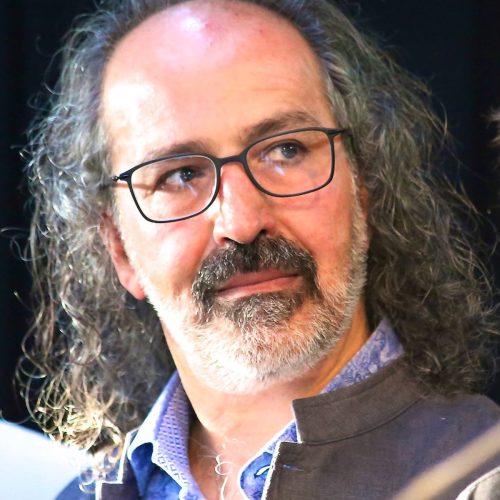
Mohamad Tavakoli-Targhi

Mohamad Tavakoli-Targhi, the Inaugural Director of the Elahé Omidyar Mir-Djalali Institute of Iranian Studies, is Professor of Historical Studies, History, and Near and Middle Eastern Civilizations at the University of Toronto. He was the founding Chair of the Department of Historical Studies at the University of Toronto-Mississauga (2004-07) and has served as President of the International Society for Iranian Studies (2008-10). In addition to serving as Editor-in-Chief of Comparative Studies of South Asia, Africa and the Middle East (2001-2012), a Duke University Press journal, he was the Editor of Iran Nameh (2011-2015). He is currently the Editor-in-Chief of Iran Namag, a bilingual quarterly of Iranian Studies, and is the co-editor of the Iranian Studies book series published by Routledge. Tavakoli is the author of Refashioning Iran: Orientalism, Occidentalism and Historiography (Palgrave, 2001) and Tajaddud-i Bumi [Vernacular Modernity] (Nashr-i Tarikh, 2003). Together with providing critical introductions in Persian, he has edited the volumes Civilizational Wisdom: Selected Works of Ehsan Yarshater (Toronto: Iran Namaeh Books, 2015); Jahangir Amuzgar: Selected Economic Essays (Toronto: Iran Nameh Books, 2015); and Ayin-i Danishjuyan: The First University of Tehran Student Journal (Toronto: Iran Nameh Books, 2016). Additionally, he is the Editor-in-Chief of Cinema & Women Poets Iranica: Digital Research Compendia. Tavakoli has published numerous historiographical articles in English and Persian on the topics of Iranian modernity, matriarchal nationalism, biopolitics, rights governmentality, and clerico-engineering. He is currently completing a monograph, Pathologizing Iran, which explores the emergence of modern diagnostic historical narratives and prognostic conceptions of politics. Tavakoli-Targhi is the recipient of two Outstanding Teacher awards from Illinois State University (1996 and 2001) and has held visiting fellowships at St. Antony’s College, Oxford University (1998), the Center for Historical Studies, Jawaharlal Nehru University (New Delhi, 1992–93); and Harvard University (1991–92). He holds a BA in Political Science and an MA in History from the University of Iowa, and a Ph.D. in History from the University of Chicago.
Managing Editor

Shabnam Golkhandan

Shabnam Golkhandan is Manager of the Tavakoli Archives and Managing Editor of the Cinema Iranica and Women Poets projects at the Elahé Omidyar Mir-Djalali Institute of Iranian Studies. Shabnam is also a doctoral candidate at the Department of History of Art at Yale University. Previously, she held research fellowships at the Yale University Art Gallery and before that in the National Museum of Asian Art Archive at the Smithsonian. Her academic history includes an MA in the history of the Modern Middle East and a BA in Art History, both from University of Toronto. Shabnam’s academic interests include, along with the broader subject of the history of the Modern Middle East, the historiography of Islamic art, the intermingling of text and image in the pictorial arts of the Middle East through the centuries, and the relationship between photography, painting, and print in the last half of 19th century in Iran. Her diverse experiences have afforded her a globally aware frame of reference steeped in vernacular modes of inquiry and practice in places such as Cairo, Istanbul, Tbilisi, Tabriz, Tehran, Mashhad, and Bombay.
Associate Editor

Azita H. Taleghani

Azita H. Taleghani is an Associate Professor in Persian language, literature, and linguistics at the University of Toronto. Her research has primarily focused on second-language learners and heritage speakers’ pedagogy, linguistic approaches in modern Persian literature, especially stylistic aspects in the poems of Persian women poets, Persian syntax, and morphology, as well as web-based and online language teaching. She is the associate editor and a member of the editorial board of Women Poets Iranica. She has published a monograph titled Modality, Aspect and Negation in Persian. She is currently working on a monograph, “Grammar of Persian Simple Verbs for Persian Second-Language Learners” and co-editing the volume, “Persian Second Language Pedagogy: New Trends and Innovations.” The two other projects that she has recently started to concentrate on take up language and style in the poems of contemporary Iranian women poets, as well as social deconstruction in the poems of ancient and medieval Iranian women poets. She has published several refereed articles, most recently, “Archaism as an Aesthetic Technique and Linguistics Process,” “Negative Forms of Persian Progressive Tense: Evidence from Monolingual, Second Language Learners and Heritage Speakers,” “Foregrounding and Its Role in Persian Modern Poetry,” “Persian Progressive Tense: Serial Verb Construction or Aspectual Complex Predicate,” and “Persian Linguistics in the 20th Century.”
Associate Editor

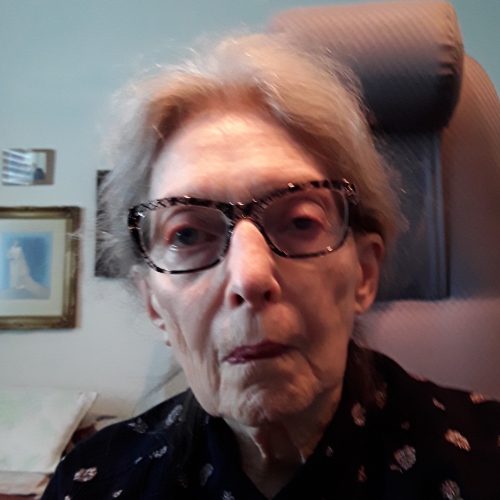
Rivanne Sandler

With a University of Toronto General B.A, I was accepted into a three-year M.A. in the newly established (1961) Department of Islamic Studies (now Department of Near & Middle Eastern Civilizations (NMC)). The expanded one-year M.A. included two years of make-up courses in the Islamic Studies undergraduate program. Language proficiency for graduate research was required for graduate study and in addition to the requisite Arabic, I chose Persian and Persian medieval history and culture taught by UK immigrants to the University of Toronto from the British tradition of study of the Middle East, Professors Michael Wickens (Trinity College, Cambridge) and Roger Savory (School of Oriental and African Studies (SOAS), University of London). Persian was the source language for my thesis on “Religion and Politics Under the First Two Tughluqs, as viewed in the contemporary traditional sources, with special reference to Barani.” (Supervisors: Professor Aziz Ahmad and Professor G. Michael Wickens). Throughout my undergraduate and graduate studies, the focus of the Department of Islamic Studies was the study of medieval Arab, Persian and Turkish history, language, literature, and culture; its program was based on a concept of the medieval Middle East as an entity linked by a common Islamic heritage. I was a Teaching Fellow in the U of T Department of Islamic Studies, an Instructor, a Lecturer, an Assistant Professor and became an Associate Professor in 1978. As a junior appointment, I made the choice to focus my teaching on the modern Middle East and to introduce literature as a source of social history. This was facilitated by an escalating availability of English translations of modern Arabic and Turkish and Persian prose as well as poetry. Literature was a prominent feature of the course syllabi for all the courses I taught such as Middle Eastern Society: Traditional and Modern, Modern Middle Eastern Literatures: A Mirror of Society, Women’s Stories of the Middle East. The students in my courses were curious to learn about a part of the world they were not exposed to in Toronto public or high school curricula or in newspapers and magazines. The influx of Iranian students following the Iranian Revolution of 1979 provided a constituency for courses on Iran and literature in the original Persian. Readings in Modern Persian Literature (in the original Persian) catered to native speakers. The Iranian Short Story in Translation, Iranian Culture and Society in the Twentieth Century, Readings in Modern Persian Literature in Translation were available to the larger undergraduate student population. At the graduate level where Arabic, Turkish and Persian studies became distinct, I offered Literature and Society in 20th c. Iran (in the original Persian), and Persian Literature in the Diaspora. In retirement, I offer a course that I did not previously offer which focuses on the memoirs (originally in Persian and available in English) of Iranian Women: Iranian Women Reveal their Lives: The First Generation.

The theses I supervised reflect the broad academic training I received as a graduate student and were specifically focused on women’s poetry (“Gulten Akin, A Pioneering Turkish Woman Poet: An Analysis of Her Life, Poetry and Poetics Within Their Social, Historical and Literary Context” (defended 2001) and women in their social setting (“The New Armenian Woman’s Writing in the Ottoman Empire, 1880-1915” (defended 2000). I served as a co-supervisor for the thesis of the well-known poet Saeed Ghahremani whose granting department was the U of T Centre for Comparative Literature.

I consider as part of my education and research the three trips I made to Iran in the 1970s: three months travelling throughout Iran (except the south) in 1971, two months during 1974, living with a family in Tehran and attending a language school, and in 1976, a trip to the Royal Ontario Museum archeological site near Kermanshah. All three visits provided an opportunity to enlarge the range of society portrayed in literature.

International Editorial Board
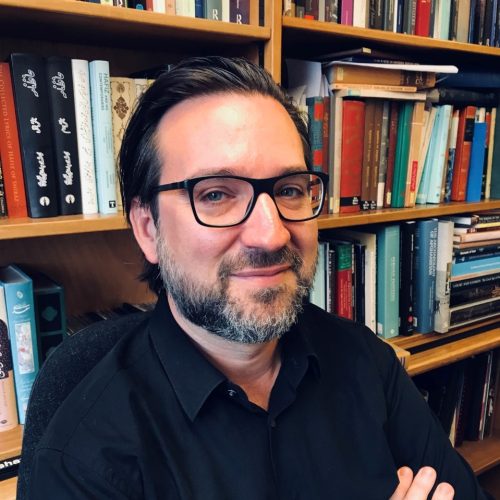
Dominic Parviz Brookshaw

Dominic Parviz Brookshaw is Professor of Persian Literature and Iranian Culture at the University of Oxford, and Senior Research Fellow in Persian at Wadham College, Oxford. He has served on the editorial boards of both Iranian Studies and Middle Eastern Literatures and is a former member of both the Governing Council of the British Institute of Persian Studies and the Council of the Association for Iranian Studies. He has published widely on premodern Persian lyric poetry, women writers of the Qajar era, and twentieth-century Iranian poets. His most recent book, Hafiz and His Contemporaries: Poetry, Performance, and Patronage in Fourteenth-century Iran (I.B. Tauris, 2019), won the Saidi-Sirjani Book Award in 2020.

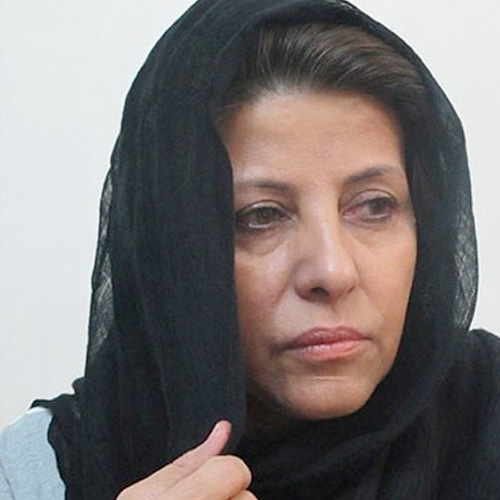
Rouhangiz Karachi

Rohangiz Karachi is an associate professor in the Department of Literature, Institute for Humanities and Cultural Studies, Tehran. Her PhD thesis was titled “A Review of the Poetry of Modern Poetesses from the Period of Constitution in Iran.” She has published six books and more than forty articles, mainly about women and poets. Her first poems were published in 1970, and her first volume of poetry, titled Bā kābūs'hā-yi zan (Women’s Nightmares) was published by Murgh-i Āmīn in 1998.” Her second collection of poetry, Chashmhā-yi lūch-i zamīn (Cross-Eyed Earth), was published in 2001 by Nigāh-i Sabz. Her poems have appeared in various magazines and anthologies. She is also the author the following monographs: Andīshah nigārān-i zan dar shiʻr-i mashrūtah (An Inquiry into the Poems of Thoughtful Poetesses during the Constitutional Period) (Dānishgāh-i al-Zahrā, 1995); Furūgh, yāghī-i maghmūm (Furūgh, the Sorrowful Rebel) (Rāhiyān-i Andīshah, 1997); and Parvīn Iʻtisāmī : hamrāh bā kitābʹshināsī-i tawsīfī (A Descriptive Bibliography of Parvīn Iʻtisāmī (Dāstānʹsarā, 2004).

Fatemeh Keshavarz

Fatemeh Keshavarz is a professor of Persian literature and the director of the School of Languages, Literatures, and Cultures at the University of Maryland. She completed her studies at Shiraz University and at the University of London. She taught at Washington University in St. Louis for over twenty years, where she chaired the Department of Asian and Near Eastern Languages and Literatures from 2004 to 2011. In 2012, Keshavarz joined the University of Maryland as the Roshan Institute Chair in Persian Language and Literature, and director of the Roshan Institute Center for Persian Studies. Keshavarz is the author of several award-winning books, including Reading Mystical Lyric: The Case of Jalal al-Din Rumi (University of South Carolina Press, 1998), Recite in the Name of the Red Rose (University of South Carolina Press, 2006), and a book of literary analysis and social commentary titled Jasmine and Stars: Reading More Than Lolita in Tehran (University of North Carolina Press, 2007). She has also published other books and numerous journal articles. Keshavarz is a published poet in Persian and English and an activist for peace and justice. She was invited to speak at the United Nations General Assembly on the significance of cultural education. Her National Public Radio show, “The Ecstatic Faith of Rumi,” earned her the Peabody Award in 2008. In the same year, she received the Herschel Walker Peace and Justice Award.

Zuzanna Olszewska

Zuzanna Olszewska is an associate professor in the social anthropology of the Middle East at the University of Oxford. She specializes in the ethnography of Iran and Afghanistan, with a focus on Afghan refugees in Iran, the Persian-speaking Afghan diaspora, and the anthropology of literature and cultural production. She received her doctorate in social anthropology from the University of Oxford, and has held post-doctoral fellowships at St. John’s College (junior research fellowship, 2008–12) and the London School of Economics and Political Science (LSE Fellow in Anthropology, 2012–13). Her doctoral research was published as The Pearl of Dari: Poetry and Personhood among Young Afghans in Iran (Indiana University Press, 2015), an ethnographic inquiry into how poetic activity reflects changes in youth subjectivity in an Afghan refugee community, based on work with an Afghan cultural organization in Mashhad, Iran. The book won the 2016 Houshang Pourshariati Iranian Studies Book Award from the Middle East Studies Association and the 2017 Middle East Section Book Award of the American Anthropological Association.

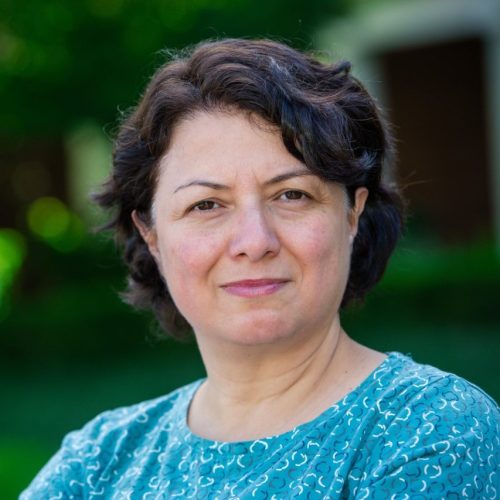
Leila Rahimi Bahmany

Leila Rahimi Bahmany is a Historical Studies Visitor at the Institute for Advanced Study in Princeton. She completed her doctorate at the Free University of Berlin. Her first book is titled Mirrors of Entrapment and Emancipation: Forugh Farrokhzad and Sylvia Plath (Leiden University Press, 2015), and it was the recipient of a 2016 Latifeh Yarshater Award. The book juxtaposes the highly ambivalent essence of the mirror metaphor in the poetry of Forugh Farrokhzad with that imagery in the oeuvre of Sylvia Plath. The interpretive prowess of the study reinforces the inseparable dynamics of the culturally established configurations of a woman’s self-image and her voice. Her main fields of interest are women’s literature and feminist literary theory and criticism. She has authored several book chapters and encyclopedia articles on Persian literature and Sufism, as well as on Azerbaijani intellectuals. Currently, she is working on her second monograph, dealing with the life and literary works of a modern Iranian female writer, Simin Daneshvar. The monograph aims to present a thorough study of Daneshvar’s biography and her fictional narratives. She also studies modern prose narratives from Iran written in Azeri Turkish.

Photo credit: Andrea Kane, Institute for Advanced Study
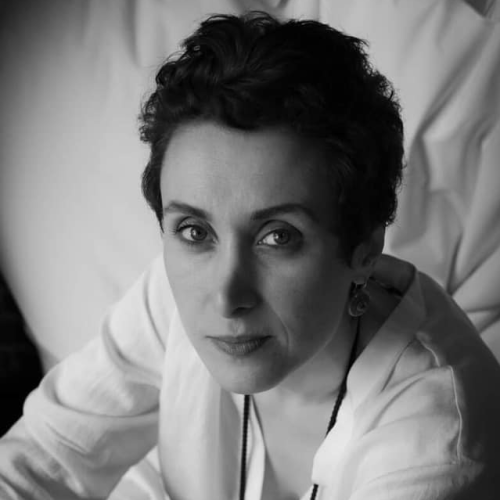
Fatemeh Shams

Fatemeh Shams is a professor of modern Persian literature at the University of Pennsylvania. She has also taught Persian language and literature at various academic institutions in the United Kingdom, including the University of Oxford, the School of Oriental and African Studies, University of London, and the Courtauld Institute of Art. Her work focuses on the intersection of literature, politics, and society. Shams is interested in the evolution of poetry and patronage in the Persian literary tradition and the representation and transformation of this relationship in modern Iran. She has published articles and book chapters on poetry, patronage, and politics in the Iranian context. Her book, A Revolution in Rhyme: Poetic Co-option under the Islamic Republic (Oxford University Press, 2020), deals with poets and patrons in Iran. She was awarded the Humboldt Foundation Fellowship to join the Forum Transregionale Studien in Berlin in order to embark on a book project on exile and exilic writing in the Persian tradition. Shams is also an internationally acclaimed, award-winning poet who has published three collections of poetry in Persian and in English. Her first collection, 88 (Gardoon, 2012), won the Jaleh Esfahani Poetry Award in London. Her third bilingual collection, When They Broke Down the Door (Mage, 2015), won a Latifeh Yarshater Book Award in 2016. Her poetry and translations have been featured in World Literature Today, the Michigan Quarterly Review, Life and Legends, Poetry Foundation, Jacket 2, Penn Sound, and more. The Mirror of My Heart: A Thousand Years of Persian Poetry by Women (Penguin, 2021) features a number of her poems.

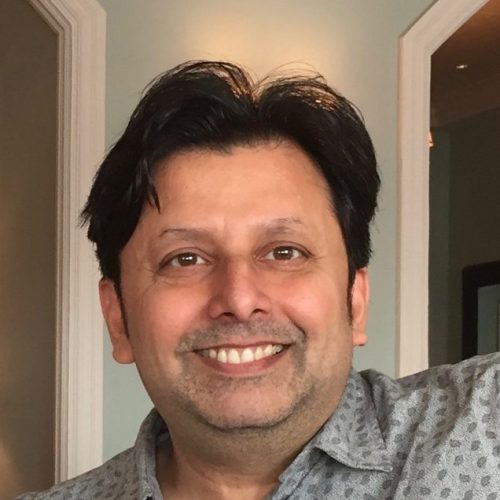
Sunil Sharma

Sunil Sharma is Professor of Persianate & Comparative Literature at Boston University. His areas of research are premodern Persian and South Asian literatures, specifically poetry and court cultures, history of the book, and travel writing. His last book, Mughal Arcadia: Persian Poetry in an Indian Court (Harvard University Press, 2017) is a study of early modern Persianate literature. The output of a multi-year project entitled “Veiled Voyagers: Muslim Women Travelers from Asia and the Middle East” with Siobhan Lambert-Hurley and Daniel Majchrowicz was recently published as Three Centuries of Travel Writing by Muslim Women (Indiana University Press, 2022). The book recovers, translates, and analyzes Muslim women’s travel writing from a range of languages in order to draw out the gendered relationships that inhere between travel and Muslim identities, nationalism, and the shaping of global power. Sharma was the president of the Association for the Study of Persianate Societies (ASPS).

Yidan Wang

Yidan Wang, professor of Persian language and literature, also serves as the director of the Institute of Iranian Culture Studies at Peking University. Her main research interests focus on classical Persian literature and the cultural exchanges between China and Iran from the tenth century, especially during the Mongol-Yuan period. Her publications include Tarikh-i Chin az Jami‘ al-Tavarikh (in Persian), A Study and Collated Translation of Rashid al-Din’s History of China in Jami‘ al- Tavarikh (in Chinese), the Chinese translations of Iranian Folktales, Rumi’s Masnavi-yi Ma‘navi (vol. 4), and Omar Khayyam’s Rubaiyat. She has also published more than thirty articles on Persian literature or on the cross-cultural communications between China and Iran.

Sholeh Wolpé

Sholeh Wolpé is an Iranian-American poet, playwright, and librettist. She is the recipient of a PEN/Heim Translation Fund Grant, a Midwest Book Award, and the Lois Roth Persian Translation Prize. Her publications number over twelve collections of poetry, translations, and anthologies, as well as several plays. Her most recent book, Abacus of Loss: A Memoir in Verse, was chosen by The Mary Sue magazine as one of “8+ Beautiful, Contemporary Novels Written in Verse That Make Poetry Accessible,” and was hailed by Colorado Review as a book that “examines the masks of patriarchy in powerful metaphor and narrative.”

Wolpé's translations of the twelfth-century Sufi mystic poet, Attar, The Conference of the Birds (W.W. Norton & Company), and of the twentieth-century Iranian rebel poet Forugh Farrokhzad, Sin: Selected Poems of Forugh Farrokhzad (University of Arkansas Press), have garnered awards and established Wolpé as a celebrated re-creator of Persian poetry in English.

Most recently, her play SHAME was featured in New Iranian Plays, published by Aurora Metro books (2022). Wolpé wrote the libretto for an oratorio, “The Conference of the Birds,” and a multi-genre performance, “The Seven Valleys,” which premiered, respectively, at the Broad Stage and the Getty Villa Museum in 2022. “Song of Exile,” for The Arlington Chorale, will premiere in Virginia in 2023.

Sholeh has lived in Iran, Trinidad, and the United Kingdom and is currently a writer-in-residence at the University of California, Irvine. She performs her literary work solo and with musicians internationally. She divides her time between Los Angeles and Barcelona.
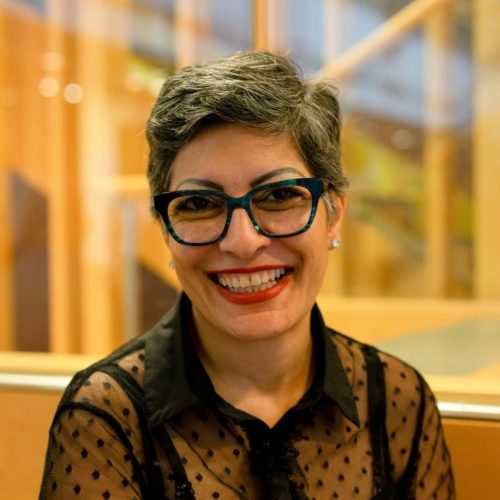
Claudia Yaghoobi

Claudia Yaghoobi is Roshan Institute Associate Professor and director of the Center for the Middle East and Islamic Studies at the University of North Carolina, Chapel Hill. Yaghoobi is a scholar of Iranian cultural studies, and gender and sexuality studies with a focus on the members of sexual, ethnic, and religious minoritized populations. She is the author of “Transnational Culture in the Iranian Armenian Diaspora” (forthcoming, Edinburgh University Press, 2023), Temporary Marriage in Iran: Gender and Body Politics in Modern Persian Literature and Film (Cambridge University Press, 2020), and Subjectivity in ‘Attar, Persian Sufism, and European Mysticism (Purdue University Press, 2017). She received her PhD in Comparative Literature from the University of California at Santa Barbara in 2013. She teaches courses on Iranian literature and culture, Middle Eastern literature, gender and sexuality, diaspora studies, and human rights. As an Iranian-Armenian-American, Yaghoobi’s research concerns the literature of the Middle East with a special focus on Persian and Armenian literature. Within Persian literature and culture, her focus is on the members of sexual, ethnic, and religious minority populations, ones marginalized by normative society. Her work addresses the embodiments of liminality through which authors, artists, and directors challenge and critique social hegemonies. Her first monograph, Subjectivity in ‘Attar, reassesses the significance of the concept of transgression and construction of subjectivity within select works of the medieval Persian Sufi poet Farid al-Din ‘Attar Nishapuri (1145-1221). She traces the intersections of transgression, law, inclusion and exclusion, self and the other, in ʿAttar’s treatment of class, gender, sexuality, and religion. Her second monograph, Temporary Marriage in Iran, examines the representation of sigheh (temporary marriage) in modern Iranian cultural productions. However, the book moves beyond the literary and cinematic realms and examines in depth a rather controversial social institution that has been the subject of disdain for many Iranian feminists, and that has captured the imagination of many Western observers. Her third book, “Transnational Culture,” examines the various creative ways that Iranian-Armenian authors and artists, as members of religious and cultural minority populations of Iran and later in the diaspora in the United States, craft and negotiate a unique notion of self—one that is at odds with the wish to be integrated into mainstream society—while maintaining ties with the homeland.

Research Team

Women Poet Iranica Coordinator

Abolfazl Moshiri

Abolfazl Moshiri is Research Coordinator for The Iranian Women Poets Project at the Elahé Omidyar Mir-Djalali Institute of Iranian Studies. Abolfazl received his PhD from the Department of Near & Middle Eastern Civilizations, University of Toronto, in 2021. His doctoral dissertation, generously supported for four years through the Ontario Gradate Scholarship, investigated the portrayal of Satan (Iblis) in classical Persian mysticism. His broad research areas include classical Perso-Islamic literature, Iranian Sufism, and the intellectual history of the Persianate world from the 10th to the 16th century. Abolfazl has been involved in several research projects including e-Campus Ontario, for which he developed online interactive modules for various courses in Islamic studies and Muslim civilizations to be offered across universities in Ontario. At the University of Toronto, he has also taught undergraduate courses on classical Persian literature and culture. His forthcoming article entitled “The Ishraqi Path: Toward Systematization of Suhrawardi’s Sufism” offers a new approach in better understanding Suhrawardi’s weltanschauung, which puts a greater emphasis on his mystical inclinations instead of his philosophical viewpoints.
Cinema Iranica Coordinator

Sophia Farokhi

Sophia Farokhi is Research Coordinator for The Cinema Iranica Project at the Elahé Omidyar Mir-Djalali Institute of Iranian Studies. Sophia most recently held a Postdoctoral Fellowship in the Department of Historical Studies, University of Toronto. She holds a PhD in Iranian Studies. Her dissertation, Contesting Identities: A Critical Analysis of Iranian Identities, examined contemporary Iranian political identities, their roots in Persian history, and their relation to more recent cultural and political phenomena in the Middle East, paying particular attention to the sociopolitical and religious influences shaping the perspective of contemporary Iranian political thinkers. Subsequent to the completion of her dissertation, Sophia worked as a lecturer at several universities in Iran, teaching courses in Iranian studies, political sociology, and political thought.Sophia is the author of numerous articles on Iranian society and politics, including “Cultural Schizophrenia: A Critical Analysis of Iranian Identity in the Thought of Dariush Shayegan,” and has written, edited, and translated several books. She recently co-translated Professor Shafique Virani’ book; The Ismailis in the Middle Ages: A History of Survival, A Search for Salvation (2007) with Amirkabir Publishers, one of the most well-known publishing houses in Iran.

Hamoun Hayati

Hamoun Hayati is a web designer with the Elahé Omidyar Mir-Djalali Institute of Iranian Studies at the University of Toronto. He studied electrical engineering at Toronto Metropolitan University. Hamoun is the founder of the Toronto-based web studio, Hexpace, and has over a decade’s worth of experience working on web design and development projects with clients across different sectors. He is deeply passionate about the future of work and education and using technology to solve real-world problems.

Elizabeth Davis

Elizabeth Davis is a Research Affiliate with the Elahé Omidyar Mir-Djalali Institute of Iranian Studies and holds a PhD in Education from the University of Toronto and an MA in Political Science from McGill University. She researches the intersection of culture, politics, and media, focusing on the role of affect and aesthetics in the reproduction of formations of race, gender, and sexuality. She is the co-editor of Affective Politics of Digital Media (Routledge 2021) and has published articles in the fields of visual culture studies; aesthetics and politics; media studies; and affect theory. Her scholarly work can be found in Theory & Event, Emotion, Space and Society, The Senses and Society, and Cultural Studies. Elizabeth has worked in the fields of diversity and inclusion, accessibility accommodation, grant writing, and non-profit administration. She is a Lecturer in Women’s, Gender, and Sexuality Studies and Education at the University of Toronto.

David R. Anderson

David R. Anderson is a Research Affiliate with the Elahé Omidyar Mir-Djalali Institute of Iranian Studies. David is a PhD candidate in the Faculty of Environmental and Urban Change at York University. His dissertation, Seeing Otherwise: Nature, Blindness, Memoir, examines memoirs written by blind, queer, black, and women authors in order to evidence how non-dominant, marginalized, and ecologically-oriented sensoriums—particularly non-visual senses like hearing, smell, and touch—can promote more just political, social, and environmental collectivities. David is a Lecturer in Women’s, Gender, and Sexuality Studies at the University of Toronto and has worked for The Intersectionality Research Hub (Concordia University) and the McLuhan Centre for Culture and Technology (University of Toronto). David’s most recent work has been published in Feminist Formations and Disability Studies Quarterly.

Bilal Hashmi

Bilal Hashmi is a Research Affiliate with the Elahé Omidyar Mir-Djalali Institute of Iranian Studies at the University of Toronto. Trained in English and comparative literature (at U of T and New York University, respectively), he is an editor, translator, and educator, who has taught widely in Canada and the United States, most recently as an Assistant Professor, Teaching Stream, in the Department of Language Studies, University of Toronto Mississauga, and as a Lecturer in the Department of Middle Eastern & South Asian Languages & Cultures at the University of Virginia. Bilal is a consulting editor with Iran Namag and is presently at work on book-length translations of twentieth-century Persian poetry and prose. In 2018, he was selected to participate in the inaugural Persian to English translation workshop offered through the British Centre for Literary Translation’s International Literary Translation & Creative Writing Summer School at the University of East Anglia. He serves as the President of the Literary Translators’ Association of Canada/Association des traducteurs et traductrices littéraires du Canada.

Yaser Farashahinejad

Yaser Farashahinejad is a Research Assistant with the Elahé Omidyar Mir-Djalali Institute of Iranian Studies. Yaser holds a PhD in Persian literature and language and recently completed his postdoctoral research at Tarbiat Modares University in Iran. In addition to his academic pursuits, he is also a fiction writer, poet, and translator. To date, Yaser has authored four books: Gūrʹhā-yi kāghaz̲ī (Paper Graves), published by Diyār Nāmag in 2022; Farār az furm (Escaping Form), with Tarh-e-no Publications, Tehran, in 2020; Minārahʹhā-yi vārūnah (Inverted Minarets), also published in 2020 by Tarh-e-no; and Nazarīyahʹhā-yi rumān dar Īrān (Theories of the Novel in Iran), which was brought out by Pāyā Publications in 2019. As a translator, Yaser has thus far rendered two books from English to Persian: Hamid Rezaei Yazd’s Persian Literature and Modernity (as Mudarnītah-yi guftugūʼī, published in 2021 by Tarh-e-no), and The Rumi Prescription by Melody Moezzi (also published by Tarh-e-no in 2021, under the title Darmāngarī-yi Mawlānā). He has recently finished translating Ali Mirsepassi’s Transnationalism in Iranian Philosophical Thought, the manuscript of which is currently in press. Yaser has published numerous articles both in Iran and internationally, with a particular focus on contemporary Persian literature and history. His work has appeared in various publications, including Iran Namag, where he has already published two articles. A third piece, titled “Subliminal Dialogue,” is forthcoming in the same journal. Since 2020, Yaser has also worked as an editor and book reviewer at Tarh-e-no, a highly reputable and prestigious publisher in Iran. His research interests revolve around modernity, dialogue, and the philosophy of literature.

Guita Banan

Guita Banan is a Research Assistant for the Women Poets project and Cinema Iranica at the Elahé Omidyar Mir-Djalali Institute of Iranian Studies, University of Toronto. She received her PhD in physics from the University of Florida. Her area of focus in her PhD was, broadly speaking, biophysics of the brain and neuroimaging, which shapes her current interests as she pursues her studies in science and technology studies. She is a graduate student at U of T’s Women and Gender Studies Institute, completing her Master’s with a focus on feminist and decolonial technoscience. In her research, she thinks about the question of agency at the intersection of feminist theory, feminist and decolonial technoscience, neurotechnology, and ethics. Guita received her BSc in physics from Sharif University of Technology, Tehran.

Faraz Chogan

Faraz Chogan is a Work Study Student who contributes to the Cinema Iranica project and Institute websites. Alongside his academic pursuits, he is also dedicated to curating and updating the website's collection of books and films from both pre and post-revolutionary eras. With a strong academic background, Faraz holds a bachelor's degree in biomedical engineering and a master's degree earned from the University of Tehran. Notably, he has made significant contributions to the field of burn-wound healing, with several published papers in this area. Currently pursuing a PhD at the Institute of Medical Science, University of Toronto, Faraz continues to excel in his research, specializing in harnessing the potential of stem cells and 3D bioprinting technology to develop cutting-edge skin substitutes. With his unwavering dedication to medical research and innovative solutions, Faraz aims to make a meaningful impact on regenerative medicine and offer hope to burn victims worldwide.

Sara Molaei

Sara Molaie is a Work Study Student who contributes to the Women Poet project. She is a first-year PhD student at the Near & Middle Eastern Civilizations department. She received her MA from the University of Washington and wrote her thesis on the revival of the Hebrew and Persian languages in the 19th century. Her current research focuses on the notion of revival in the poems of 19th and 20th-century Iranian women poets. Speak more on what you do at the institute.

Eszter Melitta Szabo

Eszter Melitta Szabo dedicates her efforts as a Work Study Student and Research Assistant for the Women Poets Iranica project at the Elahé Omidyar Mir-Djalali Institute of Iranian Studies. Currently, Eszter is a Master’s student in Near & Middle Eastern Civilisations at the University of Toronto under the supervision of Professor Mohamad Tavakoli-Targhi. With extensive training in philology, she holds a BA in Indian Studies with a minor in Iranian Studies, specializing in the exploration of classical and modern languages and literature from both regions. Her academic pursuits revolve around the broader fields of 20th century women’s literature, gender studies, and anthropology, where she passionately explores their intricate intersections within the cultural tapestries of Iran and India.

Azin Golrizkhatami

Azin Golrizkhatami contributes as a Work Study Student to the Tavakoli Archive project. Currently, Azin is a PhD student in the Civil and Mineral Engineering Department at the University of Toronto. Her area of expertise is transportation engineering. Her current research focuses on pricing models of crowd shipping services. She holds a BSc in Civil Engineering and an MSc in Transportation Engineering from Sharif University of Technology in Iran. Her role in the Archive project is to digitalize the old and invaluable lithographs. By scanning the lithographs, she is going through the cataloguing process which is very interesting for her. Exploring the lithographs is a precious experience which helps her to perceive more about Iranian literature. 

Nariman Gooranorimi

Nariman Gooranorimi contributes as a Work Study student with the Tavakoli Archives. Nariman is a senior undergraduate student at the University of Toronto, majoring in Human Biology with a double minor in Near & Middle Eastern Civilizations and French Language. Throughout his studies, Nariman has worked as a Research Assistant at the Tavakoli Archives in order to expand on and improve his research skills. Outside of academics, he is a peer mentor at the University of Toronto’s Medical Sciences Student Union, has created and sold numerous profitable businesses, and enjoys volunteering in hospitals during his free time.

Arash Zargar

Arash Zargar is a Work Study Student in the Digital Humanities and Cinema Iranica projects. Arash is currently pursuing his PhD at the University of Toronto where his research focuses on the development of innovative numerical models for the study of human lung tissue diseases. Arash began his academic career studying aerospace engineering at Amirkabir University of Technology in Tehran, and subsequently acquired his master’s degree in mechanical engineering from the University of Alberta. Arash served as the Editor-in-Chief for Peik Scientific Magazine where he managed a team of over thirty individuals and ensured the production of significant scientific content. He was also an executive member of the Iranian Students’ Association at University of Alberta, earning several accolades from the university. Complementing his academic and professional pursuits, over the past decade he has been mastering the Setar, a classic Iranian musical instrument.
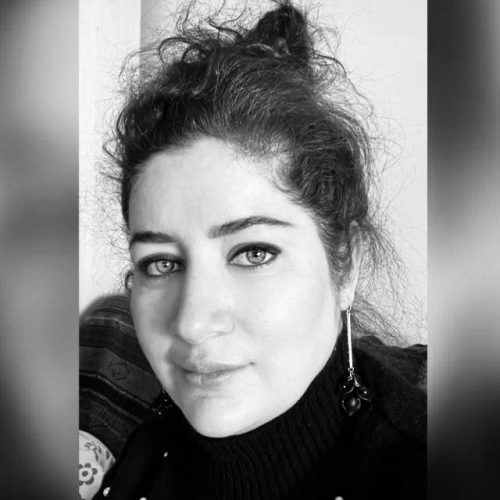
Negar Banisafar

Negar Banisafar is a Work Study Student for the Cinema Iranica project. Negar is currently a PhD student in the Department of Near & Middle Eastern Civilizations at the University of Toronto. She holds a BA in English Language and Literature from Allameh Tabataba’i University in Iran and two MAs, one in Dramatic Literature from Soore University in Iran and another in the study of Near & Middle Eastern Civilizations from University of Toronto. During her second MA, Negar was a recipient of the Scholars-at-Risk Fellowship from the School of Graduate Studies and Massey College at University of Toronto. In 2022, she received the Norman Itzkowitz Turkish Short Story Award for the best short story written in Modern Turkish.

Gunha Kim

Gunha Kim is a Work Study Student with the Cinema Iranica project. Currently, Gunha is a PhD student in the Department of Near & Middle Eastern Civilizations, University of Toronto. Previously, he studied at Seoul National University. Gunha’s doctoral project examines the historical development of the discourse of voluntary death—that is, suicide and martyrdom—in 20th century Iran. In particular, his dissertation aims to connect the concurrent development of psychiatric studies on suicide, the necropolitical discourse of martyrdom, and the environmental discourse of pollution as a mass suicide. Gunha has been involved with multiple academic projects related to Iran. For instance, he has contributed as a digital archivist at the Persian Archive, has conducted research for the Encyclopedia of Iranian Cinema and Iranian Women Poets, and, more recently, served as an editorial intern for Iran Namag: A Quarterly of Iranian Studies.

Natasha Shokri

Natasha Shokri is a Work Study Student contributing to the Archival project at the Elahé Omidyar Mir-Djalali Institute of Iranian Studies. Currently, Natasha is working on her doctoral degree in Social Justice Education at the Ontario Institute for Studies in Education (OISE), University of Toronto. She earned an MA in Peace and Conflict Studies from the United Nations-mandated University for Peace. In her MA thesis, she scrutinized water as a catalyst for peacemaking in the Middle East. Natasha’s research interests include black feminism; critical media education; the science of happiness and education; peace education; the pedagogy of hope; and refugee education. Natasha has been nominated for and received various awards and distinctions, including recognition as a UNESCO Youth Peace Ambassador for her peace building and human rights activities.

Saeid Amirzadeh

Saeid Amirzadeh is a Work Study Student in the Digital Humanities and Cinema Iranica projects. Saeid is also a PhD student in the Mechanical and Industrial Engineering Department at the University of Toronto. His doctoral research centers on creating a Digital-Twin to optimize the continuous casting process in steel industries. Saeid initiated his academic journey at Isfahan University of Technology, delving into Digitized Heat Transfer for electronics cooling, and later earned his master's degree from the same institution, focusing on Angiogenesis in the retina caused by diabetic rethinopathies, through numerical simulation. His diverse background includes expertise in computational science, data science, and High Performance Computing, allowing him to tackle interdisciplinary challenges with ingenuity and precision.

Rahima Baluch

Rahimah Baluch is a Work Study Student contributing to the Women Poets Iranica project. Rahimah is also an undergraduate student studying human biology at the University of Toronto. In her role as a research assistant for the Women Poets Iranica project, she is currently supporting the research and related work on a special journal issue and gaining new insights into Iranian poetry. Her interests outside of her position and academic pursuits include literature, illustration, and writing.

Elham Avard

Elham Avard is a Work Study Student with the Cinema Iranica project. Elham is currently a PhD student in the Department of Medical Biophysics, University of Toronto. Her academic focus examines the use of artificial intelligence for medical image analysis. She received her BA in Physics and MSc in Medical Physics from Shahid Beheshti University, in Tehran, Iran. In her free time, Elham is interested in Iranian cinema and poetry, which encouraged her to collaborate with the Cinema Iranica project as a work-study student.
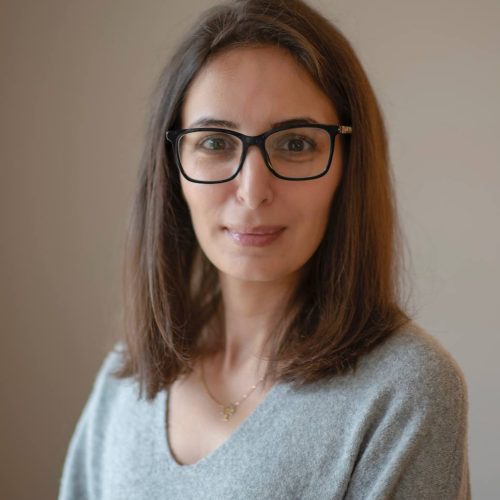
Farshad Tajddinisarvestani

Farshad Tajddinisarvestani is a Work Study Student for the Digital Humanities Project. Farshad is currently a PhD student at the University of Toronto, specializing in the fields of mechanical and industrial engineering. His research revolves around the fascinating realm of data-driven modeling, In-Silico experiments, and In-Vivo visualization of cardiovascular flows using cutting-edge techniques such as medical imaging, patient-specific and physics-based simulations, reduced order modelling, and machine learning. In his work on the Digital Humanities Project, Farshad utilizes artificial intelligence (AI) and natural language processing (NLP) techniques to unlock valuable insights and facilitate novel approaches to understanding various aspects of the works of Persian poets.

Sogand Karami

Sogand Karami is a Work Study Student contributing to the Tavakoli Archives team as an Archive Assistant for the Archive project and as a researcher for the Cinema Project. She is currently pursuing her master's degree at the Centre of Drama, Theatre, and Performance Studies at the University of Toronto. Sogand obtained her bachelor's degree in Dramatic Literature from Azad University of Tehran, where she not only excelled academically but also actively participated in a wide range of creative pursuits. Throughout her studies, Sogand nurtured her skills in writing short stories, directing, and acting in numerous student projects.Sogand's research interests are concerned with the intersection of social issues and dramatic art, exploring the social and political dimensions of the body in performance and dramatic texts. Through her research, Sogand aims to shed light on the transformative power of theatre and its potential to inspire meaningful societal change.

Parvin Malekzadeh

Parvin Malekzadeh is a Work Study Student with the Cinema Iranica project. As part of her responsibilities, she conducts research to collect information, articles, and website resources related to Iranian movies. Currently, Parvin is a PhD student in the Department of Electrical and Computer Engineering at University of Toronto. She received her BSc in Electrical Engineering from Sharif University of Technology, Iran in 2018, and her MSc in Electrical Engineering from Concordia University, Montreal in 2020. Parvin’s research interests lie in the areas of signal processing, machine learning, reinforcement learning, and the Internet of Things.

Emma McDonald

Emma McDonald is a Work Study Student with the Cinema Iranica project, supporting the growth of the Institute’s digital database of written materials and performing general website maintenance. She is a senior undergraduate student, majoring in anthropology and minoring in digital humanities and cinema. Emma is interested in how cinema is both a functional and reflective expression of social/cultural identities, on both personal and national levels. Emma is interested in exploring how the representation of genre, in particular humor and comedy, is a key component in the unique character of national cinema. In addition to her academic work, Emma is an accomplished mixed media sculpture artist whose work has been featured as part of numerous collaborative projects with local Toronto artists and arts community spaces.

Tara Yazdanimotlagh

Tara Yazdanimotlagh contributes as a Work Study Student with the Cinema Iranica project. Currently, Tara is a Mechanical Engineering PhD student at the University of Toronto, delving into research that examines the physical-based modelling of solution droplets in solution precursor plasma spray. In addition to her academic pursuits in engineering, Tara has a passion for Iranian cinema, in particular, learning about Iran’s cinema history and developing her knowledge of the field.

Robert McConney

Robert McConney is a PhD student in the Department of Anthropology at the University of Toronto. He holds BA (Hons) in History from the University of Southampton (2016), an MA in Iranian Studies from the University of Tehran (2019), and an MA in Religion from the University of Toronto (2023). Robert has lived on and off for 20 years in various countries of the Middle East, including the UAE, Iran, and Turkey. He has a working proficiency in Persian. His previous research focused on Gilan and the Jangali movement, it has since shifted to the Caribbean practice of Muharram known as Hosay. His current research seeks to connect his experience in the Middle East with his personal background as a British-West Indian of Bajan heritage. He contributes to the Cinema Iranica Project.

Zahra Kazemi

Zahra Kazemi, a Work-Study student, is involved in the Cinema Iranica project. She is currently a graduate student at the University of Toronto Institute for Aerospace Studies (UTIAS), having completed her bachelor’s and master’s degrees in mechanical engineering from Amirkabir University of Technology in Tehran, Iran. In addition to her engineering background, Zahra has a passion for Iranian history, art, poetry, and cinema. This passion led her to become a work study researcher in Professor Virani’s “Dream Team” at the University of Toronto, where she contributed to illuminating the profound beauty and significance of Persian poetry. As part of her work study in Professor Virani’s team, Zahra's role involved translating Persian poems from various poets like Attar Neyshabouri, Nizari, etc., into English. Currently, Zahra has embarked on a new journey as a member of Professor Tavakoli’s Cinema Iranica team. Her objective is to provide a fresh and unique perspective to the exploration of Iranian cinema, emphasizing its cultural and artistic significance. She actively participates in gathering information about different Iranian movies, writers, or directors from available literature, and creating an archive dedicated to them.

Fahimeh Fazel

Fahimeh Fazel contributes to the Cinema Iranica project as a Work Study Student. Fahimeh is currently pursuing a PhD at the University of Toronto under the guidance of Professor Jorg Liebeherr on distributed machine learning in communication networks and is a Student Member of the Institute of Electrical and Electronics Engineers (IEEE). Fahimeh previously earned a BSc in electrical engineering from the Amirkabir University of Technology in Tehran, Iran in 2016 and received an MSc in communication systems engineering from the University of Tehran in 2019. Her research interests span several areas, including wireless communication, cache-enabled UAV networks, visible light communication, and coding theory and their applications in visible light communications.

Hibah Mehvish

Hibah Mehvish is a Work Study Student with the Tavakoli Archives. Hibah is a second-year undergraduate student at the University of Toronto where she is pursuing an Honors Bachelor of Science with a double major in neuroscience and molecular biology and immunology. She works at the archive cataloguing materials in Urdu, Hindi, and Arabic. She has an unwavering aspiration for medicine and research. Beyond her academic pursuits, Hibah's fervent interests span a wide spectrum, including her love for languages, appreciation of diverse cultures, and commitment to justice. In her free time, she channels her passion by translating legal documents into Urdu and Hindi, aiming to enhance accessibility to justice within her community through SACA2JA justice association.

Samira Ghanbarnejad

Samira Ghanbarnejad contributes as a Work Study Student for the Women Poets Iranica project. She is a master’s student at the Department of Linguistics at the University of Toronto, pursuing her research interest in the syntax of Iranian languages. Currently, she is working on ergativity in Middle Persian. She completed her first master’s degree in ancient Iranian languages and cultures in Iran. For her first master’s thesis, she conducted research on the discourse analysis of Gathic Avestan. She also has a BA in Music and is a Kanun player.

Farshad Dabbaghi

Farshad Dabbaghi volunteers with the Cinema Iranica project at the Elahé Omidyar Mir-Djalali Institute of Iranian Studies. He is a PhD student in Civil & Mineral Engineering at the University of Toronto, specializing in the durability and long-term properties of reinforced concrete structures. His research has been published in sixteen research journal papers as well as two books in the field of civil engineering: Construction Materials and Principles of Applied Earthquake Engineering. His research aims to enhance the performance and durability of reinforced concrete structures, contributing to the development of sustainable infrastructure solutions.

Yasamin Jameh

Yasamin Jameh, a Work Study Student with the Cinema Iranica project, is currently a senior undergraduate student at the University of Toronto, majoring in International Relations & Peace, Conflict, and Justice (PCJ) and minoring in Near & Middle Eastern Civilizations. Since the autumn of 2022, Yasamin has been the host, producer, and editor of the Elahé Omidyar Mir-Djalali Institute of Iranian Studies’ official podcast: Parse: An Exploration of Critical Topics in Iranian Studies. With the generous support of the Institute, Yasamin created Parse in order expand the reach of the Institute’s considerable academic outputs among the public. (Parse is currently available on Spotify, Google Podcasts, and other streaming platforms). Previously, Yasamin worked for the Multi-Faith Center at the University of Toronto where she founded and co-hosted Subaltern Speaks, a podcast sponsored by Student Life dedicated to exploring the legacies of colonialism on the religion and spiritualties of colonized peoples. As someone of partial Iranian descent, Yasamin has a natural love and admiration for Iranian history and culture, particularly as it relates to the Safavid era and onwards. More broadly, Yasamin’s interests and perspectives are also informed by her Latin American and Dutch Caribbean heritage which have contributed to her fascination with the history of the Americas, Atlantic history, and Early Modern European history.

Sahar Javadi

Sahar Javadi is a Work Study Student with the Cinema Iranica project. Sahar is currently pursuing her Bachelor’s degree at the University of Toronto studying ethics, society, and law and criminology and socio-legal studies. She is an aspiring lawyer and hopes to continue her research in the field of criminology. She looks forward to nurturing her research skills on the complex intersection of imprisonment and the criteria of deterrence, recidivism, and rehabilitation. Sahar is also interested in prison violence and more particularly, gendered violence against women and children in prisons. In addition to academic pursuits, Sahar is a freelance translator who is currently translating a legal dictionary. Sahar has made it her personal mission to translate as many academic sources in her field as possible and make them accessible to students in her home country of Iran. She finds peace grappling with words and their meanings and hopes to leave a practical legacy for her country in this way.

Sepideh Najmzadeh

Sepideh Najmzadeh is a Work Study Student and Research Assistant contributing to various research projects with the Tavakoli Archive. Sepideh is a PhD candidate in the Department of Near & Middle Eastern Civilizations at the University of Toronto. She completed her first master’s degree in Ancient Iranian Culture and Languages, including studies in Avestan, Old Persian, and Middle Persian at the University of Tehran, Iran. She later pursued and obtained a second master’s degree from the Department of Near & Middle Eastern Civilizations at the University of Toronto. Sepideh’s dissertation research, under the supervision of Professor Enrico Raffaelli, centers around the analysis of the New Persian Zoroastrian manuscripts of Vaṣf-e Amšāsfandān (The Description of Bounteous Immortals).

Alireza Dianat

Alireza Dianat contributes as a Work Study Student with the Women Poets Iranica project. For this project, Alireza is using his research skills and expertise to collect information from here and there about the less known women poets who wrote in Farsi. Currently, Alireza is a PhD student in Civil Engineering at the University of Toronto. His research interest focuses on travel demand modelling and he is currently working on a project which investigates the relationships between choice of workplace and telecommuting decisions for his dissertation under the supervision of Professor Khandker Nurul Habib.

Parastu Ahang Mehdawi

Parastu Ahang Mehdawi volunteers with the Tavakoli Archive and the Women Poets Iranica project at the Elahé Omidyar Mir-Djalali Institute of Iranian Studies. Parastu has been a prose poetry writer from a very young age. She published her first book, a memoir, A Quest for Identity from Afghanistan to the World, in June 2022. Currently she is pursuing her education at the University of Toronto Faculty of Arts and Science in English literature and creative writing. In May 2023, she joined the Institute’s projects at the Department of Near & Middle Eastern Civilizations at the University of Toronto. She proudly works under Dr. Mohamad Tavakoli’s recommendation and has helped with the Archive, Women Poets Iranica, and Cinema Iranica projects.

Leila Moslemi

Leila Moslemi is a Work Study Student and Research Assistant with the Cinema Iranica, Women Poets Iranica, and Archive projects at the Institute. Leila is also a PhD candidate at the Department of Near & Middle Civilizations at University of Toronto under the supervision of Professor Tavakoli-Targhi. She earned her BA in Museum Studies at the Cultural Heritage Education Center in Tehran in 2005. In 2015, she received her first MA in Art History from York University, followed by her second MA in Middle Eastern Studies from University of Toronto in 2018. Her current dissertation examines the Iranian visual public sphere from 1890-1953 by studying images from periodicals since the emergence of such print materials in Iran.

Fatemeh Sadeghi

Fatemeh is 4th year PhD student in Pharmaceutical Sciences at University of Toronto. Her PhD project is focused to understand the biological mechanism underlying glioblastoma tumors heterogeneity and plasticity in patient-derived glioblastoma stem cells. In 2014, Fatemeh has completed her B.Sc. in Molecular Genetics at SCU in Iran. She then started her M.Sc. in human genetic at MUMS in Iran. Fatemeh is interested in Iran’s cinema history and literature, which made her collaborate on this project as work study student.

Viana Sadeghi

Viana Sadeghi is a Work Study Student contributing to the Women Poets Iranica project. Viana is an undergraduate student at the University of Toronto, pursuing a Bachelor of Arts degree and majoring in Philosophy of Science and Environmental Studies. Alongside her academic pursuits, Viana actively contributes to the Iranian Women Poets Iranica project, utilizing her skills and knowledge to shed light on the rich literary heritage of Iranian women. Furthermore, Viana is committed to human rights and social justice causes, and is a member of Amnesty International. Her academic interests encompass a wide range of topics, including the intersection of history and philosophy, issues surrounding poverty and underrepresented groups, and the dynamics of care and violence within kinships, among others. Her enthusiasm for these subjects is evident in her course selection, as she seeks to delve deeper into these themes and gain a comprehensive understanding of their complexities.

Samiramis Khazaei

Samiramis Khazaei is a Work Study Student with the Tavakoli Archives. Samiramis is currently pursuing a master's degree in industrial engineering with emphasis on analytics and finance at the University of Toronto. She holds a bachelor's degree in civil engineering from Iran and a master's degree in construction management from Australia. In addition to her engineering studies, Samiramis has a deep passion for literature, culture, and history, which has led her to contribute her skills and knowledge as an Archive Assistant at the Tavakoli Archive.

Hanie Rezaei

Hanie Rezaei volunteers with the Cinema Iranica Project at the Elahé Omidyar Mir-Djalali Institute of Iranian Studies. She is a passionate graduate student in the Department of Mechanical & Industrial Engineering at the University of Toronto. Her research focuses on developing innovative solutions for electric vehicle battery cooling in order to contribute to the sustainable future of transportation. Hanie earned bachelor’s and master’s degrees in mechanical engineering from the University of Tehran, Iran. Beyond her engineering pursuits, Hanie possesses a deep appreciation for various art forms, including cinema and poetry. Motivated by her passion for the arts and a desire to explore the cultural richness of her homeland, Hanie recently joined the Cinema Iranica project team. Hanie aims to contribute a fresh and unique perspective to the project, shedding light on the cultural and artistic significance of Iranian cinema. With her diverse background and interdisciplinary interests, Hanie is committed to bridging the gap between engineering and the humanities. She aspires to make meaningful contributions not only to her research but also to the broader understanding and appreciation of Iranian cinema, ultimately fostering a deeper connection between technology and the arts.

Mahak Rouhina

Mahak Rouhina is a Graphic Designer volunteering with the Elahé Omidyar Mir-Djalali Institute of Iranian Studies. Mahak is a visual artist and will begin her graduate studies at the University of Toronto in the Department of Art History in September 2023. She has already earned her MFA in Visual Communication from Tarbiat Modares University in Iran. Mahak's research interests revolve around exploring the visual elements found in manuscripts, as well as studying the associated artifacts and monuments from Islamic periods. Her articles delving into these subjects have been published in several journals. In addition, since 2018 she has been working as a Persian carpet designer. Mahak is also a recipient of several national and international awards for visual arts and carpet design.

Mohammad Hashemi

Mohammad Hashemi is a Work Study Student in the Digital Humanities and Cinema Iranica projects. Mohammad is a Ph.D. Student, Mechanical Engineering. Mohammad received his Bachelor of Science degree in Chemical Engineering from Iran's Sharif University of Technology in 2013. During his pursuit of a M.Sc. degree, his educational background led him to collaborate with Dr. Felicelli and Dr. Eshraghi on numerical modeling related to dendritic solidification at the University of Akron, USA, from 2014 to 2016. In the autumn of 2021, Mohammad became part of CACT, assuming the roles of research assistant and Ph.D. candidate supervised by Dr. Dolatabadi. His overarching objective is to devise a Lagrangian-Eulerian model for investigating atomization mechanisms in thermal spray. His primary research enthusiasm centers around formulating innovative computational models for simulating interfacial phenomena, combustion, and dendritic solidification.

Fatemeh Rastegar Jooybari

Fatemeh Rastegar Jooybari is a Work Study Student contributing to the Cinema Iranica project and related Institute websites. Fatemeh has a considerable background in biomedical engineering, medical imaging, and programming. Her master’s thesis, “Online Reconstruction of Magnetic Resonance Images with Radial Acquisition through Polar Fourier Transform,” utilized her extensive programming skills in medical imaging devices. She is an expert in several programming languages (e.g., C++, C#, Python, and Shell Scripts) and has used her knowledge in her field of medical imaging, both during the course of her studies and later as part of her work experience designing engineering user interfaces and websites. She has authored many publications, including papers in both English and Persian, and is the co-author of a Persian book.

Amin Azimi

Amin Azimi is a Work Study Student contributing to the Cinema Iranica project. Currently, Amin is a PhD student at the Center for Drama, Theatre, and Performance Studies at the University of Toronto. His research interests encompass various aspects of dramaturgy’s evolution in the 21st century, the politics of aesthetics, and digital storytelling in contemporary Iranian theatre and film. Amin has published academic articles in esteemed international journals, including Asian Theatre Journal, Alternatives Théâtrales, and Theater der Zeit, as well as Iranian journals like Film Negar and Cimia. Over the past decade, Amin has served as a lecturer in theatre and cinema at several renowned universities, including the University of Tehran and the University of Art, also in Tehran. Additionally, he has worked extensively as a critic for specific theatre and film publications and mass media outlets in Iran. Besides his scholarly contributions, Amin has directed several plays and made short films and performances. He holds an MA in Cinema Studies from the University of Art, and a BA in Theatre & Dramatic Literature.

Fahimeh Ghorbani

Fahimeh Ghorbani is a Work Study Student contributing to Tavakoli Archives. Fahimeh is currently a 4th year PhD student in the Department of Art History at University of Toronto. She has previous Master's degrees in Art History and Islamic Art respectively from University of Victoria, and Art University of Tehran. Her field of specialization is Islamic art and architecture, with a greater focus on the Persianate world. Her PhD thesis examines the correlation between the tradition of futuwwa (an ethics-based culture, based on qualities such as bravery, generosity, and honesty) and material culture and architecture of the Persianate world during the medieval and early modern period. She has held several research and curatorial fellowships at world-class research institutes and museums in Iran, Canada, and United States, including Malek National Museum and Library, Institute for Religious Studies at University of Victoria, Minneapolis Institute of Art, and Islamic Art & Material Culture Collaborative (IAMCC) at University of Toronto. Fahimeh contributes to the Institute through researching and cataloguing rare lithographs.

Vasu Vijay Singh

Vasu Vijay Singh contributes as a Work Study Student with the Tavakoli Archives. Vasu is also currently a graduate student at the University of Toronto, pursuing a Masters of Chemical Engineering with an emphasis on sustainable energy and advanced manufacturing. Apart from academics, Vasu has an interest in history and folk music. Vasu works in the archive cataloguing Hindi and Sanskrit books and also helps out in the social media team at times.

Faiza Bashir

Faiza Bashir contributes to the Tavakoli Archives as a Work Study Student. Faiza is an energetic and ambitious professional in the field of library, archival, and museum studies with over seventeen years of experience in the field as an Academic Librarian and instructor of library science. She currently works as an Assistant Professor in the Higher Education Department for the Government of Punjab, Lahore and is an International Visiting Graduate Student at the Institute of Health Policy, Management & Evaluation, University of Toronto. She is also completing her PhD in Information Management at the University of the Punjab in Lahore. Faiza completed her MPhil at Minhaj University, Lahore in 2014 and completed her Masters in Library Science (2003) and History (2006) from University of the Punjab. Faiza has published her research in both national and international journals, has widely presented her research at many national and international conferences, and works as an editorial board member and reviewer for several national and international journals as well.

Amin Dadashzade

Amin Dadashzade is a Work Study Student for Cinema Iranica. Currently, Amin is an Electrical Engineering PhD student at the University of Toronto, focusing on research on renewable energy-based electricity generation. In addition to his engineering studies, Amin is passionate about Iranian cinema. Studying Iranian cinema history and gaining a deeper understanding of it is one of his favorite subjects.

Sina Davari

Sina Davari, currently doing his PhD in Construction Management at the University of Toronto, is a Work Study Student for the Digital Humanities & Women Poet Iranica Projects. With his research centered at the nexus of Computer Vision, Deep Learning, and Robotics, Sina is dedicated to spearheading the digital and automated transformation of the construction industry to enhance safety, productivity, and operational efficiency within this sector. Stemming from a lineage of literature professors and poets spanning six generations, Sina possesses a profound passion for Persian Literature, complemented by a deep fascination with Persian classical music and vocal traditions. This heritage fuels his innovative work in the Digital Humanities and Women Poet Iranica Projects, where he investigates the potential of cutting-edge artificial intelligence methodologies in discovering new perspectives and deeper comprehension of the oeuvres of Persian women poets.

Milad Soltanzadeh

Milad Soltanzadeh is a Work-study student in the Cinema Iranica project. He is pursuing his Ph.D. in computational neuroscience at the University of Toronto's Institute of Medical Science. His research includes developing large-scale models of brain activity and connectivity to understand the underlying mechanisms of schizophrenia and depression. He earned his bachelor's and master's degrees in electrical engineering from the University of Tehran in Iran and Concordia University in Canada. Milad is mainly interested in understanding human cognition and its link to the brain. Outside academia, he is interested in philosophy and writing.